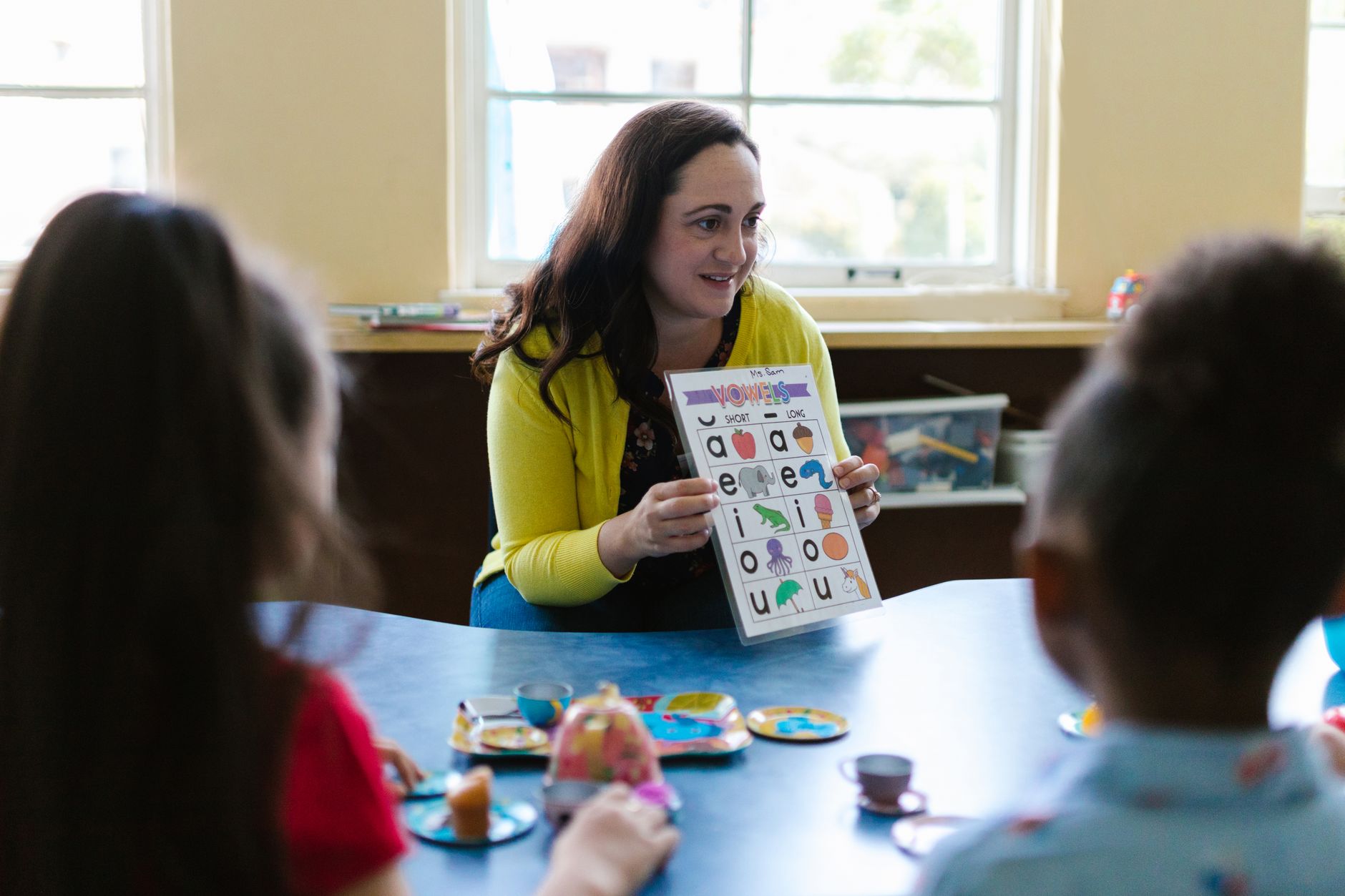
Learning to read begins long before children read their first complete sentence. For preschoolers, early phonics instruction can introduce the relationship between sounds and letters in a way that feels natural and enjoyable. Well-planned phonics activities for preschoolers can turn sound recognition, pronunciation, and letter awareness into playful experiences rather than formal lessons. When children are encouraged to explore sounds through movement, stories, songs, games, and everyday objects, they can gradually build the foundations needed for later reading development.
Key Takeaways
|
Why Play-Based Phonics Works Well for Preschoolers
Preschool children learn differently from older students. They are naturally curious, active, and eager to explore their surroundings. Expecting them to sit through long explanations about letter sounds may not always produce meaningful learning. Play provides an alternative approach that allows children to practise skills while remaining actively involved.
Phonics learning involves several connected abilities. Children first need to hear and distinguish sounds before they can consistently connect those sounds with written letters. Play-based activities can provide repeated exposure without making the experience feel repetitive.
For example, a child searching for objects that begin with the /b/ sound is practising listening, vocabulary, memory, and sound identification simultaneously. The activity has an educational purpose, but the child experiences it as a game.
Turning Practice Into Discovery
A useful principle for preschool phonics is to let children discover patterns rather than simply memorise them. Teachers can introduce a sound and then encourage children to find examples around them.
Questions such as these can encourage participation:
- “Can you find something that starts with /m/?”
- “Which picture begins with the same sound as moon?”
- “Can you hear the /s/ sound in sun?”
- “Which word sounds different from the others?”
This approach gives children opportunities to listen, compare, respond, and explain their choices.
Building Phonics Skills Through Everyday Play
Phonics does not need to happen only during a designated learning period. Many household and classroom activities can become opportunities for sound practice.
A shopping game, for instance, can introduce beginning sounds. Children can pretend to buy items beginning with a particular sound. A toy kitchen can become a setting for naming objects. Even a walk around the classroom can become a search for items beginning with a selected sound.
The key is to keep the activity focused. Introducing one sound at a time can prevent children from becoming overwhelmed.
Sound Sorting With Familiar Objects
Collect several safe, familiar objects or picture cards. Select a target sound and ask the child to identify which items begin with that sound.
For example, with the /t/ sound, possible objects might include:
- Toy
- Tape
- Toothbrush
- Teddy bear
The child can place matching objects into one group while leaving unrelated objects aside. This develops auditory discrimination and reinforces the idea that different words can share the same beginning sound.
The Mystery Sound Game
Place a few objects inside a bag. Give children clues without immediately revealing the answer. Once an object is selected, encourage them to say its name slowly and identify its initial sound.
This simple game combines curiosity with phonics practice. Children are also encouraged to listen carefully and articulate words clearly.
Creative Phonics Activities for Preschoolers
Effective early-literacy activities do not have to require expensive equipment. A combination of simple materials, imagination, and repetition can create engaging learning experiences.
Here are several approaches that can be adapted for classrooms or homes.
1. Phonics Treasure Hunt
Choose a target sound and invite children to search for objects or pictures that begin with it. Give them a small basket or container to make the activity feel like a real treasure hunt.
After collecting the items, ask the child to name each one and repeat the beginning sound. The teacher or parent can then reinforce the connection between the sound and its corresponding letter.
2. Sound Hopscotch
Write several letters on sheets of paper and place them on the floor. Call out a sound and ask children to jump onto the matching letter.
The activity introduces movement while reinforcing sound-letter associations. For younger children, use only a few familiar letters at a time.
3. Beginning-Sound Bingo
Create simple bingo cards containing pictures. Instead of calling out the picture name, say its beginning sound. Children identify the appropriate image and mark it.
This activity encourages children to process spoken information before choosing a visual answer.
4. Puppet Sound Conversations
Use a puppet or soft toy as a character that “needs help” with sounds. The puppet might ask children to find words beginning with a particular letter.
Story-based interaction can make children more willing to participate, especially those who may hesitate during direct questioning.
5. Rhyming Sound Play
Rhyming games introduce children to similarities between words. Start with familiar words such as “cat,” “hat,” and “bat.” Ask children which words sound alike at the end.
Although rhyming is not the same as phonics decoding, phonological awareness provides an important foundation for later reading instruction.
Matching Activities to Developmental Readiness
Not every preschooler will be ready for the same level of phonics instruction. Some children may confidently identify several letter sounds, while others may still be developing listening and speaking skills.
Rather than expecting identical progress, activities can be adjusted according to the child’s current abilities.
| Learning Stage | Suitable Activity | Main Skill |
| Early listening | Sound imitation games | Auditory attention |
| Sound awareness | Identify environmental sounds | Listening discrimination |
| Beginning phonics | Find objects with the same initial sound | Initial-sound recognition |
| Letter-sound connection | Match letters with pictures | Sound-symbol association |
| Early blending | Combine simple sounds orally | Phonological blending |
| Emerging reading | Match simple words with pictures | Early decoding |
This progression allows learning to move from listening toward more formal letter and word recognition without rushing children into skills they are not yet prepared to practise.
Using Stories to Reinforce Letter Sounds
Stories provide context that isolated letter drills sometimes lack. When a particular sound appears repeatedly in a story, children can begin noticing it naturally.
For example, a teacher could create a short story featuring several objects beginning with the /p/ sound. Each time one appears, children can make a simple gesture or repeat the sound.
Create a Repeating Sound Pattern
Repetition is particularly useful for preschoolers. A story can contain a recurring phrase that includes the target sound.
After hearing the phrase several times, children can participate by completing the final word or repeating the sound. This transforms passive listening into active phonics practice.
Picture books can also support this approach because illustrations provide additional clues. Children can identify objects in a picture, name them, and discuss their sounds.
Incorporating Music and Movement
Songs are naturally repetitive, making them useful for early literacy activities. Teachers can create simple sound songs around familiar letters or use established children’s songs that encourage listening and repetition.
Movement can make the experience even more engaging. For example:
- Clap when a target sound is heard.
- Stomp when a word begins with a chosen sound.
- Raise a card when the matching letter appears.
- Tap a rhythm while repeating a sound.
- Move like an animal whose name begins with the target sound.
The objective is not to make every activity complicated. A small physical response can help children remain attentive and remember the learning experience.
How Preschool Books Can Support Play-Based Phonics
Play-based learning and structured resources can work together effectively. Carefully selected preschool books can introduce children to age-appropriate vocabulary, illustrations, stories, letters, and sound patterns while giving parents and educators material for follow-up activities.
A book about animals, for example, can become the starting point for an animal sound hunt. After reading the story, children could identify animals beginning with a selected sound, sort animal pictures, or act out the characters.
The resource therefore becomes more than something to read. It can provide a starting point for conversation, listening, vocabulary development, and phonics games.
Choosing Suitable Learning Materials
When selecting resources for preschool phonics, consider whether the material:
- Uses clear and age-appropriate language.
- Includes attractive but purposeful illustrations.
- Provides opportunities for repetition.
- Introduces concepts progressively.
- Encourages interaction rather than passive memorisation.
- Matches the child’s current learning stage.
The best resource is not necessarily the one with the most activities. A simple resource that encourages meaningful interaction can be more useful than a crowded workbook that children find difficult to follow.
Making Phonics Activities Inclusive
Children have different interests, attention spans, and ways of responding. An activity that works well for one child may not work equally well for another.
Some children may enjoy movement, while others prefer drawing or looking at pictures. Providing different ways to practise the same concept allows educators to maintain the learning objective while changing the method.
For example, the same beginning-sound skill can be practised through:
- A sound-matching game.
- A picture-sorting task.
- A movement activity.
- A story.
- A drawing exercise.
- A simple verbal challenge.
This flexibility can make phonics more accessible and enjoyable.
Common Mistakes to Avoid
Play-based phonics is most effective when learning remains purposeful but enjoyable. Certain approaches can unintentionally make preschool literacy practice stressful.
Avoid Introducing Too Many Sounds at Once
Children need sufficient opportunities to hear and practise a sound before moving rapidly to another one. A smaller selection of sounds can provide more meaningful repetition.
Avoid Correcting Every Small Mistake
If a child gives an incorrect answer, provide a gentle model rather than turning the activity into a test. Repeat the word clearly and draw attention to the relevant sound.
Avoid Making Every Activity Competitive
Competition can motivate some children but discourage others. Cooperative games can create a more comfortable environment in which children focus on learning rather than winning.
Avoid Treating Worksheets as the Only Method
Paper-based practice can have a place in early learning, but preschoolers also benefit from talking, moving, listening, manipulating objects, and exploring language in context.
A Simple Weekly Phonics Routine
Parents and teachers do not need lengthy daily lessons to provide useful phonics exposure. A short, consistent routine can be easier for young children to follow.
A sample routine could look like this:
- Monday: Introduce one sound using pictures and objects.
- Tuesday: Play a sound-sorting game.
- Wednesday: Read a story and listen for the target sound.
- Thursday: Use a movement or treasure-hunt activity.
- Friday: Review the sound through a song and picture game.
The activities can be repeated with small changes. Repetition helps reinforce learning while variation keeps children interested.
Encouraging Parents to Join the Learning Process
Parents do not need specialist teaching experience to support early phonics development. Everyday conversations can provide useful opportunities.
When walking outside, parents can point out familiar objects and ask children about their beginning sounds. During mealtimes, they can play simple naming games. While reading a story, they can pause occasionally and ask children to identify objects in the illustrations.
Short interactions are often easier to maintain than formal teaching sessions. The goal is to make language and sounds a normal part of everyday communication.
Final Takeaway
Phonics learning does not have to feel like a formal classroom exercise for preschool children. Through games, stories, songs, movement, object exploration, and creative challenges, children can develop important early sound awareness while enjoying the process. The most effective approach is usually one that combines repetition with variety and structured guidance with opportunities for exploration.
Age-appropriate learning resources can further strengthen this process by giving parents and educators ideas, vocabulary, and structured practice materials. With thoughtful activities and consistent encouragement, young learners can gradually develop the sound awareness and confidence that support future reading. Singapore Asia Publishers can complement this early-learning journey by providing educational resources designed to support children’s developing academic skills.
Frequently Asked Questions
1. What are phonics activities for preschoolers?
They are age-appropriate games and learning experiences that help young children notice, identify, and connect speech sounds with letters. Examples include sound sorting, letter matching, songs, treasure hunts, and picture games.
2. When should children start learning phonics?
Children can begin developing phonological awareness during the preschool years through listening, rhyming, sound recognition, and playful language activities. Formal letter-sound instruction should be introduced according to the child’s developmental readiness.
3. How long should a preschool phonics activity last?
Short sessions are generally more suitable for young children. The exact duration depends on the child’s attention span and the activity, but several brief opportunities throughout the day can be more effective than one long session.
4. Can phonics be taught without worksheets?
Yes. Children can practise sounds through stories, songs, movement, object sorting, picture cards, role-play, and everyday conversations. These activities can complement structured written practice.
5. How can parents make phonics more enjoyable?
Parents can connect sounds to things children already enjoy. Animal games, toys, songs, storytelling, drawing, and treasure hunts can turn sound practice into an enjoyable shared activity.
6. Should children learn letter names or sounds first?
Both are useful, but phonics instruction particularly focuses on understanding the sounds represented by letters. A balanced early-literacy approach can introduce letter names alongside meaningful sound practice.
7. How can books help with preschool phonics?
Books expose children to vocabulary, spoken language, illustrations, repetition, and sound patterns. Parents can extend reading time with simple questions about beginning sounds and familiar objects in the story.