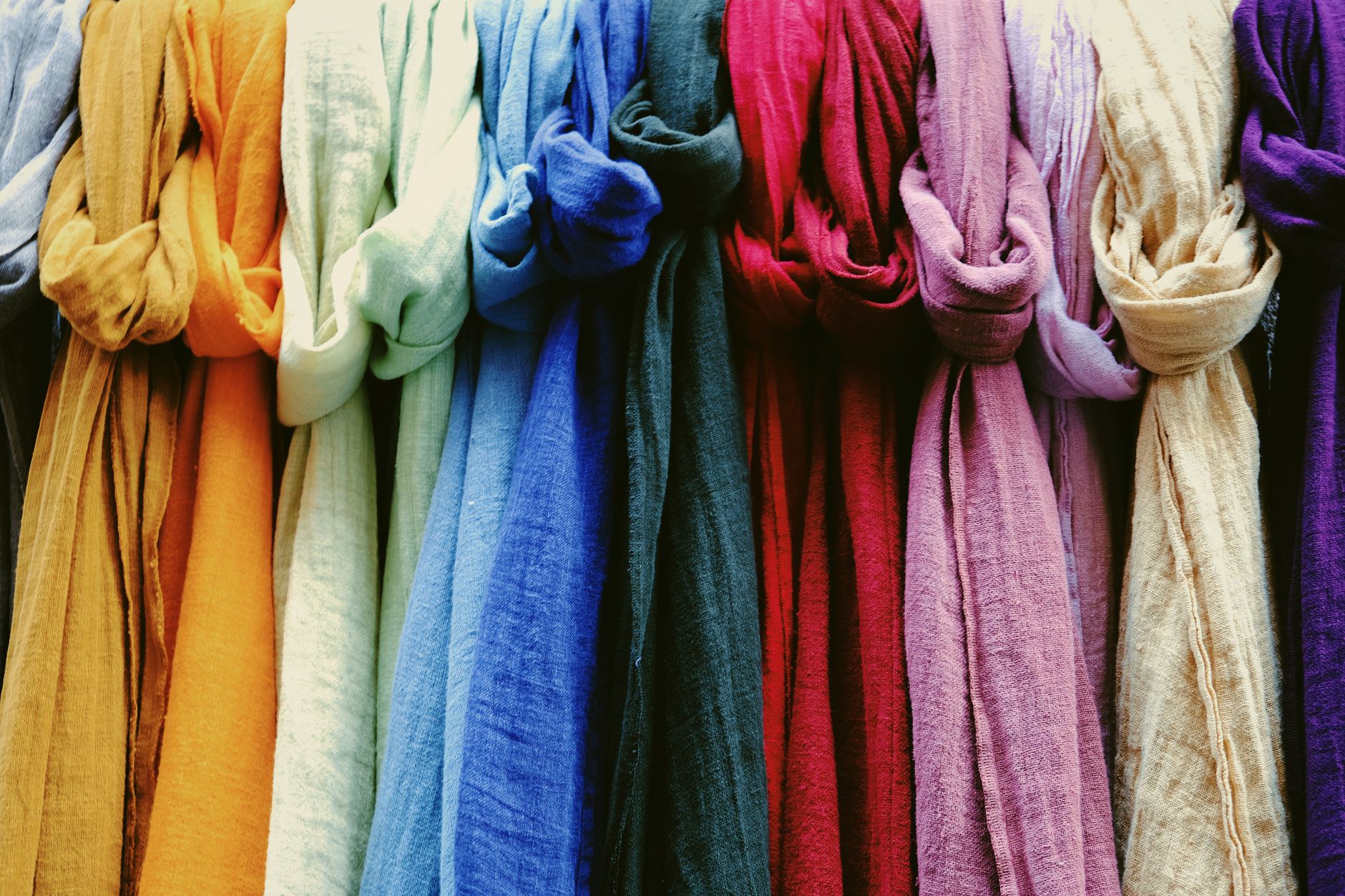
Cashmere earns its reputation the moment it touches skin: warmer than wool, softer than nearly anything else in a closet, and light enough to drape rather than bundle. That combination is why a well-made cashmere scarf isn’t just a seasonal purchase so much as a season’s favorite, the scarf pulled out the first cool morning and worn on repeat straight through the coldest weeks of winter. Understanding what actually makes cashmere worth choosing, and worth choosing well, starts with the fiber itself.
Reading a Cashmere Label Like Someone Who Actually Knows the Fabric
Not all cashmere scarves labeled “luxury cashmere scarves” or “designer cashmere scarves” are made to the same standard, and the difference usually comes down to details most shoppers never learn to look for.
Ply count is the first one. Single-ply cashmere uses one strand of spun yarn; two-ply twists two strands together before weaving, producing a denser, more durable scarf that holds its shape and resists pilling far longer. A two-ply cashmere scarf will typically feel heavier and more substantial in hand than a single-ply scarf of the same size, and it’s usually the better long-term investment for a scarf meant to be worn through several winters rather than one.
Fiber length matters too. Longer cashmere fibers spin into a smoother, stronger yarn with less pilling over time; shorter fibers, often used to cut cost, tend to shed and thin faster. And origin matters: cashmere sourced from regions with a genuinely cold, high-altitude climate, like the Ladakh and Mongolian plateaus, tends to produce a finer, more insulating undercoat than cashmere raised in milder conditions, whatever the label claims.
A quick way to judge quality in hand: run the scarf through a closed fist. Genuine, well-spun cashmere springs back to shape rather than staying compressed, and it feels dense rather than airy when compared side by side with a lower-grade scarf.
Why Cashmere Is the Season’s Favorite
There’s a reason cashmere scarves for women reliably outsell nearly every other accessory once the weather turns. It solves the actual problem cold weather creates, warmth without bulk, in a way few other fabrics manage.
A cashmere scarf knotted loosely over a coat works for the walk into a charity gala in November. Wrapped twice and tucked into a wool coat, it carries through a Manhattan rooftop dinner once the heaters can’t quite keep up with December air. Thrown over the shoulders at a Hamptons weekend by the fire. None of these moments call for anything technical from the wearer. The fabric does the work on its own, which is exactly what makes it a genuine season favorite rather than a once-a-year purchase.
There’s also the New Year’s Eve dinner problem, the one night a season where a heavy coat isn’t an option indoors but the walk to the car still runs cold. A cashmere wrap solves that specific gap better than almost anything else in a closet, doubling as outerwear for the five minutes it’s needed and as a finishing layer for the rest of the night.
Cashmere Versus the Other Fabrics in a Scarf Wardrobe
Cashmere isn’t the only warm-weather-adjacent option, and knowing where it sits relative to the alternatives makes the investment clearer. Wool-silk blends offer more breathability and suit the earlier, milder weeks of fall, when a scarf needs to move between a warm afternoon and a cool evening. Pure pashmina, technically a finer sub-category of cashmere fiber, leans even softer and lighter, often favored for eveningwear where drape matters more than raw warmth. Cashmere itself sits at the center: warmer than wool-silk, sturdier than pashmina, and versatile enough to move from daytime errands to a black-tie dinner without looking mismatched to either.
For a shopper comparing the best cashmere scarves side by side, the deciding factor usually isn’t softness alone, since most genuine cashmere feels soft, but density, ply, and how the scarf holds its shape after repeated wear.
What Sets a Well-Made Cashmere Scarf Apart
The difference between an ordinary cashmere scarf and an exceptional one shows up in the details that don’t announce themselves on a hangtag. Fabric sourced from GOTS-approved factories and dyed using AZO-free processes protects both the fiber’s integrity and the people producing it, a standard Maneesha Ruia holds across its entire scarf collection, cashmere included. The finishing work is where each scarf takes on its character. Hand-embroidery, intricate beadwork, lacework, appliqué, featherwork and stonework are added by skilled artisans, with each technique bringing its own texture, detail and dimension to the design.
Ethically sourced materials and considered production also mean a cashmere scarf built this way is designed to be worn for years, not replaced each season, which is the more honest argument for investing in one well-made piece over several lower-grade options.
Maneesha Ruia’s cashmere collection is built on exactly this standard: two-ply cashmere sourced for density and warmth, finished by hand, and designed to be the scarf reached for first once the temperature drops. For anyone comparing luxury cashmere scarves this season, it’s worth seeing the difference in person rather than by description alone.
Caring for a Cashmere Scarf So It Lasts
Cashmere rewards a little extra care with years of wear. Dry cleaning is the safest route for most cashmere scarves, and steam should never be applied directly over any embroidered or embellished section. Between wears, fold rather than hang the scarf, since hanging can stretch the fiber over time, and store it somewhere cool, dry, and out of direct sunlight, ideally in a breathable bag rather than plastic. As with any cashmere scarf, checking the specific care instructions listed on the product page is always more reliable than general fabric advice, since finishing and blend can vary slightly from one design to the next.
A quick reference for keeping cashmere at its best:
- Dry clean only; never steam directly over embroidery or embellishment
- Fold for storage rather than hanging, to protect the fiber’s shape
- Keep away from direct sunlight and store in a breathable bag
- Let two-ply, closely woven scarves rest between wears rather than wearing them daily
Cashmere Scarf Questions Worth Asking Before You Buy
How can you tell real cashmere from a wool blend at a glance? Genuine cashmere feels notably lighter than wool of the same size and springs back quickly when compressed in a fist, rather than staying flattened. Wool blends, even soft ones, tend to feel denser and heavier for the same warmth.
Is two-ply really worth paying more for than single-ply? For a scarf meant to be worn through multiple winters rather than one, yes. Two-ply cashmere resists pilling and holds its shape noticeably longer, which matters more over three years of wear than it does on the first day.
Does cashmere need to rest between wears? It benefits from it. Letting a cashmere scarf air out and regain its shape between wears, rather than wearing the same one daily, extends how long it holds its density and softness.
The Case for Buying Once, Well
A women’s cashmere scarf bought for softness alone tends to disappoint within a season or two. One bought for fiber quality, ply, and craftsmanship becomes the scarf worn through an entire fall and winter, then the next, without losing its shape or its warmth. That’s the real test of a cashmere scarf worth calling an investment: not how it feels on the first wear, but how it still feels three winters later.
For anyone building a scarf wardrobe around genuine quality rather than a seasonal label, maneesharuia.com is a reasonable place to start: fewer, better pieces, made to become the season’s favorite for more than one year running.