

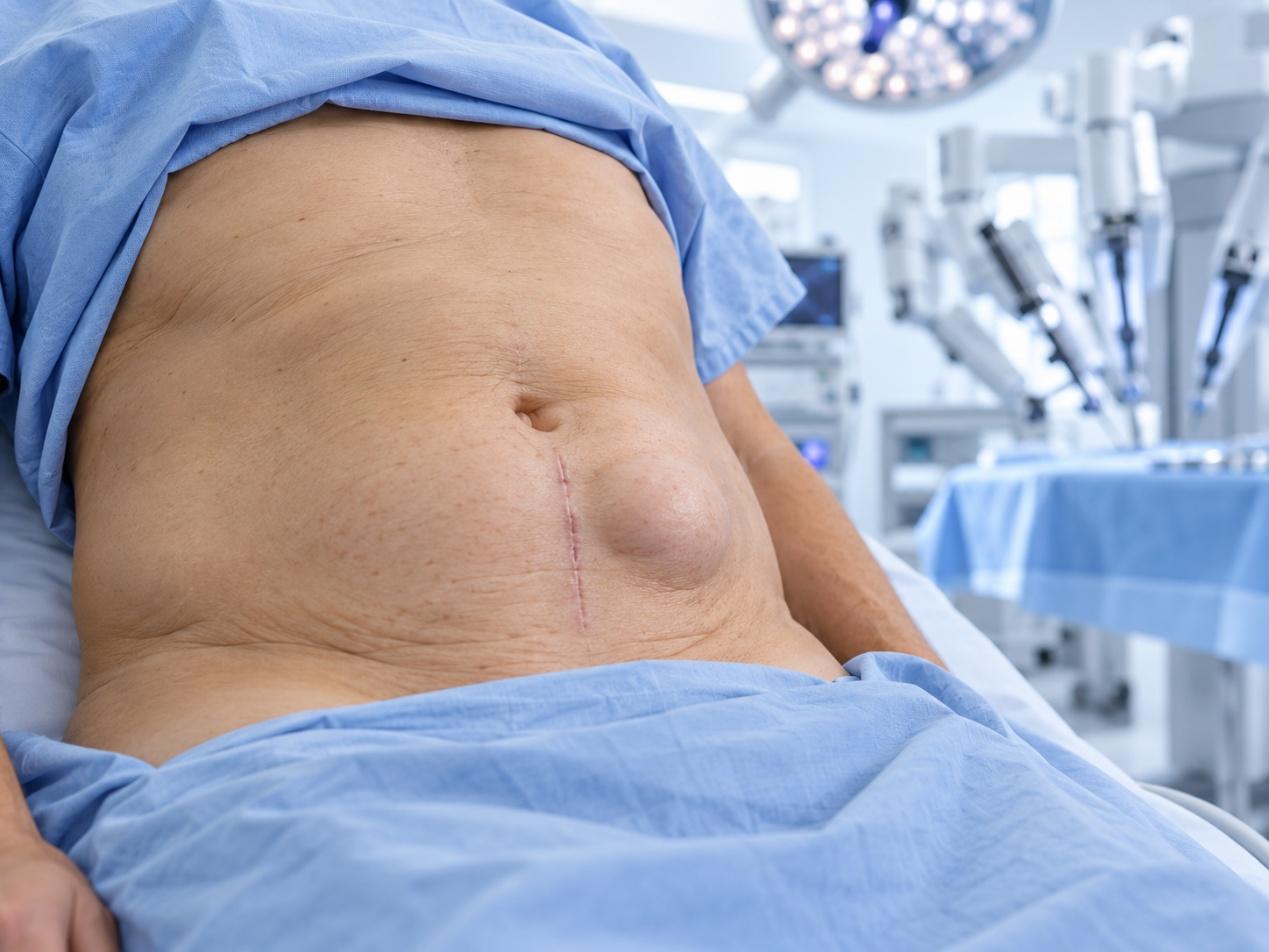
An incisional hernia is a type of abdominal wall hernia that develops at the site of a previous surgical incision. It occurs when abdominal contents, such as part of the intestine or another organ, protrude through an area of weakness created by an earlier operation. Although it may appear within months after surgery, an incisional hernia can also develop several years later.
Incisional hernias are among the most common complications following abdominal surgery and represent the second most frequently encountered type of hernia after inguinal hernia.
Why Does an Incisional Hernia Develop?
During abdominal surgery, an incision interrupts the continuity of the muscles and temporarily weakens the abdominal wall. The scarred area may subsequently become a vulnerable point through which intra-abdominal contents can protrude, particularly when increased pressure is applied to the abdomen.
Several factors may contribute to the development of an incisional hernia. These include multiple previous abdominal operations, wound infection, smoking, excessive physical activity soon after surgery, rapid weight gain, pregnancy before complete wound healing, immune system disorders and chronic coughing. The surgical closure technique may also influence healing, especially when excessive tension is placed on the tissues.
What Are the Main Symptoms?
The most characteristic sign of an incisional hernia is a visible or palpable swelling close to a previous surgical scar. Patients may also experience discomfort, a burning sensation, heaviness or pain in the affected area.
In more complicated cases, the hernia may become trapped and cannot return to its normal position. Severe pain, constipation and nausea may then develop. If the blood supply to the trapped tissue is compromised, intestinal obstruction, ischemia or even perforation may occur, making immediate medical assessment necessary.
How Is It Diagnosed?
Diagnosis begins with a detailed medical history and clinical examination by an experienced surgeon. A CT scan of the abdomen is often used to accurately determine the location and size of the abdominal wall defect and identify the contents of the hernia.
Imaging can also reveal smaller defects that may not be obvious during physical examination, helping the surgeon plan the appropriate procedure.
Modern Surgical Treatment
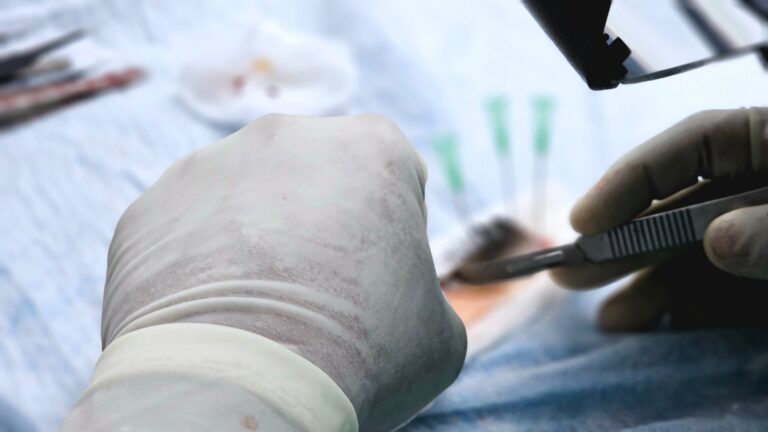
Treatment of an incisional hernia is surgical. Depending on the individual case, repair may be performed through open, laparoscopic or robotic surgery.
Modern minimally invasive techniques include eTEP, which allows mesh to be positioned outside the abdominal cavity, between the layers of the abdominal wall. This approach avoids direct contact between the mesh and the intestine. In larger or more complex abdominal wall defects, eTEP may also be combined with techniques such as TAR.
Robotic application of eTEP using the DaVinci Xi system provides three-dimensional visualization and enhanced precision during demanding abdominal wall reconstruction. The operation is performed through small openings, while the abdominal wall defect is repaired and reinforced with mesh.
Hospital stay after incisional hernia surgery is usually approximately one to two days, depending on the technique used, while complete recovery may be achieved within four to six weeks.
Specialized Care for Incisional Hernias
The selection of the appropriate surgical technique depends on the size of the hernia, previous abdominal operations, existing adhesions and the individual characteristics of each patient.
For specialized evaluation and modern treatment of an incisional hernia or other hernias, patients can contact Dr. Fotis Archontovasilis, specialized hernia surgeon, and his surgical team for an individualized assessment and selection of the most appropriate therapeutic approach.







1 thought on “Incisional Hernia: Causes, Symptoms and Modern Treatment Options”
Comments are closed.