

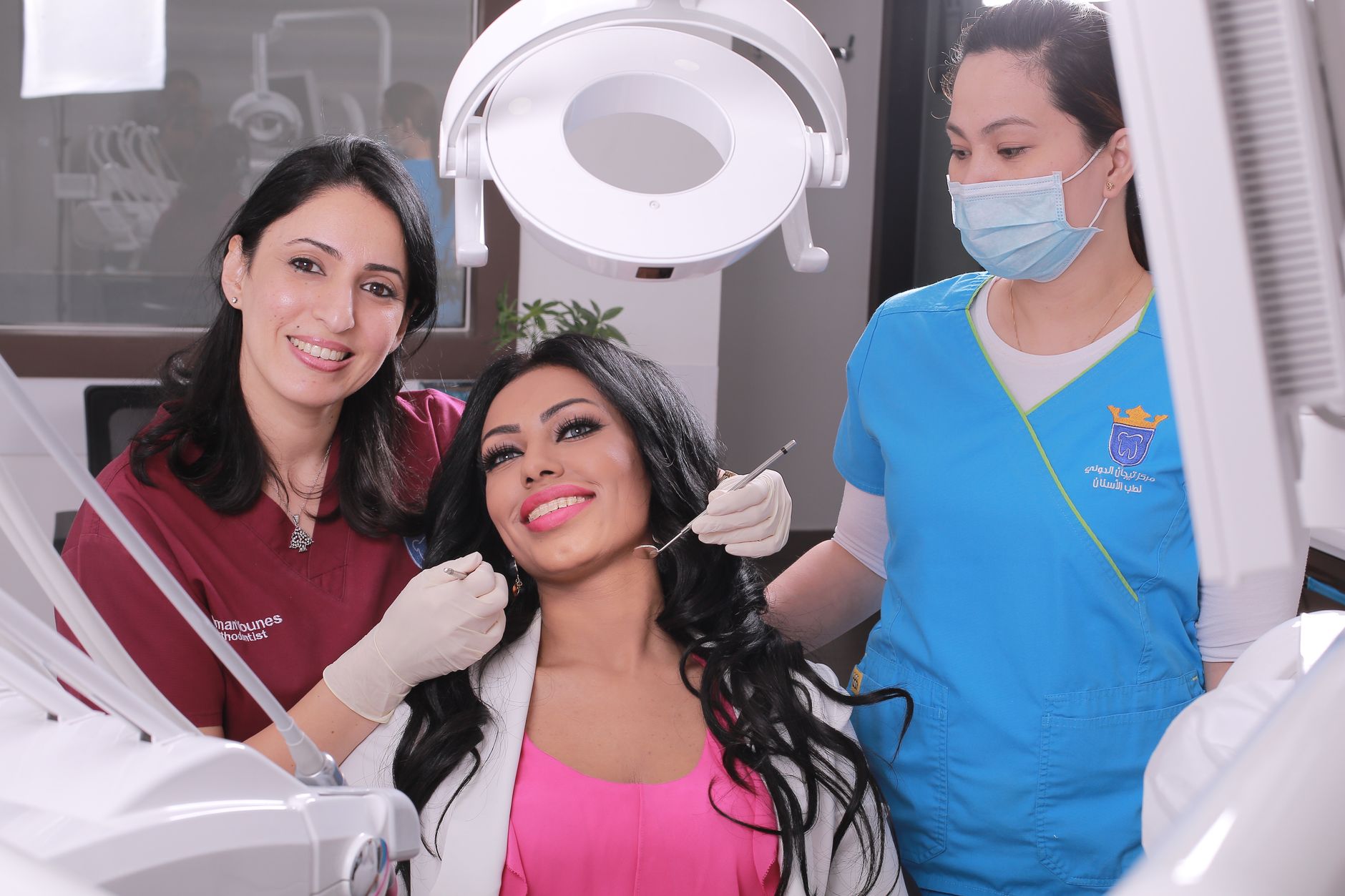
You brush twice a day, you floss when you remember, and you still get that look from the hygienist. The gap between what patients think is fine and what dental professionals actually see in the chair is wider than most people realize. After years of watching patients undo their own progress between visits, dental teams have a pretty consistent list of habits that make their jobs harder and your mouth worse off. This list covers the everyday behaviors that quietly damage enamel, gums, and existing dental work, plus what to do instead. If you have questions about your own routine, talking to a dentist winnipeg mb can help you sort out what applies to you specifically.
1. Using Teeth as Tools
Everyone does it. You're opening a bag of chips, tearing off a price tag, or holding a pen cap while your hands are full, and your teeth seem like the most convenient option. The problem is that enamel is strong for chewing food but not designed for prying, twisting, or gripping hard objects. That kind of force creates micro-fractures that grow over time, and those fractures are exactly where cavities start. You also risk cracking a filling or chipping a tooth edge, which turns a five-second convenience into a dental appointment you didn't plan for.
Keep a small multi-tool or a pair of scissors in your desk drawer, your car, and your kitchen. When you reach for your teeth out of habit, having an alternative within arm's reach makes the right choice the easy choice.
2. Brushing Too Hard
Brushing with more pressure doesn't clean better, it just wears away enamel faster. Many patients use the same force they'd use to scrub a pan, and that aggressiveness causes gum recession over time. Once gums pull back, the softer root surface underneath gets exposed, which leads to sensitivity and a higher risk of decay in spots you can't easily reach with a brush. The American Dental Association recommends using a soft-bristled brush and gentle, circular motions rather than sawing back and forth.
If you're not sure whether you're brushing too hard, look at your brush after a few weeks. When the bristles splay outward instead of staying upright, you're applying too much force.
3. Snacking All Day Without Rinsing
Grazing on snacks, sipping coffee, or nursing a sports drink keeps your mouth in a constant acid attack. Every time you eat, bacteria feed on the sugars and produce acid that demineralizes enamel for about twenty to thirty minutes afterward. If you eat six times a day, your teeth spend a huge portion of the day under acid stress with no recovery window. The fix isn't necessarily giving up snacks, it's rinsing with water after you eat and limiting sugary or acidic foods to mealtimes when your saliva flow is higher.
Swapping sugary drinks for water, or at least alternating sips, gives your mouth a chance to neutralize acid before it does lasting damage.
4. Skipping the Night Guard for Grinding
Teeth grinding and clenching at night is one of the most common things dental teams spot that patients have no idea they're doing. The damage doesn't happen in one dramatic event, it happens gradually as enamel wears flat and teeth develop cracks. Over time, grinding can also cause jaw pain, headaches, and loosening of existing restorations. Many patients assume grinding is rare or that they'd wake up from it, but most grinding happens during lighter sleep stages and goes completely unnoticed.
A custom night guard is the standard protection, and while over-the-counter boil-and-bite versions exist, they rarely fit well enough to stay in place or distribute pressure evenly. If you wake up with a sore jaw, sensitive teeth, or headaches near your temples, ask for an evaluation at your next cleaning.
5. Treating Bleeding Gums as Normal
Blood in the sink after brushing or flossing gets dismissed by a lot of patients as a sign that they brushed too hard or that bleeding is just something that happens. In reality, bleeding gums are the earliest sign of gum inflammation, and the longer you ignore it, the more the supporting structures around your teeth break down. Gingivitis is reversible with better cleaning habits, but periodontitis, the advanced form, causes bone loss that can't be undone without professional intervention. The National Institute of Dental and Craniofacial Research notes that gum disease ranges from mild inflammation to serious tissue and bone damage.
Bleeding that persists for more than a few days of consistent flossing deserves professional attention rather than a shrug.
6. Whitening Without Dental Supervision
Whitening strips, LED kits, and DIY charcoal pastes fly off shelves, but the results are inconsistent and sometimes counterproductive. Charcoal is abrasive and actually thins enamel while making teeth look temporarily whiter from the contrast. Overusing whitening strips can irritate gums and cause dramatic tooth sensitivity that lingers for weeks. Deeper stains, like those from tetracycline or trauma, don't respond to surface whitening products anyway, so patients spend money and get no visible change. Professional whitening starts with an exam to confirm your teeth are healthy enough for treatment, then uses higher concentrations of peroxide under controlled conditions.
If you're considering whitening, get evaluated first. You might find out that your stains are actually coming from something else, like enamel erosion or a failing filling, that needs a different approach.
7. Ignoring Sensitivity Until It Becomes Pain
Sensitivity to cold or sweet things is often shrugged off as a normal quirk, but it frequently signals an underlying issue like a small cavity, an exposed root, or a failing restoration. Patients adapt by avoiding cold drinks or chewing on one side, and that workaround keeps the problem hidden until it escalates into a full-blown infection requiring a root canal. Early intervention for sensitivity is usually a small filling or a desensitizing treatment, while delayed care turns into a much bigger procedure.
If sensitivity appears suddenly or gets worse over a few weeks, that's worth mentioning at your next appointment rather than waiting until it hurts constantly.
8. Postponing Restorations When They Fail
Old fillings, crowns, and bridges have a finite lifespan, but patients often wait until something breaks or falls out before booking an appointment. The space under a failing crown or around a cracked filling traps bacteria and food debris, and decay progresses rapidly in those protected areas. By the time the restoration fails visibly, the tooth underneath often needs more invasive treatment than the original problem. Dental materials break down silently, so the only way to catch a failing restoration early is through regular x-rays and clinical exams, which is why consistent visits matter.
If a crown or filling has been in your mouth for over a decade, you're on borrowed time regardless of how it feels, and catching problems before they become emergencies is the entire point of routine care.
None of these habits require perfection to fix, but each one is a choice you make daily that compounds into either better oral health or more dental bills later. The people who see the results of those choices firsthand are the ones recommending you change course now.








1 thought on “8 Things Your Dental Team Wishes You’d Stop Doing to Your Teeth”
Comments are closed.