

Why Replacing Missing Teeth Matters
For Orlando residents, a missing tooth can affect more than a photograph at Lake Eola or a dinner out with friends. It may change the way a person chews, speaks, cleans around neighboring teeth, or distributes pressure across the bite. Cosmetic dental implants from Southpark Dental Group are one option for patients considering a fixed replacement. The practice’s Orlando, Florida implant page explains its approach to replacing missing teeth with dental implants and implant-supported dentures, making it relevant for people who want to discuss both function and smile appearance with a local restorative dental team. Waiting to replace a tooth is not always an emergency, and the right timing varies from patient to patient. Still, a space in the smile can allow nearby teeth to move over time, particularly when a back tooth is missing. The American Dental Association notes that adults ages 20 to 64 have an average of three or more decayed or missing teeth, and that missing teeth may affect chewing and speech.
The Three Main Tooth-Replacement Options
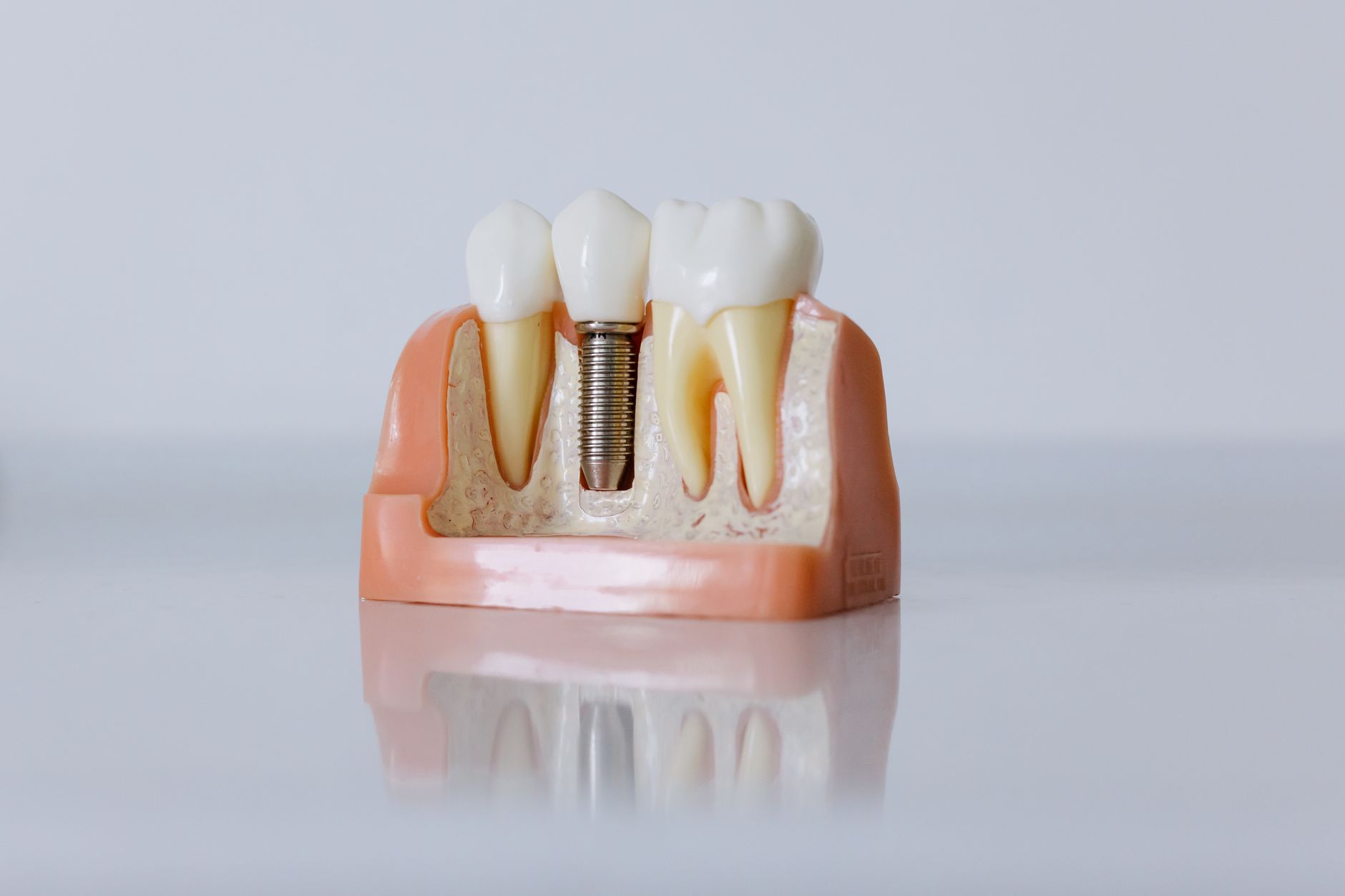
Dental Implants
A dental implant is a post placed in the jawbone to serve as an artificial tooth root. After healing, it may support a single crown, a bridge, or a full-arch denture. Because an implant supports the replacement tooth from within the jaw, it does not require a neighboring natural tooth to be shaped for a single-tooth restoration.
- May replace one tooth, several teeth, or an entire arch.
- Usually involves surgery and a healing period before the final restoration is completed.
- May require bone grafting if there is not enough bone to support the implant.
- Can support removable or fixed dentures for people missing most or all teeth.
Dental Bridges
A traditional dental bridge fills a gap with an artificial tooth held in place by crowns on the adjacent teeth. An implant-supported bridge uses implants rather than natural teeth as supports. A bridge can be a practical fixed option when the gap is short, and the supporting teeth are healthy enough for the design.
- May replace one tooth or multiple teeth in a row.
- Often takes less time than an implant because implant healing is not required.
- Traditional designs can require permanent changes to teeth beside the gap.
- Need daily cleaning beneath the artificial tooth and around the supporting teeth.
Removable Dentures
Partial dentures replace several missing teeth, while complete dentures replace most or all teeth in an upper or lower arch. They can be removable and may be made before or after extractions, depending on the treatment plan. Implant-supported dentures add attachment points for greater stability, which may reduce movement during eating or speaking.
How Implants, Bridges, and Dentures Compare
- Support: Implants are anchored in the jawbone. Natural teeth or implants support bridges. Dentures rest on the gums and jaw ridge, unless implants are added.
- Removability: Implants and bridges are generally fixed. Dentures are usually removed for cleaning, although some implant-supported options are fixed.
- Surgery: Implant placement generally requires surgery. Conventional bridges and removable dentures generally do not, unless implants are part of the plan.
- Typical use: Implants can treat one missing tooth through a full arch. Bridges work well for a defined gap. Dentures are often considered when several or most teeth are missing.
- Daily care: Every option requires consistent home care and professional checkups.
Who May Be a Candidate for Dental Implants?
Age alone does not determine whether implants are appropriate. A dentist evaluates gum health, remaining teeth, jawbone volume, bite forces, tobacco use, overall health, medications, and healing considerations. Some medical conditions require additional planning or coordination with a physician, rather than automatically ruling out treatment.
- Examine the missing tooth area and nearby teeth.
- Evaluate gum condition and bite alignment.
- Use imaging to review bone and nearby anatomical structures.
- Discuss health history, medications, and healing factors.
- Compare fixed and removable treatment choices.
How Long Does Treatment Take?
There is no universal timeline. A bridge may be completed relatively quickly because it does not depend on implant integration. Dentures require impressions, design, fitting, and follow-up adjustments. Implant treatment commonly includes planning, placement, healing, and attachment of the final crown, bridge, or denture. Healing can take several months in some cases, although treatment plans differ.
Cost Questions to Ask Before Deciding
The lowest starting price is not always the lowest long-term cost. Ask for a written plan that identifies the services and materials included. This makes it easier to fairly compare an implant, bridge, or denture.
- Does the estimate include the final crown, bridge, or denture?
- Are imaging, extraction, sedation, laboratory, or surgical fees included?
- Could bone grafting or other preparation be needed?
- Will the restoration need relining, repair, or replacement later?
- Does insurance contribute to any stage of care?
Daily Care After Tooth Replacement
Natural teeth supporting a bridge still need thorough brushing and cleaning around the restoration. Implant restorations need cleaning along the gumline and regular dental visits. Dentures should be cleaned daily, stored as directed, and checked when the fit changes. Pain, bleeding, swelling, looseness, or a sudden change in bite should be reported promptly. The ADA’s overview of dental implant treatment also emphasizes that healing, restoration design, and general health can affect an implant plan.
Common Questions About Tooth Replacement
Are dental implants better than bridges?
Neither is automatically better. Implants may avoid altering healthy neighboring teeth, while bridges may offer a shorter route to a fixed replacement for a missing tooth. Bone support, gum health, treatment goals, and budget all matter.
Can dentures look natural?
Yes. Dentures can be designed to complement facial features and remaining teeth. Their comfort and stability depend on the fit, bite, gum tissue, jaw ridge, and the use of implants for support.
How long do dental implants last?
Implants can function for many years with consistent home care and professional maintenance. The crown, bridge, or denture attached to an implant may eventually need repair or replacement.
Conclusion
Dental implants, bridges, and dentures each provide a useful way to replace missing teeth in Orlando, with benefits that vary depending on a patient's needs and oral health. The best choice is based on the condition of the entire mouth, not just the space. Factors such as gum health, jawbone support, the number of missing teeth, bite alignment, and daily habits can all influence which option is appropriate. A detailed dental examination and written treatment plan can help clarify expected comfort, treatment timing, maintenance requirements, appearance, and overall cost before treatment begins. Patients should also ask about healing time, insurance coverage, and follow-up visits. By understanding these details and discussing concerns with a dental professional, patients can make an informed decision that supports their comfort, function, and long-term oral health.







2 thoughts on “Dental Implants, Bridges, and Dentures in Orlando, Florida: How to Choose the Right Tooth Replacement”
Comments are closed.