

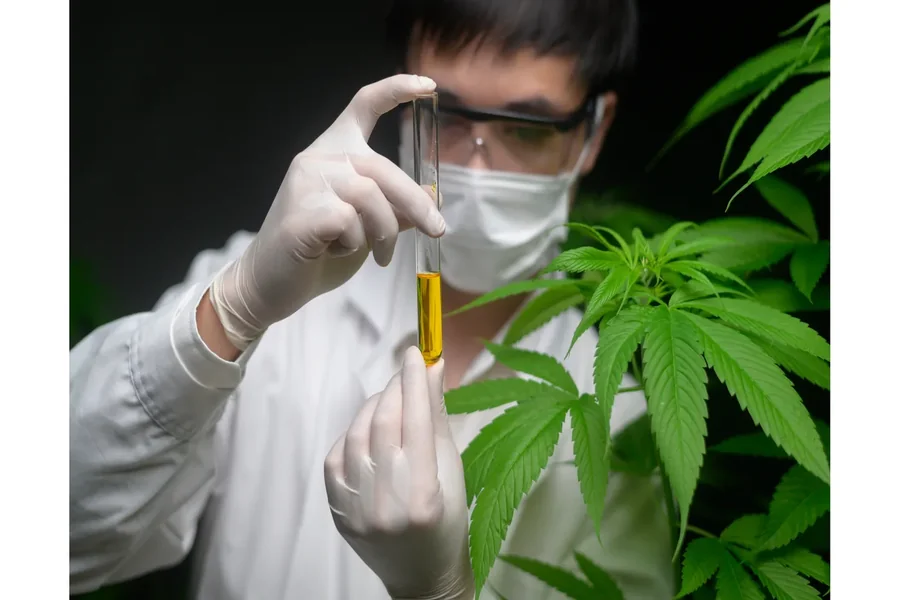
The hemp industry is becoming more informative as customers are now focusing more on the information and quality of products before purchasing. Product details, impressive packaging, and marketing language may offer the introductory package, but these factors never tell the whole story. Lab reports are much more important, as they allow customers to pay more attention to cannabinoid contents, potency, contaminants, and test results.
Writers and creators who write for hemp products must understand lab reports as a useful factor. A lab report may transform an unclear statement such as a tested product into particular details that can be explained and understood.
To read the hemp lab results and buy from Dr Ganja store, there is no need to become a lab scientist. The main thing is to know which sections need attention, understand what the numbers explain, and identify the questions of the reports. A careful and attentive reader may use all such documentation for creating balanced and information-based content related to hemp products.
Understanding the Basic Structure of a Hemp Lab Report
Writers and creators must learn the basics of creating the report to make it easier and simpler, instead of creating complex results such as basic information overwhelmed with technical details.
1. Product and Sample Identification
At first, there is a need to identify the product and sample before making basic personal wellness plans. This step includes the name of the products, sample number, batch number, test date, and collection date.
All these details matter a lot, as lab results are only applied to samples that are being tested. If the lab report has no connection with the sample being discussed, it becomes challenging to check its value.
2. Laboratory Information
The report must explain the lab that has held the analysis. It allows readers to completely understand the place of testing and provides background of the results.
Professional and impressive documentation is not proof of an accurate test. Writers must check if the report offers all the necessary details for establishing what was tested, where it was tested, and who tested it.
3. Testing Categories
For a variety of hemp products, there are different types of tests. A test report must include cannabinoids content, terpene content, microbial testing, heavy metal contaminations, pesticides, solvent and other analysis.
Not all tests are suitable for all products, so readers must not think that one test category will cover everything.
4. Results and Units
Lab results commonly use specific units and measurements, so the numbers must be explained in such a context.
The values explained as a percentage, milligram per gram, or milligram per serving may communicate differently. So proper understanding of units is as important as knowledge of numbers.
How to Read the Cannabinoid Profile and Potency Results?
The cannabinoid section is considered the most closely tested part in the hemp reports. It explains the types of cannabinoids present in the product and their measured contents.
Creators should explain all such reports to readers by simply following the rule: never focus on a single number without knowing what it actually represents.
Identify the Cannabinoids Listed
There are some cannabinoids present, including CBG, CBGA, THC, THCA, and CBD, based on the type of product and test method.
A variety of cannabinoids is helpful to explain the overall cannabinoid profile in the product. However, what each result explains is based on the formulation of the product and how the lab reports its measurement.
Understand Percentage and Milligram Measurements
The results for cannabinoids are displayed as percentage and milligram per gram measurements, which further explain concentration in a variety of ways.
A percentage is the explanation for the presence of certain cannabinoids related to the sample; however, a milligram per gram explains the communication of quantity in a certain amount of product. Writers must recognize the units and then compare two numbers.
Pay Attention to Total Cannabinoid Content
In a report, include the individual cannabinoid results and total or calculated cannabinoid figures.
While explaining potency, it is necessary to describe whether you are referring to a single cannabinoid or the cannabinoid profile. Just saying a product is of higher potency without telling the measurement may cause confusion.
Look at Detectable and Non-Detectable Results
Some cannabinoids are labeled as Not detected or below the lab’s results limits. It does not mean that there is no compound at each level.
However, it means that the sample is not detected above the lab-specific detection limits. Writers must stop transforming Not Detected into a claim that there is nothing present.
How Writers and Creators Can Interpret Lab Reports Responsibly?
Writers, creators, and reviewers face the major challenge of translating the technical lab results into simple and easier language that helps readers understand without feeling confused.
A lab result must be assumed to be evidence about the specific product, but not as a way to make multiple claims about the complete product line.
1. Match the Report to the Product
Ensure you check if the lab results are related to the product being discussed. Check for product details, names, batch number, and test date to create a connection.
2. Separate Facts From Interpretation
A stronger report explains the difference between the measured sample in the lab and what the results mean according to the creator.
A report may explain the measured cannabinoid contents. However, it doesn’t prove that the user will enjoy the specific effects.
3. Explain Technical Terms in Plain Language
There is no need to have scientific training to understand all the main points of the lab result. Instead of copying lab terms, readers must explain what the term means.
For example, consider ND as the substance is Not Detected above the lab report limit instead of saying that there is no substance present in the product.
4. Avoid Treating One Report as a Permanent Guarantee
Lab testing is applied to all the samples that were tested. Products vary in all batches, so the testing of one batch is not necessarily representative of the composition of other batches. Creators must focus on dates and batch details while explaining lab reports.
Most Important Part of a Hemp Lab Report to Understand
Not a single section is important for every situation because the testing purpose may identify which information needs more attention. However the best place to start with the identification of product, cannabinoids content and lab tested results
First, determine the right test result for the product. Then check out the cannabinoids contents and examine any extra relevant testing.
1. Start With Sample Identification
Check out the name of the product, batch number, sample details, and testing date. This information is helpful to know if the report is actually relevant to the product.
2. Check the Cannabinoid Profile
After that, check out the cannabinoids and their concentration. Focus more on the units used, such as percentage and milligrams; link details in different ways.
3. Review Safety Testing
After knowing potency, check for testing for microbes, solvents, contaminants, heavy metals, and pesticides. The exact category is based on the test program and product.
Ensure you consider the testing report as the complete documentation and identify what it tells you.
Can a hemp lab report prove that a product is high quality?
A lab report is valuable to offer you all evidence related to products but never guarantees the overall quality.
Testing is valuable to offer details about cannabinoid concentration and contaminants, but other characteristics may be based on different factors, including storage, packaging, ingredients, manufacturing, and curing. Based on the test, a report can show.
- Cannabinoid contents
- Certain contaminants
- Pesticide reports
- Heavy-metal report
- Microbial report
- Residual solvents
- Other measured characteristics
For these reasons, lab test results are used as the main part to evaluate products instead of an overall replacement for quality details.
Conclusion:
By having a complete understanding of hemp reports, users may get complete information about the product instead of a confusing document. Customers must start with the identification of the sample, lab details, testing date, and batch details, then move towards the safety section and cannabinoid contents. Proper focus on units, report limits, and testing categories may explain everything rather than just looking at the potency number.
Simply put, customers must understand the reading of reports to create a strong base for explaining hemp products. Instead of providing different claims regarding the product, companies must check the information, explain everything in easy language, and allow readers to understand what they actually are buying. This valuable approach makes hemp products helpful and allows users to make the right decision by choosing a fine product.









2 thoughts on “Writer’s or Creator’s Look at the Hemp Industry -How to Understand Lab Reports?”
Comments are closed.