

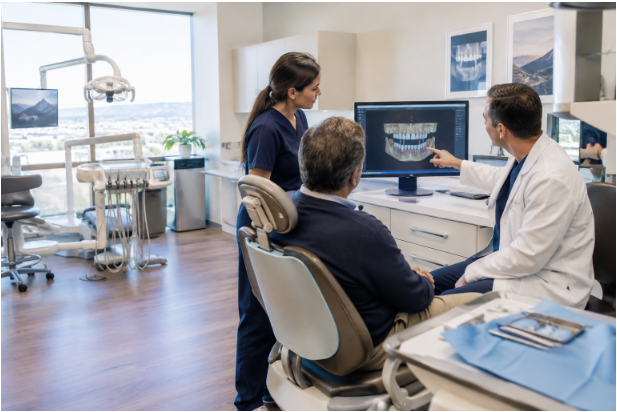
The right choice is rarely based on a single price or a quick promise. A thorough discussion with a qualified dental team should help you understand what treatment involves, whether another option may be more appropriate, and what commitment will be required after the final teeth are placed.
Why Careful Planning Matters
Full-arch care involves more than placing implant posts in the jaw. The dental team must evaluate jawbone volume, gum health, remaining teeth, bite balance, facial support, and the design of the replacement teeth. Diagnostic imaging and an in-person examination are essential because anatomy, medical history, and oral conditions differ from one patient to another.
Overall health can affect healing and treatment suitability. The FDA guidance on dental implants advises patients to discuss benefits, risks, health considerations, smoking, and the specific implant system being used with their dental provider. That conversation should happen before anyone commits to a plan.
What Full-Arch Treatment Involves
A full arch is one complete row of replacement teeth, either upper or lower, supported by full mouth dental implants. A full-mouth plan generally means treatment for both arches. Depending on the design, replacement teeth may be fixed in place by a clinician or removable for cleaning and maintenance.
Terms such as “same-day teeth” can be confusing. In many cases, they refer to a temporary restoration placed soon after surgery. The final restoration may be made after healing and follow-up evaluation. Extractions, grafting, bone condition, medical history, and the selected restoration all influence the timeline.
Questions About Candidacy
Candidacy is personal, and age alone does not provide a complete answer. A good consultation should address the condition of your mouth and your broader health, rather than treating every patient as though they need the same solution.
Ask These Questions
- Are any of my natural teeth healthy enough to keep?
- How much bone is available where implants may be placed?
- Do I have gum disease, infection, or another issue that needs treatment first?
- Could smoking, diabetes, medications, or another medical condition affect healing?
- Will I need bone grafting or another preparatory procedure?
- Are removable dentures, individual restorations, or another approach better suited to my goals or budget?
Questions About the Dental Team
Full-arch treatment often involves surgical, restorative, and hygiene care. Ask who will examine you, create the plan, place the implants, design the replacement teeth, and make future adjustments. It is also reasonable to ask how the team handles complex cases, what imaging and digital planning tools are used, and whether they can show examples of comparable treatment.
You should also know whom to contact if you develop pain, swelling, looseness, a broken tooth, or a bite that feels different. Clear follow-up access matters as much as the day of surgery.
Questions About the Treatment Plan
- How many implants do you recommend, and why does that number fit my anatomy?
- Does the plan include extractions, grafting, sedation, temporary teeth, and final teeth?
- What healing period should I expect, and what appointments will follow surgery?
- What foods, activities, and cleaning steps will be restricted during recovery?
- What materials will be used for the temporary and final restorations?
- How will my bite, speech, appearance, and comfort be evaluated and adjusted?
- What happens if an implant does not heal as expected or a restoration needs repair?
Questions About Cost and Financing
Quotes can vary because they may cover different scopes of care. One estimate may address a single arch, while another includes both arches. Ask for an itemized written estimate rather than relying on an advertised starting price.
Review whether the total includes examinations and 3D imaging, extractions, grafting, sedation, implant surgery, temporary teeth, final teeth, follow-up visits, adjustments, and any repair or replacement terms. Compare what each plan includes, not only the final number.
Questions About Recovery and Maintenance
Dental Implant-supported teeth still require consistent home care. Patients need to clean around and beneath the restoration using the techniques and tools recommended by their dental team. Before treatment is complete, ask for a hands-on hygiene demonstration and written instructions you can follow at home.
Regular exams can help identify gum irritation, bite changes, loose components, and wear before those issues become more difficult to manage. A long-term evidence review of complete-arch implant-supported restorations found favorable survival outcomes while also reporting biological and technical complications that may require maintenance over time.
Red Flags to Watch For
- Pressure to decide or pay on the same day.
- Promises of a perfect result for every patient.
- A price with no explanation of included services.
- No discussion of alternatives, limitations, or possible complications.
- No clear follow-up plan after surgery or final delivery.
- A focus on appearance without discussing chewing, speech, cleaning, comfort, and bite balance.
A Simple Consultation Checklist
- Bring a current list of medications, supplements, allergies, and medical conditions.
- Share tobacco use, prior surgeries, and relevant dental history.
- Bring recent dental records or imaging when available.
- Write down concerns such as loose dentures, pain, broken teeth, or difficulty eating.
- Request a written treatment plan and itemized cost estimate.
- Consider bringing a trusted family member or friend to take notes.
- Give yourself time to compare options before choosing extensive treatment.
Final Thoughts
Full-arch dental implants can be a meaningful option for people with extensive tooth loss or failing teeth, but they require realistic expectations and long-term commitment. Clear answers about candidacy, costs, recovery, maintenance, and provider responsibilities can make it easier to choose care that fits your health, goals, and daily life.






1 thought on “Questions to Ask Before Choosing Full-Arch Dental Implants”
Comments are closed.