

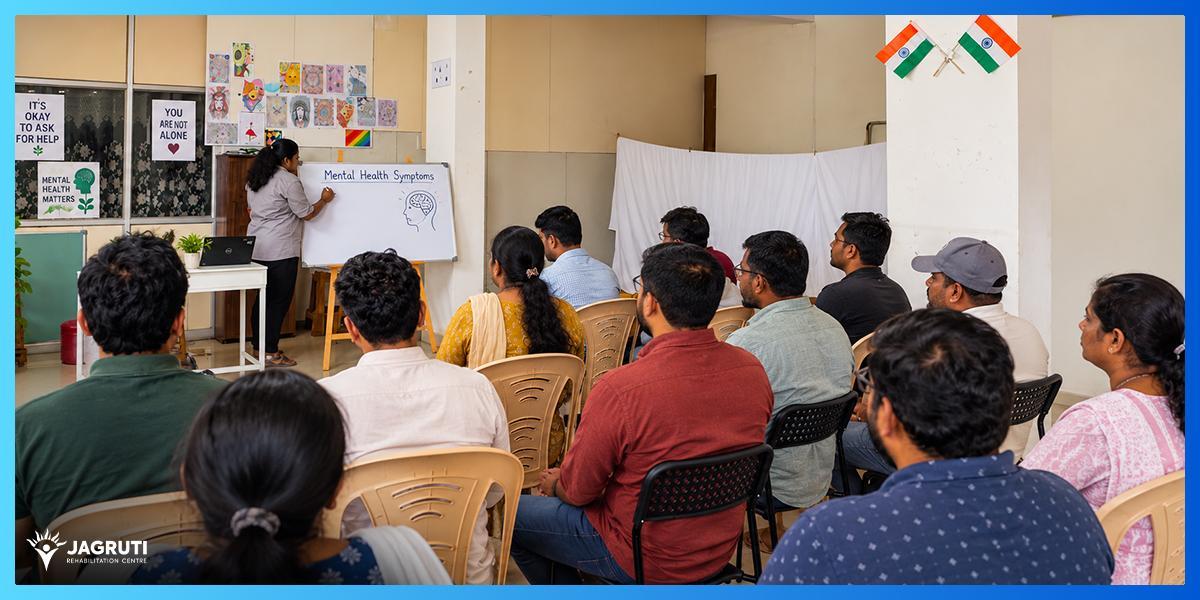
Take two colleagues who work in the same Bangalore office, both of whom have depression but who look nothing alike. One stops replying to messages and slips away from team lunches, while the other gets louder and funnier, stays back till nine every night and insists he is fine. The condition is the same, yet the picture is completely different.
Bangalore makes this easy to miss. It is a city of long commutes, tech parks, shared flats and filter coffee at six in the evening, and many of its people moved here from Patna, Kochi, Imphal or Coimbatore, each carrying their own way of talking about stress. Symptoms rarely show up the way a textbook lists them, because they show up inside real lives.
Same Diagnosis, Very Different Signs
Mental health conditions do not follow a script. Depression is often described as sadness, but plenty of people never feel sad at all, and they describe feeling flat, irritated or tired in a way that sleep does not fix. Anxiety can be a racing heart for one person and a stubborn stomach ache for another, while someone else may check the same door lock four times before leaving the house.
Biology plays a part, and so do temperament, age, sleep, hormones, family history and whatever a person has lived through. A teenager with anxiety might refuse to go to school and get called lazy. A man in his forties might start drinking more and get called stressed. Neither label really explains what is going on.
This is also why families in the city often search for a mental hospital in Bangalore only after months of confusion, when the signs have become too big to explain away as a bad phase. By then, everyone around the person has usually offered a different theory, whether it is overwork, weak will or bad company. The real picture, once a professional looks at it, is usually more layered than any of those explanations.
Two people with the same diagnosis may need quite different care. That is not a flaw in the system, because people simply experience illness in their own ways.
Culture, Language and What Gets Noticed
In many Indian homes, emotional pain gets spoken about in the language of the body. People say their head feels heavy, that there is a burning in their chest, or that they cannot eat anything. These are real sensations, and they are often the only words available when talking about feelings was never part of dinner table conversation. A grandmother may say her heart feels heavy, while her grandson may say he is just bored.
Bangalore adds another layer. A single conversation can slide between Kannada, Tamil, Telugu, Hindi and English without anyone noticing. The word for hopeless in one language might not have a clean match in another, so a person may describe what they feel in a way that sounds vague, or even dramatic, to a listener who does not share that language.
Gender shapes this too. Women are often told they are just being emotional, and men are told to toughen up, so their distress tends to come out as anger, withdrawal or drinking instead. Older adults may talk about aches, poor memory or loneliness rather than low mood. Children usually show it through behaviour, such as clinging, tantrums, falling grades or going quiet.
None of this is wrong or unusual. It simply means the signs can be missed when people expect one fixed pattern.
How City Life Can Hide or Reshape Symptoms
Bangalore runs on schedules, with night shifts for clients in other time zones and two hours in traffic each way. Delivery riders race the clock, students in PG rooms live far from home, and startup founders treat exhaustion like a badge of honour.
In that environment, a lot gets explained away. Irritability becomes work pressure, insomnia becomes deadline season, and skipped meals become being too busy. Someone living alone, with family in another state, can go weeks with nobody noticing a change in how they sound on the phone.
The opposite happens too. Because everyone around is stressed, a person might assume what they feel is normal and keep going. A software engineer can ship sprint after sprint on four hours of sleep while dreading every Monday, and manage like that until the day they cannot.
When symptoms reach the point where daily life starts slipping, a Psychiatric Hospital in Bangalore is often where a proper assessment and structured care become possible. A good evaluation looks at the whole person, not just the loudest symptom, including sleep, habits, relationships, work, medical history and how the person describes things in their own words.
When Differences Become a Reason to Seek Help
Because symptoms vary so much, waiting for a classic presentation can mean waiting too long. A few things are worth taking seriously, whatever they look like on the surface:
- A clear change from how someone usually is, lasting more than a couple of weeks
- Sleep or appetite that has shifted a lot
- Pulling away from people they were close to
- Trouble keeping up with work, study or basic routines
- Increased use of alcohol or other substances to cope
- Talk of feeling like a burden or of not wanting to be here
Any of these matters on its own. A person does not need to tick every box, and they do not need to look the way they think someone with a mental health condition should look.
For families, the most useful habit is probably the simplest one, which is to notice change, ask gently and listen without rushing to fix anything. If things do not ease, a professional can take a closer look.
Rehabilitation Support in Bangalore
If you or a family member is looking for professional mental health support in Bangalore, you can contact:
Jagruti Rehabilitation Centre in Bangalore











2 thoughts on “Why Do Mental Health Symptoms Vary from Person to Person?”
Comments are closed.