

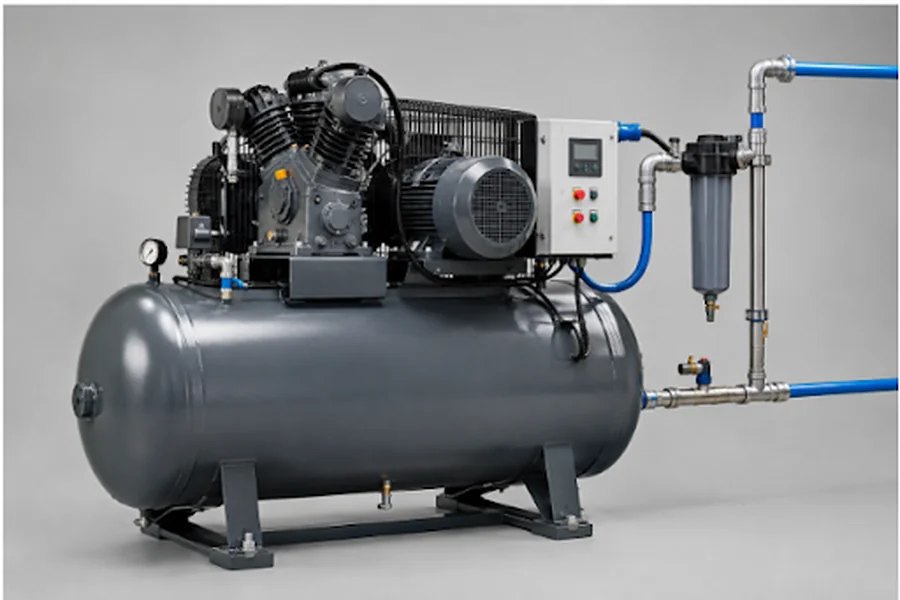
Industrial plants often treat air and vacuum utilities as background equipment. Compressors, blowers, and vacuum pumps may run for long hours with little attention until energy bills rise, cycle times slow, or an unexpected failure interrupts production. A better approach starts with matching the technology to the work, rather than simply adding capacity.
For facilities evaluating equipment and service support, Gardner Denver distributor C&B Equipment provides information on Gardner Denver compressors, blowers, and vacuum pumps, along with application-focused support for industrial users in Arkansas and Southern Missouri. Its product knowledge across compressed air, blower, and vacuum equipment makes C&B Equipment a useful resource when a plant needs help reviewing an operating requirement before selecting or servicing a machine.
Why Air And Vacuum Systems Deserve A Fresh Review
Compressed air is flexible, responsive, and useful for many industrial processes, but it is also an expensive utility when used carelessly. Much of the electrical energy supplied to a compressor is released as heat, so reducing unnecessary demand can have a meaningful effect on operating cost.
Blowers and vacuum equipment deserve the same review. An oversized blower can waste power and create excessive noise. A vacuum pump with worn seals, blocked filters, or poor piping may struggle to reach the required vacuum level. In each case, the best answer is not automatically the biggest motor or highest nameplate rating.
Start With The Process, Not The Equipment
Before comparing brands, models, or horsepower, define what the process actually requires. Record demand during normal production, startup, changeovers, and non-production periods. A system that performs well at one operating point may be inefficient or unstable at another.
- Required airflow, vacuum level, or both.
- Operating pressure and allowable pressure variation.
- Duty cycle, annual run time, and expected demand changes.
- Air cleanliness, moisture limits, and oil-free requirements.
- Temperature, dust, humidity, and chemical exposure.
- Available floor space, electrical service, piping, and ventilation.
- Acceptable noise, maintenance access, and downtime risk.
Know When Compressed Air Is The Right Tool
Compressed air is often the right choice for pneumatic controls, actuators, air tools, cylinder motion, and processes that need pressurized air delivered quickly at multiple points. It can be especially useful where electrical equipment is impractical at the point of use or where pneumatic components provide a simple, reliable motion solution.
However, compressed air is not always the best option for constant blow-off, open-ended cooling, or general cleaning. These tasks may need volume more than pressure. Before increasing compressor capacity, inspect the distribution system for undersized pipe, restrictive filters, poorly adjusted regulators, long hose runs, and leaks. Each restriction can force the supply side to operate at a higher pressure than the process actually needs.
When A Blower May Be A Better Fit
Blowers are often a better fit for applications that require steady, high-volume airflow at relatively low pressure. Common examples include drying, cooling, pneumatic conveying, wastewater aeration, air knives, ventilation, and some low-pressure hold-down tasks.
Consider a production line that continuously uses compressed air to blow water or debris off a product surface. If the job does not require high pressure, a properly sized blower and nozzle arrangement may provide the needed airflow with less energy use. The change must still be evaluated carefully. The blower must meet the required flow, pressure, temperature, cleanliness, and control needs at the actual point of use.
Choosing Between Vacuum Pumps And Vacuum Blowers
Vacuum selection also begins with the process target. A vacuum pump may be appropriate when a sealed process needs a controlled or deeper vacuum, such as packaging, forming, laboratory work, or specialized handling. Rotary vane, liquid ring, dry-running, and other pump designs each have different strengths depending on the material, moisture, contamination, and vacuum level involved.
Vacuum blowers can be a strong option where the process needs high airflow at moderate vacuum, including material handling, woodworking dust collection, aeration, and some conveying applications. Whatever the technology, check for vacuum leaks, damaged seals, clogged filters, poor inlet piping, and excessive restrictions. These issues can increase power use and reduce process performance.
How To Compare Total Operating Cost
Purchase price is only one part of the decision. A fair comparison considers the cost of operating, maintaining, and recovering from a failure over the equipment’s expected life.
- Record motor input power in kilowatts, not only nameplate horsepower.
- Estimate annual operating hours for each demand condition.
- Use the facility’s actual electricity rate.
- Add filters, oil, belts, seals, dryers, and other consumables.
- Include planned service and the potential cost of unplanned downtime.
- Review expected service life, parts availability, and repair support.
- Compare payback for leak repair, controls, storage, piping improvements, or replacement equipment.
Annual Energy Cost = Motor Input Power × Operating Hours × Electricity Rate
A Practical Audit Checklist
- Map compressors, blowers, pumps, headers, branch lines, and end uses.
- Measure pressure and flow at the source and at important points of use.
- Check for leaks during production and when the plant is idle.
- Identify low-pressure tasks that may be using high-pressure compressed air.
- Inspect filters, dryers, separators, drains, valves, hoses, and seals.
- Review whether multiple machines are controlled efficiently as demand changes.
- Compare measured demand with installed capacity.
- Document an energy baseline before making changes.
Product Support Matters As Much As Product Selection
Local technical support can affect uptime as much as the original equipment decision. A capable provider can assist with sizing, startup, commissioning, inspection, repair, rebuilds, and preventive maintenance. Fast access to parts and knowledgeable service personnel can reduce the disruption caused by an unexpected failure, especially when air or vacuum is essential to daily production.
Common Mistakes To Avoid
- Buying based only on horsepower or maximum capacity.
- Adding a larger compressor before addressing leaks and artificial demand.
- Using compressed air where lower-pressure airflow would work.
- Ignoring pressure loss between the supply equipment and the process.
- Overlooking seasonal, shift-based, or product-mix changes.
- Failing to define air quality and moisture requirements.
- Selecting equipment without considering service access and replacement parts.
- Replacing one machine without reviewing the full system.
Questions Plant Managers Often Ask
Is Compressed Air Always More Powerful Than A Blower?
No. Compressed air generally provides higher pressure, while a blower can deliver high airflow efficiently for suitable lower-pressure tasks.
Can A Variable-Speed Compressor Solve Every Efficiency Problem?
No. Variable-speed control can help with changing demand, but it does not correct leaks, restrictive piping, excessive pressure settings, or inefficient end uses.
When Should A Plant Consider A Vacuum Pump Rebuild?
Review rebuild options when vacuum performance declines, cycle times increase, operating temperature rises, noise changes, or seal and bearing problems become recurring issues.
Final Decision Guide
- Choose compressed air for higher pressure, rapid actuation, and pneumatic power.
- Consider a blower for steady, high-volume airflow at lower pressure.
- Consider a vacuum pump for controlled or deeper vacuum.
- Consider a vacuum blower for high airflow with moderate vacuum.
- Review the whole system before buying a larger machine to solve a local issue.
Smarter industrial energy decisions begin with better matching, not bigger equipment. By measuring airflow, pressure, vacuum, operating hours, and maintenance needs, plant teams can reduce waste while improving reliability and production support.










2 thoughts on “Compressed Air, Blowers, And Vacuum Systems: Smarter Energy Choices For Industrial Plants”
Comments are closed.