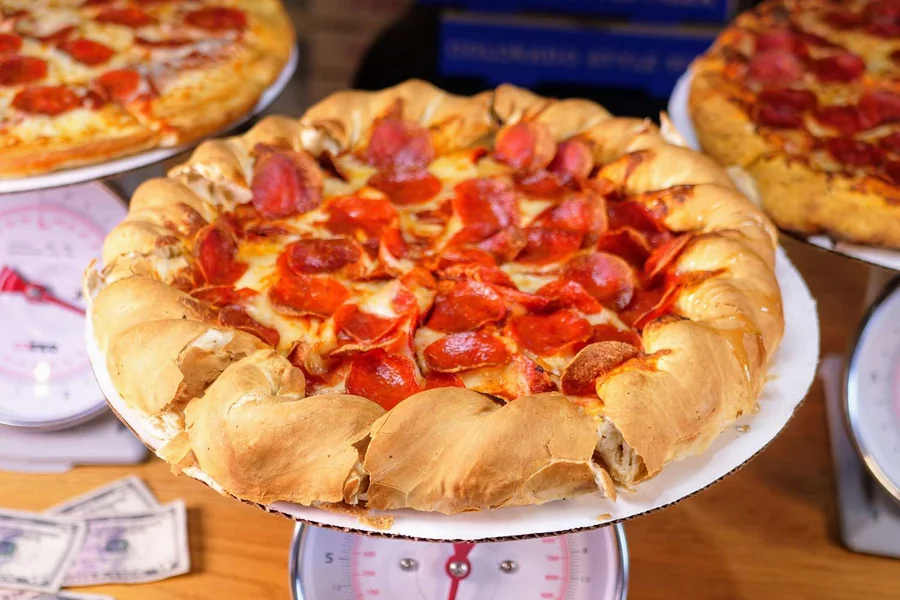
A five-pound pizza sounds like a dare. In Colorado, it’s just dinner. The style is built on a hand-rolled ring of dough that walls in the toppings, and the pies get sold by weight instead of by diameter, which throws off every out-of-towner who walks in expecting a large pepperoni.
Here’s what that means for you: once you understand why the crust runs so thick and why the leftovers hold up so well, ordering stops being confusing. You’ll know how much to buy for your table, what to do with the unused rim, and which version of the pie fits a weeknight versus a post-hike feast.
What exactly is Colorado-style pizza?
It’s a pizza with a raised, hand-rolled edge that acts as a retaining wall. Picture a shallow bowl made of bread, filled edge to edge with cheese, sauce, and whatever else you asked for, then baked until the rim turns golden and the center goes molten.
Two versions show up on menus around the state, and both trace back to the same kitchen:
- The mountain pie. A thick, hand-rolled rim with heavy toppings. Sized in pounds rather than inches.
- The prairie pie. No rolled rim, lighter toppings, sold in the small through extra-large sizes you’d recognize anywhere else.
That split isn’t marketing fluff. A mountain pie eats like a casserole with a bread bowl attached, and the prairie pie eats like a conventional slice. Knowing which one you ordered saves you from the classic mistake of buying three pounds of food for two people.
The style grew out of a single shop that opened in 1973 in Idaho Springs, a former mining town tucked in the mountains west of Denver, and eventually spread to several Front Range communities. The town itself is a good marker for how the region’s food culture works. Colorado’s mountain communities sit at high elevation, and the state tourism office notes that visitors flock to these historic mining towns year round for exactly this kind of lingering, unhurried meal (Colorado.com).
Why sell pizza by the pound?
Because the crust is the variable, not the diameter. When the rim is hand-rolled, two pies of identical width can hold wildly different amounts of food depending on how ambitious the cook got that morning. Weighing the finished product tells you what you’re actually eating.
The shop behind the style, Beau Jo’s Colorado Style Pizza, sells mountain pies in one, two, three, and five-pound sizes, and recommends a pound per hungry person. That’s a genuinely useful rule of thumb. It’s also the reason a family of four can split a three-pound pie with enough left over for lunch.
Here’s my honest take after too many of these meals: the pound-per-person guidance assumes you haven’t eaten anything else all day. Split it down the middle if you ordered appetizers, and lean heavier if you’re feeding teenagers who just came off a trail.
Where the crust stops being crust and becomes dessert
The leftover rim is the part outsiders never see coming. Once the cheese and sauce are gone, you’re holding a warm, hollow bread ring, and the move is to dunk it in honey. I’ll admit I thought this was a gimmick the first time someone handed me the squeeze bottle. It isn’t. Something about the slightly salty, chewy dough and the honey turns the end of the meal into a second, better course. The staff will bring it without being asked if they can tell you’re new.
If you’re feeding a group and want the full table experience rather than a cardboard box at home, the bigger locations handle private events and banquet reservations, which is worth knowing before a birthday or a team dinner.
How to order without overshooting
Use this as your decision path when you sit down:
- Count the big appetites, not the chairs. A pound per person works for genuinely hungry adults. Subtract for kids, salads, and appetizers.
- Pick your size by weight, then confirm it. One pound for two moderate eaters, two pounds for three or four, three pounds for a real crowd.
- Decide mountain or prairie before you look at toppings. The rim changes how much topping the pie can carry, so it should be your first choice, not your last.
- Plan the rim. Ask for honey when the pie lands. Trust the process.
- Assume leftovers. Thick crust reheats far better than a thin one, so ordering slightly heavy is rarely a mistake.
One more thing worth flagging: cheese and topping volumes climb fast on a mountain pie. If you’re eyeballing portions for a group with mixed appetites, the federal dietary guidance behind general nutrition labels is a reasonable sanity check on serving sizes, even if nobody orders pizza by the gram (USDA).
A regional style that stayed regional
Most American pizza styles went national decades ago. Thin-crust New York slices, deep-dish Chicago squares, and Detroit’s rectangular pies all show up in strip malls a thousand miles from home. Colorado’s version mostly didn’t, which is exactly what makes it interesting.
Part of that is geography. Colorado’s population clusters along a narrow strip of the Front Range, and the state grew quickly over recent decades while still holding onto a strong outdoors identity, a pattern the U.S. Census Bureau has documented in its population estimates. That combination, a fast-growing metro area sitting under a mountain range full of trailheads, produces a specific kind of restaurant: casual, family-heavy, generous with portions, and built for people who just spent six hours outside.
Beau Jo’s sits squarely in that tradition and has been at it since 1973, which puts the operation in the same longevity bracket as a handful of American regional pizza institutions. These days you don’t need to live in Colorado to eat it. Shipping has made plenty of regional specialties portable, and the mountain pie travels better than most because there’s more structure to protect it.
The bottom line
Colorado-style pizza isn’t a gimmick with a novelty name. It’s a solution to a local problem, which is how to feed a table of people who just came in from altitude with something warm, enormous, and shareable. The pound sizing exists because the crust is genuinely irregular. The honey exists because the rim would otherwise be wasted. Once you know those two facts, the menu reads like plain English.
So the next time someone asks why the pizza is measured in pounds, you’ll have an answer that’s better than a shrug. If you’re near one of the Colorado locations, order a pound per person and see how close you get. If you’re not, that’s what shipping is for, and your oven reheat will thank you.