

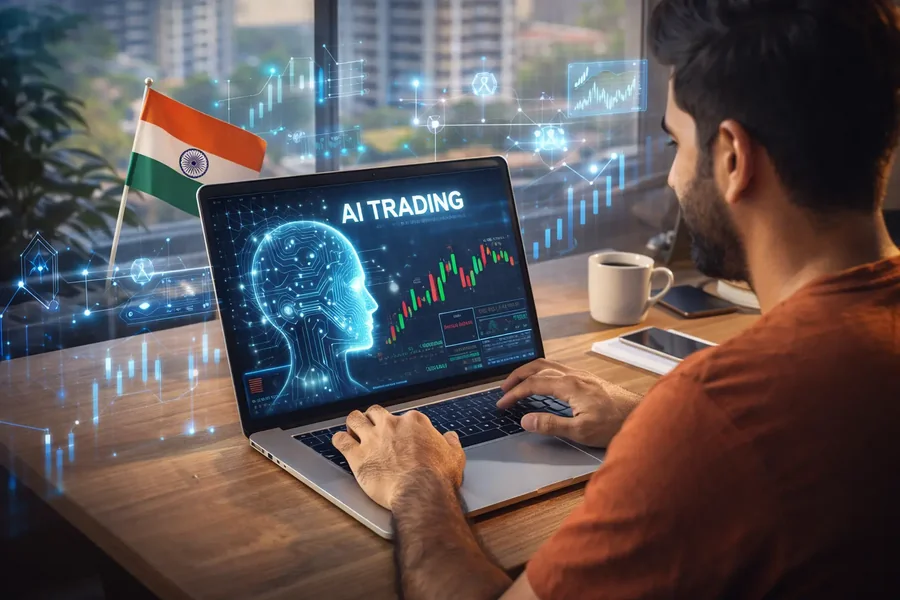
Artificial intelligence has moved from hedge fund trading desks into the apps everyday investors use. Tools that once required a team of quants and expensive infrastructure now run on a laptop or phone, and they’re changing how people research markets, build strategies, and place trades.
This shift brings real advantages, along with new risks worth understanding. Below, you’ll find the biggest ways AI is changing the way investors approach trading.
Automation Handles the Repetitive Work
Trading used to mean watching charts for hours, waiting for the right setup, and placing orders by hand. AI-powered automation now handles much of that routine work. Bots can scan markets, spot conditions that match a strategy, and execute trades within seconds, which frees investors to focus on planning and risk management instead of screen time.
Crypto traders feel this change more than most, since digital asset markets never close. An automated crypto trading bot from PrimeAutomation, the automation platform built by the team behind ChartPrime, lets you build, test, and run strategies that keep working around the clock, so you don’t miss a move while you sleep.
Speed plays a big role here as well. Prices in crypto and other volatile markets can swing sharply within minutes, and a human trader often reacts too late. Automated systems respond the instant their conditions trigger, which helps traders enter and exit positions closer to their planned levels rather than chasing the market afterward.
Automation lets investors cover more ground, too. A single trader can only watch a few charts at once, but a bot can monitor dozens of assets and timeframes at the same time. That wider coverage means you catch more opportunities that fit your strategy without spending your whole day glued to a screen.
AI Reads More Data Than Any Human Could
Markets react to far more than price charts. Earnings reports, interest rate decisions, social media chatter, and breaking news all move prices, often within minutes. AI models can process this flood of information in real time, pulling out signals that would take a human analyst days to find and connect.
Sentiment analysis offers a good look at how this works. Natural language processing tools scan headlines, social posts, and financial filings, then score whether the tone leans positive or negative. Traders use these readings to gauge market mood and spot shifts in sentiment before they fully show up in the price.
Large institutions go even further with alternative data. Some firms study satellite images of parking lots, credit card spending trends, shipping traffic, and web search activity to predict company performance. Retail investors rarely have access to these exact datasets, but many AI-powered platforms now package similar insights into tools that ordinary traders can afford.
Pattern recognition rounds out the picture. Machine learning models can study years of historical price data and flag recurring setups, unusual volume, or correlations between assets that most people would never notice. You see, these models don’t get tired or distracted, so they can keep scanning long after a human analyst calls it a day.
Backtesting and Strategy Building Get Faster
Testing a trading idea used to take weeks of manual work in spreadsheets. Today, AI-assisted platforms let you backtest a strategy against years of historical data in minutes. You can see how a set of rules would have performed through bull runs, crashes, and sideways markets before you put a single dollar on the line.
Optimization tools take things a step further. They run thousands of variations of the same strategy, adjusting settings like entry levels, stop-loss distances, and timeframes, to find the combinations that historically performed best. This process used to require programming skills, but many modern platforms now offer no-code builders that beginners can figure out quickly.
That convenience comes with a catch, though. When you tune a strategy too closely to past data, you risk overfitting, which means the system looks flawless on historical charts but struggles in live markets. Good traders test their strategies on data the model has never seen and treat spectacular backtest results with healthy suspicion.
Forward testing helps close that gap. Running a strategy on a demo account or with a small amount of real money shows how it handles current market conditions, slippage, and trading fees. Only after a strategy proves itself over several weeks of live data should you consider giving it a bigger share of your capital.
Emotions Play a Smaller Role in Decisions
Fear and greed have always been the biggest enemies of individual traders. People sell in a panic during sharp drops, hold losing positions too long, and chase rallies after prices have already climbed. AI-based systems don’t feel any of that, so they stick to the plan no matter what the market does.
That discipline helps investors avoid some of the most common and costly mistakes. A bot won’t revenge trade after a loss or double its position size because it feels lucky. It also won’t hesitate to close a losing trade at the stop-loss level, which protects your account from small losses turning into large ones.
Investors still bring emotions to the table, of course. Many people turn off their bots during a scary drawdown or override the system after a few losing trades, which defeats the purpose of automation. Before you switch anything on, decide in advance what conditions would justify pausing the strategy, and write those rules down.
AI can act as a reality check for discretionary traders. Some platforms analyze your trading history and point out patterns, such as overtrading after wins or cutting winners too early. Seeing your habits laid out in plain numbers makes it much easier to correct them over time and build stronger habits for the next market cycle.
Human Judgment Still Matters
AI tools have real limits, and smart investors keep those limits in mind. Models learn from past data, so they can struggle when markets face events they’ve never seen before, like a sudden regulatory crackdown, an exchange collapse, or a global crisis. In those moments, human judgment and common sense matter more than any algorithm.
Be wary of anyone promising guaranteed returns from an AI trading system. The popularity of AI has attracted plenty of scams, from fake trading bots to platforms that simply disappear with deposits. Stick with reputable providers, research reviews from real users, and never hand over more access to your funds than a tool truly needs.
Security deserves attention whenever you connect a bot to an exchange. Use API keys with trading permissions only, disable withdrawal rights, and turn on two-factor authentication for every account involved. These simple steps limit the damage if a third-party service ever gets compromised or your login details fall into the wrong hands.
The most successful investors treat AI as a powerful assistant and keep themselves in the driver’s seat. They set the strategy, define the risk limits, and review performance regularly, while the technology handles the data crunching and execution. That balance lets you benefit from automation without handing over full control of your financial future.
Wrap Up
AI is making trading faster, more data-rich, and more disciplined than ever before. Automated bots, sentiment tools, and quick backtesting give everyday investors capabilities that once belonged only to big institutions.
Still, no algorithm can guarantee profits. Start small, test everything, protect your accounts, and keep your own judgment in the loop. Used wisely, AI can make you a sharper and more consistent trader.











2 thoughts on “How AI Is Changing the Way Investors Approach Trading”
Comments are closed.