

The Core Pillars of Maintaining Indoor Air Quality and Comfort
Achieving superior indoor air quality (IAQ) and comfort hinges on a multi-faceted approach, often simplified into three fundamental strategies: source control, improved ventilation, and advanced air cleaning or filtration. While each plays a vital role, understanding their interplay and prioritizing the most effective method is key to creating truly healthy and comfortable indoor environments.
Source Control: The Most Effective First Line of Defense
At the heart of any effective IAQ strategy lies source control. This involves identifying and eliminating or reducing pollutant sources directly at their origin. It is widely considered the most effective and often the most cost-efficient method because it prevents pollutants from entering the air in the first place, rather than trying to remove them afterward. For instance, selecting low-VOC (Volatile Organic Compound) paints and furnishings drastically reduces chemical off-gassing. Ensuring proper combustion safety for gas stoves and furnaces, or even transitioning to electric appliances, eliminates harmful byproducts like carbon monoxide and nitrogen dioxide. Radon, a naturally occurring radioactive gas and the second leading cause of lung cancer, requires specific mitigation techniques such as sealing foundation cracks and installing ventilation systems to prevent its entry. Similarly, encapsulating asbestos rather than disturbing it is a critical source control measure. By proactively managing these sources, we significantly reduce the overall pollutant load, making subsequent ventilation and filtration efforts more manageable and effective.
Mechanical and Natural Ventilation Strategies
Once pollutant sources are minimized, the next crucial step is to ensure adequate air exchange. Ventilation introduces fresh outdoor air and removes stale indoor air, diluting remaining contaminants like CO2, VOCs, and airborne pathogens.
Natural ventilation, such as opening windows and doors, can be effective when outdoor air quality is good and weather permits. It’s a simple way to dilute indoor pollutants and bring in fresh air. However, its limitations are significant: it’s dependent on favorable outdoor conditions (temperature, humidity, and pollutant levels), can be energy inefficient, and lacks precise control over air exchange rates.
Mechanical ventilation systems, on the other hand, provide controlled air exchange. These systems can range from simple exhaust fans in bathrooms and kitchens to whole-house systems like Heat Recovery Ventilators (HRVs) and Energy Recovery Ventilators (ERVs). HRVs transfer heat between incoming and outgoing air, making them energy-efficient in colder climates. ERVs go a step further, transferring both heat and moisture, which is beneficial in mixed or humid climates to manage indoor humidity levels. ASHRAE Standard 62.2, a benchmark for residential ventilation, outlines recommended fresh air delivery rates to ensure healthy indoor environments. Building owners and facility managers can monitor and control outdoor air delivery through sophisticated HVAC systems that measure airflow and integrate with building management systems.
Here’s a comparison of common ventilation strategies:
Feature Natural Ventilation (Windows/Doors) Heat Recovery Ventilator (HRV) Energy Recovery Ventilator (ERV) Air Exchange Control Low (weather-dependent) High (mechanical) High (mechanical) Energy Efficiency Low (heat/cool loss) High (recovers heat) High (recovers heat & moisture) Humidity Control None None Good (recovers moisture) Outdoor Air Quality Direct intake (no filtration) Filters incoming air Filters incoming air Best Use Case Mild weather, low outdoor pollution Cold, dry climates Mixed/humid climates Limitations Unpredictable, energy loss No moisture transfer More complex, higher initial cost
Advanced Air Cleaning and HVAC Filtration Standards
Air cleaning and filtration act as a secondary defense, removing particulate matter and some gaseous pollutants that source control and ventilation might miss. The effectiveness of filters is largely determined by their Minimum Efficiency Reporting Value (MERV) rating. MERV ratings indicate a filter’s ability to capture larger particles (like pollen, dust mites) and smaller particles (like bacteria, smoke, and even some viruses).
For controlling particulate matter (PM2.5), which includes fine inhalable particles linked to various health issues, MERV 13 filters are increasingly recommended. These filters can capture particles between 0.3 and 1.0 micrometers with high efficiency. Upgrading to a MERV 13 filter or higher, often within a media filter cabinet, is considered one of the highest-impact, lowest-cost improvements for residential HVAC systems. However, it’s crucial to ensure your HVAC system can handle the increased airflow resistance (static pressure) that higher MERV filters can create. Regular maintenance, including timely filter replacement and professional indoor air quality services, is essential to ensure continued performance and prevent strain on the HVAC system.
Proper system evaluations ensure that all mechanical components are correctly calibrated for seasonal changes. Working with qualified regional contractors like Duct-Rite Mechanical LLC allows homeowners to verify that ductwork, airflow, and filtration components are working together to maintain optimal indoor comfort.
Beyond standard filter replacements, routine system checkups help ensure that airflow remains unobstructed throughout the home. Partnering with a licensed HVAC contractor can help identify minor mechanical issues before they impair indoor air distribution or drive up utility costs. Regular maintenance checks keep system components running efficiently and support consistent indoor temperature levels across every season.
Humidity Management for Health and Thermal Comfort
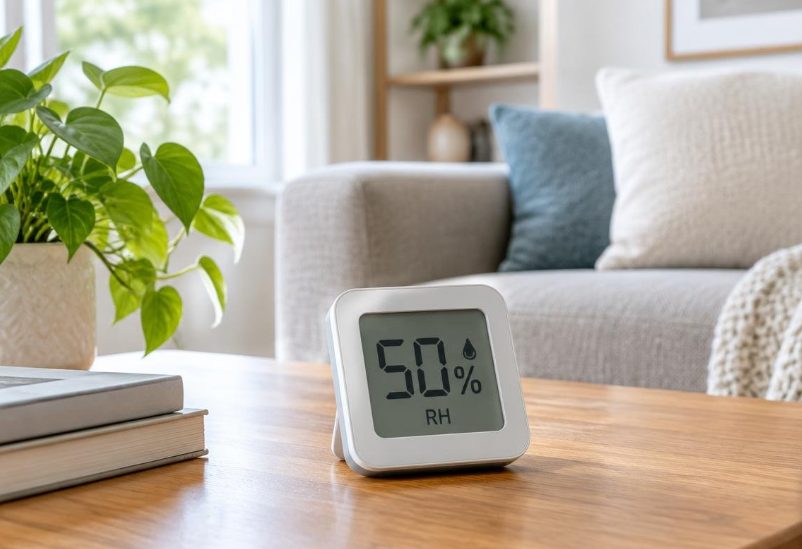
Beyond controlling pollutants, maintaining optimal indoor humidity is paramount for both human health and overall thermal comfort. Relative humidity (RH) levels significantly influence our perception of temperature, the survival and transmission of airborne pathogens, and even the integrity of building materials. For those seeking comprehensive lasting comfort solutions, understanding and managing humidity is a critical step.
Why Maintaining Indoor Air Quality and Comfort Requires 40% to 60% Relative Humidity
Research consistently points to an intermediate indoor relative humidity range of 40% to 60% as ideal for human health and comfort. This “sweet spot” is not arbitrary; it’s a critical factor in reducing the risk of viral infections and supporting our body’s natural defenses. Periodic adjustments help lower energy consumption while extending the operational lifespan of major cooling and heating equipment.
Regular mechanical checks also help identify minor cooling issues before they impact indoor temperature regulation. Homeowners arranging ac repair Jacksonville can ensure their cooling systems run efficiently throughout hot summer months, keeping indoor environments comfortable while maintaining steady airflow across all living areas.
Studies in October 2026 have demonstrated that low indoor humidity (below 40% RH) has a “triple whammy” effect on health. Firstly, it dries out our mucous membranes in the respiratory tract, making us more susceptible to infections. Secondly, it enhances the stability and travel distance of airborne particles, including viruses. Viruses like influenza A and even SARS-CoV-1 show significantly higher inactivation rates at 50% RH compared to 20% RH, with inactivation occurring over 10 times faster. This means pathogens linger in the air for much longer in dry conditions. Evidence from a preschool study even showed that humidification to 45% RH decreased influenza A illness in children by more than half compared to 20% RH. Conversely, excessively high humidity (above 60% RH) promotes mold growth, dust mites, and bacterial proliferation, leading to other health concerns and discomfort. Therefore, proactively managing indoor RH within this optimal range is a powerful strategy for maintaining indoor air quality and comfort.
Mitigating the Risks of Low and High Indoor Humidity
Both extremes of indoor humidity present distinct challenges. Low humidity can lead to dry skin, irritated respiratory passages, increased static electricity, and even damage to wooden furniture and musical instruments. High humidity, on the other hand, creates an environment ripe for mold and mildew growth, dust mite proliferation, and can make indoor spaces feel clammy and uncomfortable. It also increases the risk of condensation on cooler surfaces, which can lead to structural damage over time.
To mitigate these risks, various solutions are available. In dry climates or during heating seasons, whole-house humidifiers (steam or evaporative) can add moisture to the air. In humid climates, whole-house dehumidifiers or the efficient operation of air conditioning systems are essential. Modern variable-speed heat pumps are particularly effective at maintaining consistent humidity levels by running for longer periods at lower speeds, providing better moisture removal than traditional single-stage systems. Continuous monitoring with a digital hygrometer allows occupants to track and adjust humidity levels as needed, ensuring a healthy and comfortable indoor environment year-round.
Ventilation Protocols and Emerging Air Cleaning Technologies
As we refine our approach to IAQ, understanding advanced ventilation protocols and critically evaluating emerging air cleaning technologies becomes increasingly important. The goal is to maximize contaminant dilution while minimizing unintended consequences.
Measuring Outdoor Air Delivery and Demand-Controlled Ventilation
Effective ventilation relies on accurately delivering the right amount of outdoor air. Building owners and facility managers can achieve this through several methods. Direct airflow measurement devices installed in outdoor air intake ducts provide real-time data on cubic feet per minute (CFM) of fresh air. This allows for precise control and verification that ventilation standards, such as those from ASHRAE, are being met.
Demand-controlled ventilation (DCV) is an advanced strategy that optimizes energy use by adjusting outdoor air intake based on real-time occupancy and indoor air quality. CO2 sensors are commonly used for DCV, as indoor CO2 levels serve as a reliable proxy for human occupancy and the accumulation of bio-effluents. When CO2 concentrations rise above a set threshold (e.g., indicating more people in a space), the system automatically increases outdoor air delivery to dilute contaminants. Conversely, when CO2 levels are low, ventilation can be reduced, saving energy. Regular sensor calibration and strategic placement are crucial for the accuracy and effectiveness of DCV systems.
Navigating Air Purification Risks: Ozone and Ionization Hazards
While air cleaning can be beneficial, not all technologies are created equal, and some pose potential unintended consequences. Technologies like ionizers, hydroxyl generators, and ozone generators are marketed for air purification, but their use warrants caution.
Ionizers work by electrically charging particles, causing them to stick to surfaces or each other, making them easier to filter. However, many ionizers can produce ozone as a byproduct. Ozone (O3) is a powerful lung irritant, even at low concentrations, and can trigger asthma attacks, chest pain, coughing, and shortness of breath. It can also react with other chemicals in the air to form harmful secondary organic aerosols. Similarly, ozone generators are explicitly designed to produce ozone, often with claims of “air sanitization,” but the EPA does not recommend their use in occupied spaces due to health risks. Hydroxyl generators, while theoretically safer as hydroxyl radicals are short-lived, can also have potential for unintended chemical reactions. When considering air cleaning technologies, it is crucial to choose devices that are certified to produce zero ozone, such as those verified by organizations like CARB (California Air Resources Board). Mechanical HEPA filtration remains the gold standard for particle removal without generating harmful byproducts.
Solving Building-Related Complaints and IAQ Data Transparency
Building-related symptom complaints, often encompassing issues like headaches, fatigue, eye irritation, or respiratory problems, are common indicators of underlying IAQ or comfort issues. Addressing these complaints effectively requires a systematic approach and a commitment to transparency with occupants.
Practical Framework for Maintaining Indoor Air Quality and Comfort in Occupied Buildings
When occupants report discomfort or symptoms, a structured diagnostic process is essential. We recommend the following framework for investigating indoor comfort complaints:
- Initial Assessment: Document specific symptoms, their timing, and location within the building. Gather information on recent activities (e.g., renovations, new furniture) or changes in HVAC operation.
- Environmental Monitoring: Deploy portable or continuous IAQ monitors to measure key parameters such as temperature, relative humidity, CO2, PM2.5, and VOCs in affected areas. Establish baseline readings and compare them to recommended thresholds.
- HVAC System Inspection: Thoroughly inspect the HVAC system, including air handlers, ducts, and outdoor air intakes. Look for visible mold on coils, check filter integrity and replacement schedules, and ensure proper airflow and balanced distribution. Verify that outdoor air dampers are functioning correctly and that there are no blockages.
- Odor Investigation: Trace the source of any persistent or unusual odors. This could involve identifying off-gassing materials, moisture intrusion, or issues with drainage systems.
- Building Envelope Review: Assess for signs of moisture intrusion, such as leaks, condensation, or water damage, which can lead to mold growth.
- Occupant Surveys: Conduct anonymous surveys to gather broader feedback on thermal comfort, odors, stuffiness, and other perceptions across different zones of the building. This can help identify widespread issues versus localized complaints.
- Maintenance Records Review: Check HVAC maintenance logs, cleaning schedules, and records of past IAQ interventions.
By systematically investigating these areas, facility managers can pinpoint the root causes of complaints, whether they stem from thermal drift, inadequate ventilation, specific pollutant sources, or poor HVAC maintenance, including issues like dirty coils or compromised duct integrity.
Ethical Reporting and Real-Time Environmental Monitoring
Ethical considerations are paramount when it comes to reporting and transparency of indoor air quality data to building occupants. Trust and open communication are vital for occupant well-being and satisfaction.
We believe in providing clear, accessible, and actionable IAQ data. This can involve setting up public dashboards that display real-time readings from continuous monitoring sensors for key parameters like temperature, humidity, CO2, and PM2.5. Data should be presented in an easy-to-understand format, perhaps with color-coded indicators for “good,” “moderate,” and “action required” levels.
Furthermore, it’s crucial to communicate not just the data, but also what the numbers mean, why certain thresholds are important, and what steps are being taken to maintain or improve conditions. When issues arise, prompt and transparent communication about the problem, the investigation process, and the planned remediation steps helps build confidence. This continuous monitoring and transparent reporting empower occupants with information, fosters a sense of shared responsibility, and demonstrates a commitment to their health and comfort.
Frequently Asked Questions About Indoor Environmental Quality
What makes source control superior to air cleaning and ventilation?
Source control is considered superior because it addresses the problem at its origin. By eliminating or significantly reducing the release of pollutants into the indoor environment, it prevents the need for extensive energy-intensive ventilation or costly air cleaning. This approach is inherently more energy-efficient, often more cost-effective in the long run, and fundamentally prevents exposure rather than just mitigating it after the fact. It’s the primary strategy for achieving optimal IAQ.
Can indoor air quality directly influence cognitive performance?
Absolutely. Research strongly indicates a direct link between indoor air quality and cognitive performance. Studies have shown that even slight increases in PM2.5 can lead to a significant rise in mistakes, such as chess players making 26% more errors or umpires making 2.6% more incorrect calls. Similarly, elevated CO2 accumulation, often indicating inadequate ventilation, has been linked to decreased decision-making abilities, reduced concentration, and an 8% increase in the probability of failing an exam. Poor IAQ can directly impair productivity, learning, and overall mental acuity.
Are ionizers and ozone-generating air cleaners safe for residential use?
While marketed for air purification, ionizers and ozone-generating air cleaners carry significant safety concerns. Ozone is a known lung irritant that can exacerbate respiratory conditions, and even devices that claim to produce “safe” levels of ozone can contribute to poor indoor air quality. Some of these technologies can also create harmful secondary organic aerosols through chemical reactions in the air. For residential use, mechanical filtration, particularly True HEPA filters or high-MERV HVAC filters, remains the safest and most effective method for removing airborne particles without introducing harmful byproducts. We recommend verifying any air cleaning device for zero ozone emission certification (e.g., CARB certified) if considering such technologies, but generally advise caution against ozone-generating devices.
Conclusion
Maintaining optimal indoor air quality and comfort is not a luxury but a fundamental necessity for our health, productivity, and overall well-being. As we navigate the complexities of modern indoor environments in October 2026, a holistic management approach is essential. This involves prioritizing source control to prevent pollutants, implementing effective ventilation strategies to dilute contaminants, and utilizing advanced filtration to capture remaining particles. Crucially, precise humidity management within the 40% to 60% range plays a vital role in curbing pathogen transmission and enhancing comfort.
By adopting a layered strategy that includes continuous monitoring, regular HVAC maintenance, and transparent communication with occupants, we can transform our indoor spaces. Investing in these measures ensures not only immediate comfort but also contributes significantly to long-term wellness and resilience against airborne health threats.











1 thought on “Maintaining Indoor Air Quality and Comfort Year-Round”
Comments are closed.