

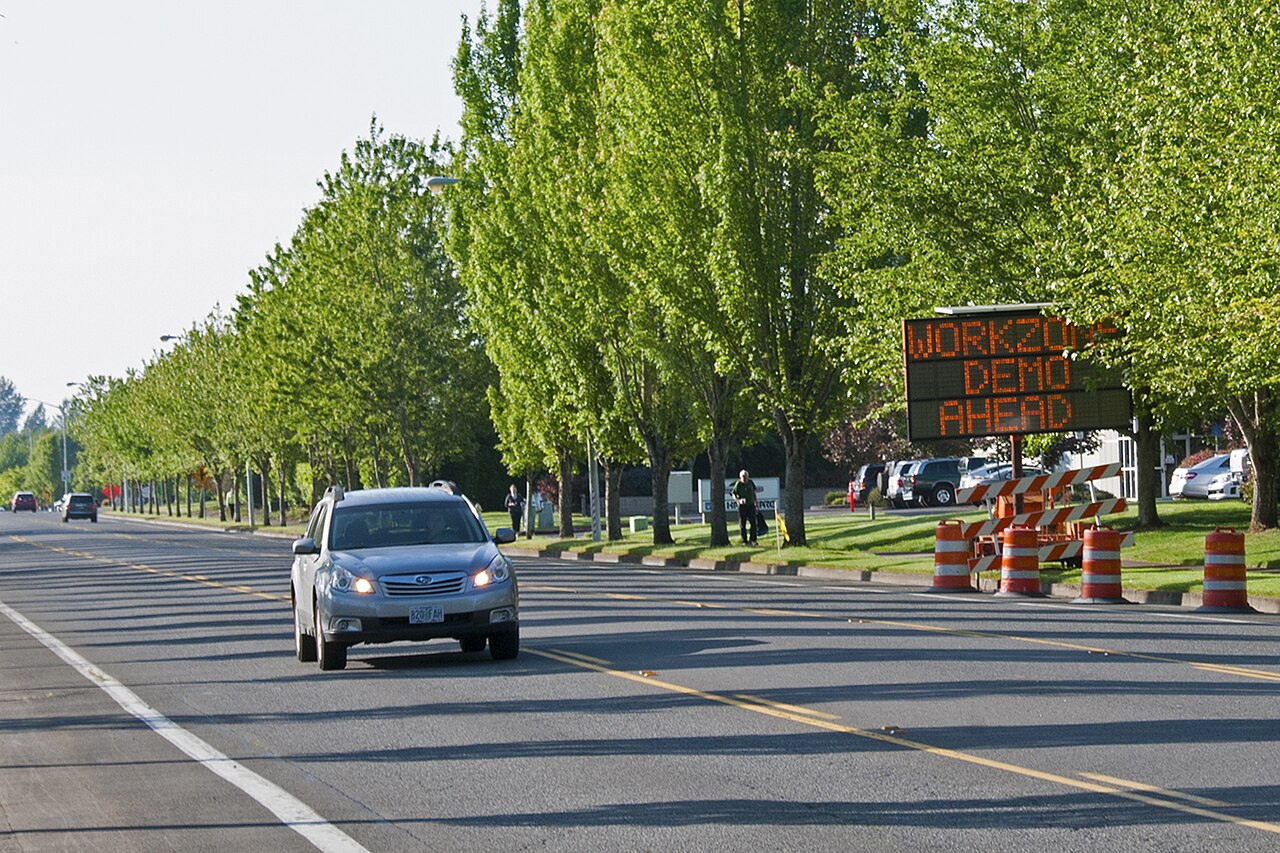
A driver approaches a familiar stretch of road, only to find one lane closed for construction. Traffic slows, heavy equipment operates nearby, and workers move between vehicles and the work area. Without clear advance warning, the driver may have little time to react.
Situations like this explain why traffic signage is essential to road construction safety. Temporary signs alert motorists to changing conditions, communicate restrictions, and guide them through unfamiliar road layouts. They also help protect workers who may be operating just metres from passing vehicles.
For construction contractors and roadwork planners, proper signage requires more than placing a few warning boards near a job site. The signs must be appropriate for the conditions, positioned correctly, and maintained throughout the project.
How Traffic Signs Improve Safety in Construction Zones
Construction zones introduce hazards that drivers do not normally encounter. Lanes may narrow or shift, equipment may enter the roadway, and traffic can stop unexpectedly.
Properly positioned Traffic Signs give motorists advance notice of these changes. A warning about a lane closure, for example, allows drivers to adjust their speed and prepare to merge before reaching the construction area.
Signs also communicate information that may not be immediately visible. A traffic controller could be stationed beyond a bend, or a temporary detour might begin farther along the road.
Clear warnings help motorists understand what lies ahead rather than making last-second decisions.
For workers, this advance communication is particularly important. Drivers who know they are approaching an active work zone have more opportunity to slow down and watch for people, equipment, and temporary traffic arrangements.
However, signage works best as part of a broader traffic control plan that considers vehicle movement, pedestrian access, barriers, and other necessary safety measures.
Common Types of Construction Traffic Signs
Different signs serve different purposes within a construction zone. Selecting the right combination depends on the road layout, traffic conditions, and activities taking place.
Advance Warning Signs
Advance warning signs tell drivers about construction or maintenance activities before they reach the affected area.
Common examples include ROAD WORK AHEAD, LANE CLOSED AHEAD, and TRAFFIC CONTROL PERSON AHEAD.
These warnings are especially important on higher-speed roads, where motorists need more distance to recognize a hazard and respond appropriately.
Regulatory Signs
Regulatory signs communicate enforceable requirements, including speed limits, stopping instructions, and movement restrictions.
Temporary regulatory signs may be needed when construction changes the normal rules of the road. They must be authorized and installed according to applicable requirements.
Their purpose differs from general warning signs. Rather than simply identifying a potential hazard, regulatory signs tell drivers what they are legally required to do.
Detour and Directional Signs
When construction closes a street or restricts access, directional signs help motorists follow an alternative route.
Detour signage is particularly important near intersections, where drivers may need to change direction several times before returning to their normal route.
Good directional signage provides continuity. Drivers should not have to guess where to turn after following the first detour sign.
Why Sign Placement Matters as Much as Sign Selection
Even the correct sign can be ineffective if drivers cannot see it early enough.
Consider a lane closure immediately beyond a sharp curve. A warning positioned too close to the work area may leave motorists insufficient time to slow down or merge safely.
Signs must be located where approaching drivers can reasonably see, understand, and act on their instructions.
Placement decisions should account for several factors, including:
- Road speed and expected stopping distance
- Curves, hills, and other visibility restrictions
- Traffic volume and vehicle types
- Nearby intersections and access points
- Temporary lane alignments and pedestrian movements
Signs must also remain visible in darkness and poor weather. Suitable retroreflective materials, appropriate mounting heights, and properly maintained surfaces help drivers recognize messages under changing conditions.
Sign spacing should follow the applicable traffic control standards rather than relying on estimates or convenience.
The Importance of Following Canadian Traffic Control Standards
Construction signage requirements are not identical across Canada. Provincial transportation authorities establish standards for temporary traffic control, and municipalities may impose additional requirements.
For example, Ontario’s Traffic Manual includes Book 7, which addresses temporary traffic conditions. British Columbia has its own Traffic Management Manual for Work on Roadways.
These documents provide guidance on selecting, positioning, and managing traffic control devices.
Contractors must determine which requirements apply to the road and project involved. A temporary closure on a residential street may require a different arrangement from work on a multilane highway.
Compliance is also about maintaining the approved traffic control arrangement as construction progresses.
A sign that was appropriate during the initial excavation may need to be relocated or removed when the work area changes. Leaving outdated instructions in place can confuse motorists and undermine other traffic control measures.
Common Signage Mistakes That Can Create Road Hazards
Several avoidable problems can reduce the effectiveness of construction signage.
One is placing warning signs too close to the work area. Drivers may notice the message but lack sufficient distance to respond safely.
Another is using damaged, dirty, or poorly supported signs. Faded lettering, obstructed symbols, and tilted boards make instructions harder to recognize.
Too many signs can also create confusion, especially when messages conflict or contain information that is no longer relevant.
Construction crews should pay particular attention to signs after severe weather, equipment movement, or changes to temporary lane arrangements.
Signs that have fallen, shifted, or become obstructed need prompt attention. Temporary traffic control is not a one-time installation that can be ignored until the project ends.
Maintaining Effective Signage Throughout Roadwork
A construction site rarely remains unchanged throughout a project. Excavation gives way to paving, crews move to new sections, and traffic arrangements may change between daytime and overnight operations.
Traffic signage must reflect the conditions drivers will actually encounter.
Regular inspections help identify missing, damaged, or incorrectly positioned signs. They also provide an opportunity to check whether drivers can follow the intended route without encountering conflicting instructions.
When work activities move, signs should be adjusted according to the approved traffic control plan. Once temporary restrictions no longer apply, unnecessary signs should be removed or covered as required.
Final Thoughts
Proper construction signage helps drivers recognize hazards, understand temporary restrictions, and navigate changing road conditions.
For contractors and project managers, effective signage begins with understanding the work area and selecting devices that meet applicable requirements. Correct placement, visibility, regular inspections, and timely adjustments are equally important.
When traffic signs communicate clear and accurate information throughout a project, they contribute to safer conditions for road users and the people working alongside them.











1 thought on “Why Proper Traffic Signs Are Essential for Construction and Work Zones”