
Key Highlights
- Company liquidation in Sydney is a formal process used when an insolvent company can no longer meet its debts on time.
- Early action matters because insolvent trading can increase director risk and lead to personal liability.
- Directors should review company assets, financial records, and creditor pressure before making any move.
- The liquidation process may be voluntary or driven by court action from creditors.
- Professional advice can help you decide whether liquidation, restructuring, or administration is the best way forward.
- Acting quickly often gives you more control over timing, communication, and the appointment of a liquidator.
Introduction
If you are going through company liquidation in Sydney, you might be under financial distress and feeling pressure from those you owe money to. This time is hard, and it can feel close to home. If you are one of the directors of an insolvent company, the first thing you need to do is stay calm. You should try to understand what the company liquidation process is, what risks you and your company face, and what steps you can take before things get any worse.
Understanding Company Liquidation in Sydney

Company liquidation in Sydney is a formal process. This is used when a business cannot pay its company debts as they become due. Australian law sets rules about how the company’s affairs must be managed.
The liquidation process usually goes like this. The company will stop trading. Next, a liquidator gets appointed. They will then go through the company records and deal with people or groups owed money. Knowing what company liquidation is and why it happens can help you understand the steps involved.
What is Company Liquidation and Why Does it Happen?
Company liquidation occurs when a company shuts down because it can no longer operate, often due to unpaid debts.
A registered liquidator then takes control, collects assets, and manages creditor claims to resolve the company’s affairs.
Directors must stay involved: keep records safe, cooperate with the process, and act promptly. Ignoring issues like unpaid taxes, rent, or wages only increases risks.
Common Reasons for Liquidation in Sydney Businesses
Many Sydney small business owners endure financial distress for a long time before considering liquidation. It’s rarely just a bad week—most keep hoping cash flow will improve.
Common triggers for liquidation include:
- mounting unpaid company debts
- pressure from unsecured creditors
- missed loan or supplier payments
- concerns about insolvent trading
For instance, a business might keep taking orders but can’t pay BAS, wages, or suppliers. In these situations, voluntary and court liquidation offer very different paths forward. We’ll discuss both options next.
Signs Your Sydney Business May Need Liquidation

You can often see warning signs before things fall apart. These include ongoing money trouble, growing tax debt, and pressure from people your business owes money to. These signs can show that there is insolvent trading and that the company may be heading towards insolvency.
If you are not sure about your company’s financial position, that is already a problem. Getting professional advice early can help. It lets you know if liquidation must happen now or if there is another formal process still open to you.
How to Spot Early Signs of Insolvency
If you can’t pay your company’s debts when they’re due and keep trading, you risk insolvent trading. To understand this better, look for warning signs:
- Overdue tax, superannuation, or supplier accounts
- Incomplete or late financial records and statements
- Payment demands or threats of legal action from creditors
- Taking on new debt to pay off existing debts
For example, if your company relies on this week’s customer deposits to cover last month’s wages, your financial position may already be weak. At this point, stop guessing and review your financial statements thoroughly.
Director’s Duty to Prevent Insolvent Trading
Directors have a duty to stop insolvent trading. Under the Corporations Act, you must not let the company take on more company debts if there is a good reason to think it cannot pay them.
This is important because directors’ duties are not only about paperwork. A bad choice made when under stress can lead to personal liability, especially if there were signs of trouble.
For example, if action from creditors is getting worse and you still agree to new supply deals when the company cannot pay, this can cause big problems. Getting advice early can help protect options and lower the risk of personal liability.
Types of Company Liquidation in Sydney
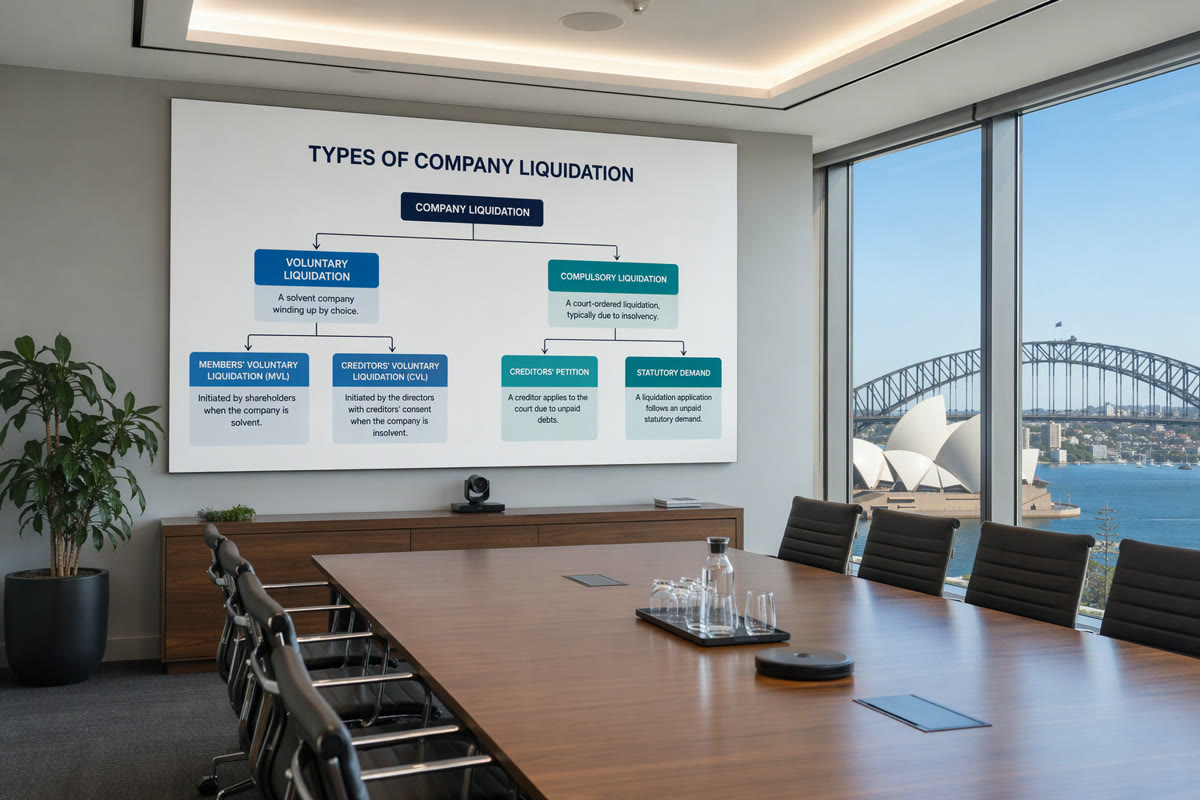
Not every company liquidation starts the same way. Under Australian law, the direction you take depends on whether directors act first or if a creditor steps in.
For many small business owners, the biggest thing to compare is voluntary liquidation and court liquidation. The difference changes timing and who has control. It also changes how fast things can get tough. So, it’s important to know both well.
Creditors’ Voluntary Liquidation (CVL) Explained
A CVL is the most common form of voluntary liquidation for an insolvent company. Directors choose it when it is safer to stop trading and deal with creditors through a formal liquidation process.
In practice, directors resolve to wind up the company and a registered liquidator is appointed. That usually gives more control over timing and communication than waiting for legal action.
| Point | CVL in simple terms |
|---|---|
| Who starts it? | Directors and shareholders of the company |
| Why use it? | The business cannot pay debts and should stop trading |
| Who takes control? | A registered liquidator |
| Main benefit | Earlier action can reduce risk and confusion with creditors |
Court-Ordered Liquidation: What Triggers It?
Court liquidation usually starts when creditors ask the court to close a company, often due to unpaid debts or missed payment deadlines.
Once the court intervenes, it appoints a liquidator, and the company directors lose control over the timeline. This makes court liquidation feel abrupt.
A common trigger is when a creditor issues a demand that goes unanswered. If a creditor moves to wind up the company in court, seek advice immediately—time may be very limited.
Key Responsibilities of Directors During Liquidation

Directors still have important work to do after it is decided to liquidate the company. Your focus changes from running the business to helping the liquidator get a clear picture of the company’s affairs.
This means you have to meet legal obligations, keep company records safe, and ask for professional advice as soon as you can. The next two sections talk about what directors in Sydney must do before and during this time.
Legal Obligations of Sydney Directors When Facing Liquidation
Directors in Sydney must act in good faith and take insolvency concerns seriously. The Corporations Act requires them to stay informed about the company’s affairs and not ignore warning signs.
You should maintain accurate financial records and be transparent about the company’s situation. You can’t simply withdraw when challenges arise.
Incomplete records make everything harder. If your books don’t reflect trading, debts, or payments, your risks increase, and tasks become more time-consuming.
Steps Directors Must Take Before and During Liquidation
Directors should review the facts before starting liquidation, rather than relying on hope. A confidential consultation can help determine if liquidation, restructuring, or administration is best for your company.
Steps to take:
- Gather all company records, financial statements, and key contracts
- Review overdue debts, tax issues, and creditor pressure
- Seek early advice from an insolvency professional
- Avoid actions that could worsen losses
Stay responsive and cooperative throughout the process. For example, promptly provide any records requested by the liquidator—delays can raise suspicion and slow proceedings.
Risks for Directors During Company Liquidation
Liquidation does not always mean the company is the only one to lose. In some cases, directors can get personal liability. This happens if there are tax issues, a director penalty notice, if they give guarantees, or if there is a breach of director duties.
You should also think about what could happen if you get a director penalty notice, civil penalties, and how this will affect your future jobs. These risks can be serious. But it is easier to deal with them if you look at these problems early.
Personal Liability and Guarantees in Sydney Liquidations
Personal liability is a major concern for directors, and for good reason. If you’ve signed personal guarantees for leases, equipment, or loans, company debts may follow you even after liquidation.
Tax issues can also arise. A director penalty notice can make you personally liable in some cases. Never ignore unpaid obligations.
Many directors mistakenly believe liquidation clears all debts—it doesn’t. If your personal assets back business loans or you’ve given a guarantee, seek advice before taking any action.
Impact on Director Credit Ratings and Future Roles
Liquidation doesn’t always ruin your future, but it can lower your credit rating, hinder borrowing, and affect your reputation as a company director.
What happens after liquidation depends on prior issues. Criminal charges or personal bankruptcy are far more serious than simply closing a failed business.
For shareholders and directors, your actions matter. Respond promptly, keep records, and follow proper procedures to minimise long-term consequences.
Conclusion
In summary, directors in Sydney should understand company liquidation, as it affects both business operations and personal responsibilities. Recognising signs of liquidation and knowing the process enables informed decisions for stakeholders. Remember your legal obligations, potential risks to personal liability, and credit ratings. Seeking professional advice and a free consultation can provide valuable support during this challenging period.