Key Highlights
- An after-hours electrician in Melbourne helps when an electrical emergency happens at night, on weekends, or on public holidays.
- Common urgent electrical services include loss of power, a blown fuse, a tripping safety switch, and sparking power points.
- You should act fast if you notice warning signs like a burning smell, buzzing, or exposed wiring.
- A licensed emergency electrician can inspect electrical systems safely and carry out compliant repairs.
- Before help arrives, keep clear of the affected area and switch off the main switch only if it is safe.
- Shak Electrical provides 24/7 emergency services across South East Melbourne for homes and businesses.
Introduction
A power outage late at night can feel stressful, especially if you smell something burning or your switchboard keeps tripping. That is when an after-hours electrician in Melbourne that homeowners trust becomes important. Fast electrical services can reduce disruption, protect your property, and help you decide whether you need an emergency electrician or your electricity company.
What Is an After-Hours Electrician in Melbourne?
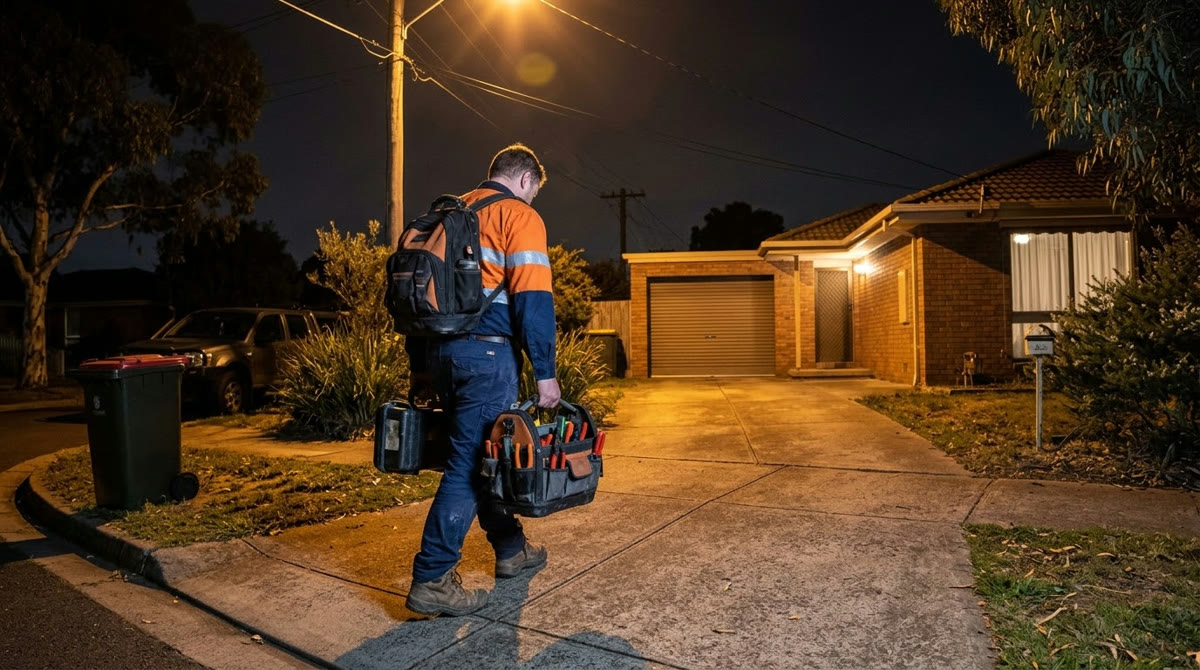
An after-hours electrician in Melbourne is a licensed electrician who handles urgent electrical problems outside normal business hours. That includes nights, weekends, and public holidays across Melbourne.
You would call one for emergency services when there is a safety risk with your electrical systems, such as sudden loss of power, sparking outlets, faulty wiring, or a burning smell. The key point is simple: if it feels unsafe, do not wait until morning.
How After-Hours Electricians Differ from Regular Electricians
The main difference is the time of day. A regular electrician may work standard hours, while an after-hours electrician is available when urgent faults happen overnight or on a Sunday.
There is also a difference in the type of electrical work. Emergency callouts focus on immediate risk first, such as making a switchboard safe or isolating a fault before a full repair.
Cost can vary after normal hours, but clear pricing matters. Shak Electrical states transparent upfront pricing before work begins, which helps you understand what to expect without guessing in the middle of a stressful situation.
The Importance of 24/7 Electrical Support in Melbourne Homes
Electrical emergencies rarely happen at a good time. A tripped safety switch at 11 pm or a failed power point near a child’s bedroom cannot always wait until morning.
That is why 24/7 service matters. It gives you dependable service when electrical appliances stop working, when there is a loss of power in one part of the house, or when storm damage affects supply.
Response times depend on location, traffic, and demand. Even so, urgent and safety-critical jobs are prioritised, which is what you want when fast electrical repair work can lower the risk of electrical fires or electric shock.
When Should You Call an After-Hours Electrician in Melbourne?
Call an after-hours electrician when the electrical issues create an immediate safety concern or leave part of your property unsafe to use. That includes faults that involve heat, sparks, smoke, or repeated tripping.
If the problem is limited to your property rather than the entire area, it is often an electrical emergency. The next sections make those warning signs easier to spot.
Recognising Night-Time Electrical Emergencies
A night-time electrical fault requires urgent help when there is a real risk of injury, fire, or worsening damage. Short answer: if there is immediate risk, call.
Watch for these warning signs:
- A burning smell near the switchboard, power sockets, or appliances
- Sparks, crackling, or buzzing from outlets
- Exposed wiring or damaged insulation
- Repeated tripping that will not reset
These signs matter because they can indicate faulty wiring, overheating, or other issues linked to house fires. If you are unsure, treat the affected area as unsafe until a professional checks it.
Specific Scenarios That Demand Immediate Help
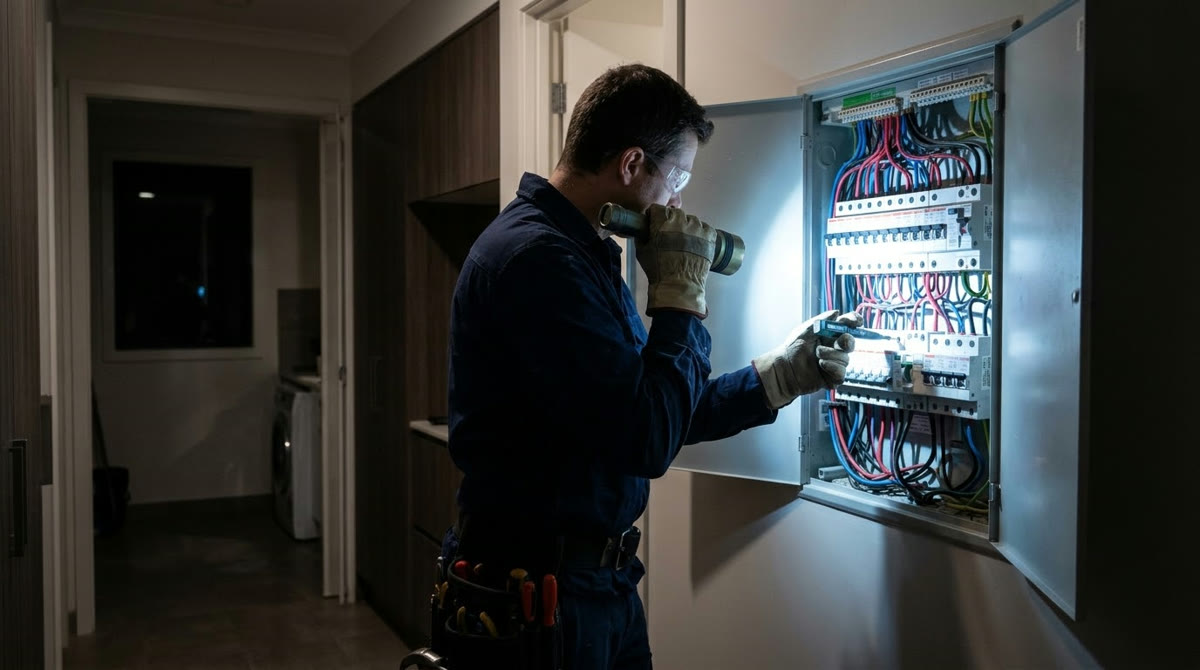
Some situations should never be left overnight. If you smell burning or see sparks from your fuse box, switch off power at the main switch if safe, keep away, and call for help.
Common examples include:
- A burning smell from power points or the switchboard
- Sparks after plugging in electrical appliances
- Signs of storm damage or water ingress
- Any electric shock, even a minor one
A practical example is a fuse box that starts crackling after heavy rain. That can mean moisture, damaged wiring, and real fire risk. If there is fire, injury, or electric shock, call 000 first.
Common Emergency Electrical Problems Handled After-Hours
Most after-hours callouts involve electrical problems that affect safety or stop power from working properly. These jobs often need fast diagnosis rather than guesswork.
Emergency electrical services commonly deal with a blown fuse, a safety switch that keeps tripping, sudden outages, faulty wiring, and hazards around outlets or the switchboard. Here is what that looks like in practice.
Power Outages, Blown Fuses, and Tripped Safety Switches
First, see if your neighbours have lost power. If they have, call your electricity provider. If only your home is affected, the issue might be with your circuit breaker, main switch, safety switch, or a blown fuse.
| Issue | Safe Actions |
|---|---|
| Whole home outage | Check neighbours; contact the distributor if area-wide |
| Tripped safety switch | Reset once if safe; if it trips again, stop and call |
| Blown service fuse | Don’t repair yourself; get urgent professional help |
If resetting a switch works briefly but then trips again, it likely means a faulty appliance or wiring and needs expert inspection.
Smells of Burning, Sparks, or Exposed Wiring
These are among the clearest warning signs of danger. A burning smell or visible sparks can point to overheating, damaged parts, or faulty wiring hidden behind a wall or inside a switchboard.
Do this straight away:
- Keep everyone away from the area
- Turn off power if safe to reach the main switch
- Do not touch exposed wiring or try a DIY fix
This matters because electrical fires can start quietly before flames appear. Even a small spark at a power point can become a larger hazard if left energised overnight.
What to Do Before Your After-Hours Electrician Arrives
Your job is not to perform electrical work. It is to keep people safe until a licensed electrician arrives.
- Keep everyone, including pets, away from the affected area.
- Turn off the main switch only if the switchboard is dry and safe to reach.
- Do not touch exposed wiring or attempt a DIY fix.
- Note when the problem started and what you saw, smelled or heard, so the electrician can find the cause faster.
- If there is fire, smoke, injury or electric shock, call 000 first.
Conclusion
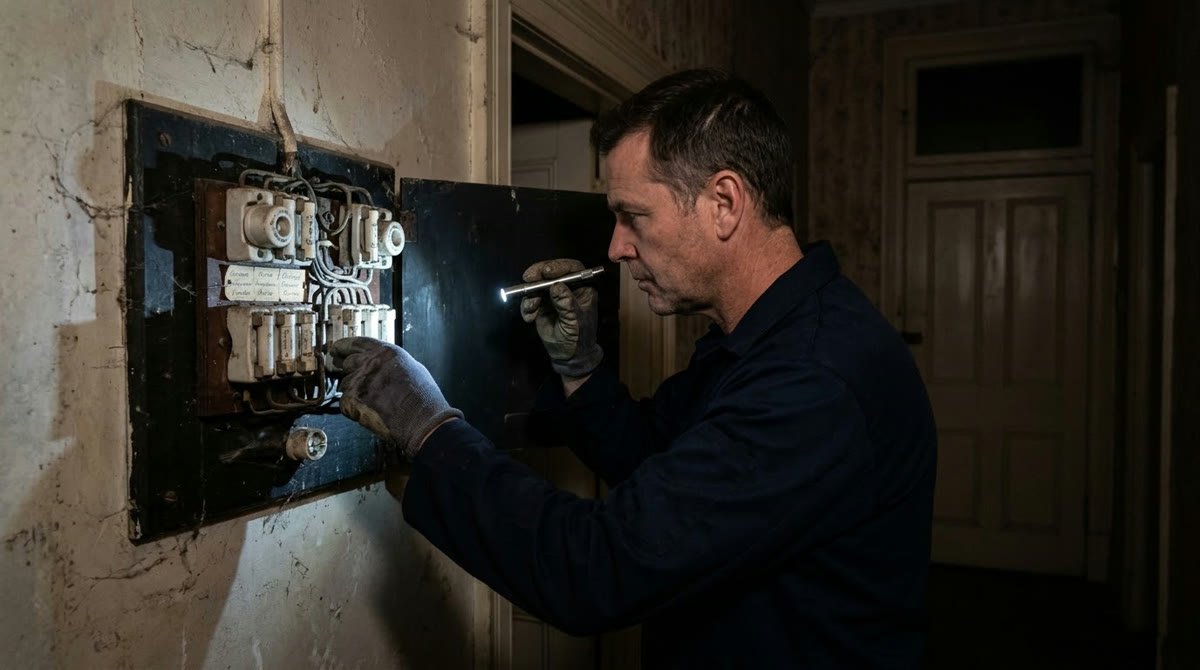
In conclusion, knowing how to handle a night-time power outage is key to staying safe and comfortable. After-hours electricians in Melbourne can quickly address emergencies like blown fuses or burning smells. Recognising when to call for help and being prepared can greatly reduce stress. Stay informed and don’t hesitate to contact a professional—your peace of mind matters. For any electrical issues, book a consultation with a trusted after-hours electrician today.
Frequently Asked Questions
Do After-Hours Electricians in Melbourne Charge More Than Daytime Rates?
An after-hours electrician may charge differently depending on the time of day and the urgency of the callout. What matters most is clear pricing before work starts, so you know the cost of the electrical services and expected response times.
Can After-Hours Electricians Assist Both Homes and Businesses?
Yes. An after-hours electrician can provide electrical services for both homes and businesses in Melbourne. Shak Electrical supports residential and commercial properties across the local area, helping reduce downtime and restore safe supply as quickly as possible.
How Quickly Can an After-Hours Electrician Respond at Night?
Response times depend on where you are in Melbourne, traffic, and current demand. A good emergency electrician will prioritise urgent, safety-related jobs first, especially when the electrical emergency involves sparks, burning smells, or a complete loss of power.