

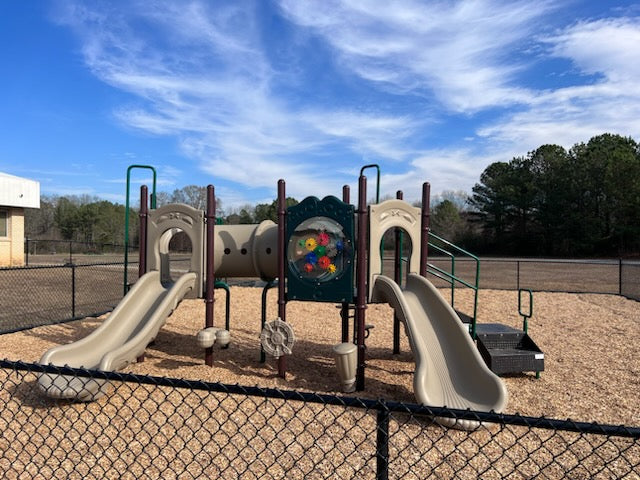
Most school playground projects follow the same pattern: a capital budget or fundraising push comes through, nearly all of it goes to the play structure, and everything surrounding it gets treated as an afterthought until the first safety inspection reveals what was skipped.
The structure is the right place to concentrate the majority of the budget, but it isn’t the only thing that determines whether the playground stays safe and usable across years. Six planning mistakes account for most of what goes wrong, and nearly all of them are easier to prevent before purchase than to correct after installation.
Table of Contents
1. Choosing Equipment Before Measuring the Space
2. Underestimating Surfacing Depth
4. Leaving Shade Out of the Plan
5. Buying for Today’s Students, Not Tomorrow’s
6. No Maintenance Budget After Installation
1. Choosing Equipment Before Measuring the Space
Committees often select a structure from a catalog before realizing it cannot fit the site once fall zones are calculated. These safety perimeters demand six feet of clearance from stationary equipment under current CPSC guidelines. Consequently, a compact unit demands a buildable area substantially larger than its physical dimensions.
Usable footprint differs from total outdoor space since fencing and drainage reduce the available square footage. Measuring the exact usable footprint prevents purchasing unworkable layouts that require expensive redesigns. Bring verified dimensions to supplier conversations before finalizing equipment choices.
2. Underestimating Surfacing Depth
Playground safety failures primarily originate with inadequate surfacing depth at the impact point rather than broken equipment. Loose-fill materials require minimum depths tied directly to the highest accessible structural point. CPSC guidelines dictate 9 to 12 inches of material at installation depending on fall height.
This protective surfacing compacts heavily under daily student traffic. A depth passing a September inspection easily falls below the safety threshold by April without active replenishment. Specifying an overfill margin at installation absorbs this inevitable loss and keeps the playground compliant.
| Key Insight: Loose-fill surfacing compacts heavily in its first year. Specifying an overfill margin at installation, not just the minimum depth, prevents noncompliant depth under equipment by midyear. |
3. Skipping the Edging
Without a physical barrier like WillyGoat’s flexible playground border edging, loose-fill surfacing constantly migrates away from the areas where students need it most. Foot traffic displaces material from the center of the fall zone, while heavy rain pushes it toward the perimeter. Within a single season, the depth directly under the equipment drops below safety thresholds simply because the material leaves the play area rapidly.
Operating without containment means the school effectively pays to surface the surrounding lawn. Inspectors measure depth directly under the equipment at the center of the fall zone rather than the edges.
Proper edging keeps the loose fill contained exactly where the impact zone dictates. This barrier drastically reduces the volume of replenishment required to pass annual safety audits.
4. Leaving Shade Out of the Plan
A playground facing minimal shading becomes unusable during a significant portion of the school year across most climates. Exposed equipment surfaces sitting in direct sun easily exceed 150 degrees on hot days.
This extreme temperature causes contact burns in seconds, creating a severe liability exposure. Lack of overhead protection places a harsh practical restriction on when the physical education department can safely utilize the space.
Deferring shade structures forces schools to re-engineer the layout or reduce overall capacity post-installation. Retrofitting overhead protection costs more than building it into the original design because contractors must anchor new poles in unprepared ground.
Heavy anchoring requirements demand resolution during the initial site prep phase. Treating overhead protection as a separate future project frequently forces the removal of expensive play components.
| Important: Exposed playground equipment in direct sun can exceed 150°F and cause contact burns in seconds. Retrofitting shade later is more expensive and can reduce play capacity. |
5. Buying for Today’s Students, Not Tomorrow’s
Schools frequently specify equipment based entirely on the current enrollment profile and ignore long-term district demographic shifts. Designing exclusively for early elementary students leaves the structure irrelevant within three years as that cohort advances. Equipment sized solely for younger children faces swift abandonment by older students when they lack challenging physical components to master.
Project leaders must evaluate what the student population will realistically look like in five years before finalizing specifications. A mixed-age structure serving a broader developmental range costs marginally more initially.
However, this flexible design remains highly relevant across multiple intake cycles. Accommodating distinct developmental stages substantially lowers the effective cost per year of useful service life.
6. No Maintenance Budget After Installation
Schools treating installation as a completed project rather than the start of an asset lifecycle face early full-replacement costs. Commercial play structures degrade rapidly without a structured maintenance plan to preserve the materials.
A standard annual schedule must cover surfacing depth replenishment, hardware torque inspections, and detailed component wear assessment. Assigning a designated staff contact ensures these mandatory checks actually happen on schedule.
Tasks get deferred until they become a safety incident or a cost emergency when districts fail to assign a dedicated budget line. A modest annual allocation for surfacing top-ups and hardware checks costs materially less than accelerated replacement. Establishing this recurring funding creates the critical difference between a durable fifteen-year asset and a degraded seven-year liability.
| Pro Tip: Before the purchase order is signed, name a responsible party and assign an annual maintenance budget. Surfacing top-up, hardware checks, and a seasonal inspection cost far less than accelerated replacement. |
The Bottom Line
Concentrating funding on the main play structure remains the correct strategy for facility planning. Yet, the components looking minor on a spreadsheet dictate how long those expensive structures perform safely.
Dedicated containment systems holding the material in place protect the physical investment. Overhead shade planned into the original layout and an active maintenance budget secure the installation’s operational lifespan.
Measure the exact site boundaries before specifying catalog items, plan surfacing depth alongside physical border containment, and build shade anchoring into the initial ground prep. Setting a five-year horizon and funding an ongoing maintenance line must happen before signing any purchase order.
| Author Profile: WillyGoat is the leading online retailer of commercial playground equipment for schools, parks, churches, daycares, and communities across America. |



1 thought on “6 Big Mistakes Schools Make Planning Playgrounds”
Comments are closed.