

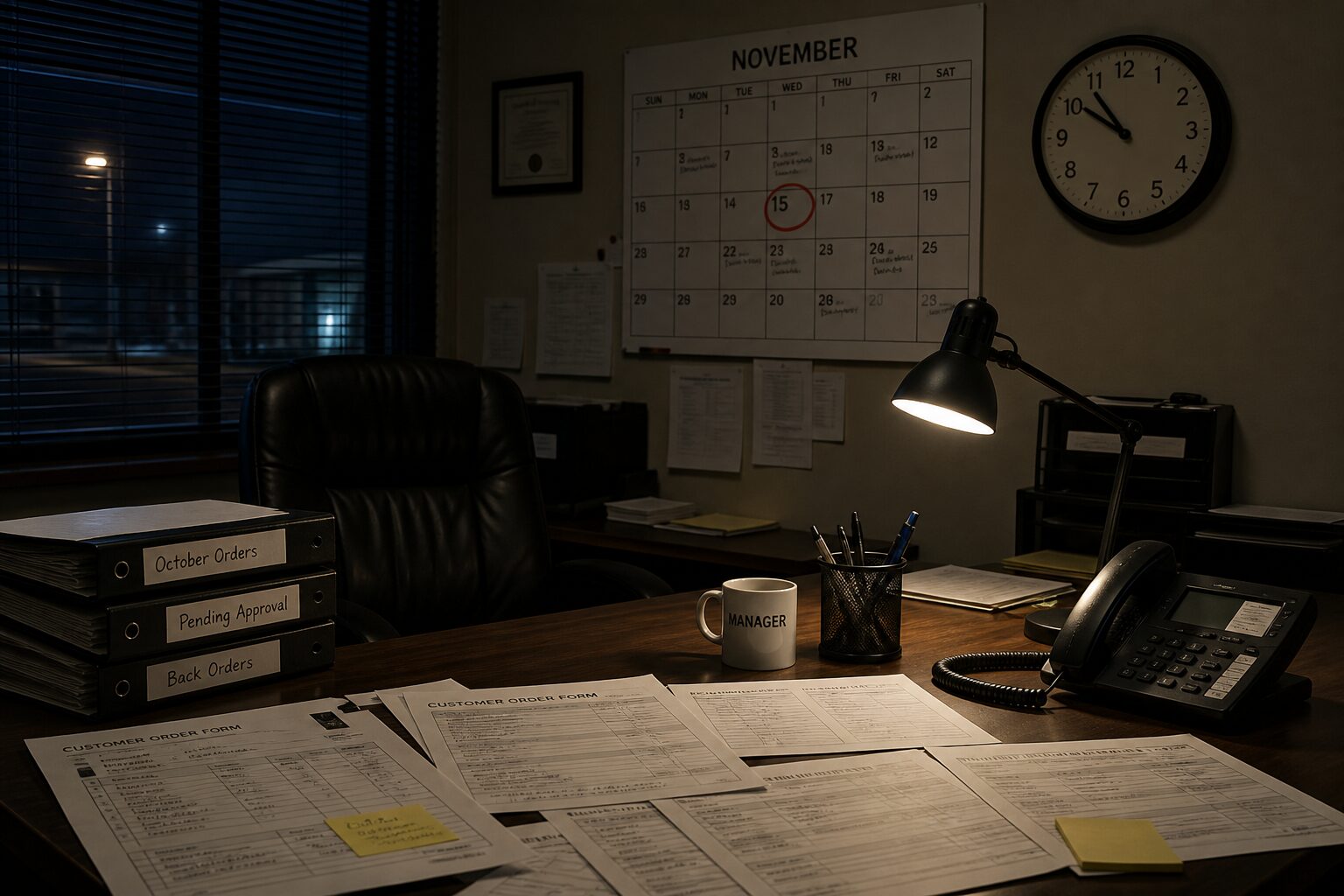
Most club treasurers have lived this exact scenario: the kit order went in two weeks too late, half the sizes came back wrong, and a replacement order at full unit price is now eating into a budget that was already tight before the first home game.
The frustrating part is that it happens to organized clubs, not just disorganized ones. Here are the six mistakes most clubs make this season, and what to do instead.
Table of Contents
1. Ordering Only For Your Current Roster
2. Trusting Group Chats For Sizing
3. Underestimating Production Lead Times
4. Skipping The Design Proof Stage
5. Forgetting Essential Training Layers
6. Ignoring Mid-Season Replacements
Putting It All Together
1. Ordering Only For Your Current Roster
Clubs typically confirm squad numbers late in pre-season and order exactly to that headcount. Late joiners and athletes who grew a full size since last September often get missed. When those additions inevitably arrive, the only remaining option involves placing a small supplementary order at full retail price.
Building a size buffer into the original order provides an easy fix. Adding a handful of larger sizes costs relatively little during the initial purchase, and finding a supplier with zero minimum order quantities removes the financial penalty for late additions. Ordering exactly to headcount thus becomes an avoidable risk rather than a necessity.
2. Trusting Group Chats For Sizing
Parents self-reporting measurements through a messaging app causes constant sizing errors. People guess their measurements while the coordinator fills in the blanks. The real cost surfaces after delivery when garments do not fit, and replacement orders drain the budget.
A loose basketball jersey absorbs a one-size error without major consequences. Close-fitting garments show the error immediately while restricting athletic movement.
The wrestling singlet represents a performance-critical piece where guessing a size creates massive competition problems. Because of this, ordering specialized gear like Sports Gear Swag’s custom team wrestling singlets requires a formal size run rather than a quick estimate.
Run an in-person sizing session before submitting the final order. Distribute a sizing guide to all players and consult expert support to interpret the measurements. Relying on self-reported data for any close-fitting item introduces unnecessary risk.
| Key Insight: For close-fitting performance garments like wrestling singlets, a size guess leads to misfit and potential eligibility concerns; a proper size run is non-negotiable. |
3. Underestimating Production Lead Times
Custom apparel requires a different timeline than standard retail stock. Production, personalization, and shipping run sequentially rather than simultaneously.
Many coordinators treat the order as an administrative task to handle only after confirming the final squad. As a result, this approach guarantees the gear will arrive late for the first fixture date.
Working backwards from a first fixture, six to eight weeks serves as a conservative minimum for standard custom orders. Complex designs or large rosters need much more runway than a basic purchase.
Rush delivery can rescue a season, but it adds a massive premium to the final bill. Anchor the ordering calendar to the first game to avoid these fees entirely.
4. Skipping The Design Proof Stage
Many clubs upload a logo, enter player names, confirm the order, and blindly wait for the delivery. The gear frequently shows up with a misspelled name or an incorrect team color.
Skipping the design proof stage means these production errors only surface after the factory finishes sewing. Corrections then cost valuable money and threaten your fixture deadline.
Requesting a full design preview resolves this issue immediately. This step lets a club verify the complete garment layout and player numbers before any payment goes through.
Treat the design proof stage as a strict supplier requirement rather than a premium bonus. Vendors unable to show a full proof transfer the risk of production errors directly onto your budget.
| Important: Skipping the design proof stage risks receiving a kit with misspelled names or off‑center crests. Always demand a free preview before payment. |
5. Forgetting Essential Training Layers
Match-day jerseys typically monopolize the planning attention. Training layers like warm-up tops get worn five days a week, yet coordinators regularly treat them as an afterthought.
Players end up training in their match kit, which shortens its useful life drastically. Others show up in mismatched personal gear that destroys the visual cohesion the club paid to create.
Treat the full training wardrobe as part of the seasonal order right from the start. Add warm-up tops customized with the same color scheme as the primary match kit.
This strategy opens up a lucrative bulk discount opportunity for the organization. Combined orders represent a larger total volume, so the final pricing should reflect that scale.
| Pro Tip: Include training layers in your initial order warm‑up tops, hoodies, compression gear to unlock bulk discounts and preserve match kits. |
6. Ignoring Mid-Season Replacements
Gear gets torn, lost, or outgrown during the year. This happens frequently in contact sports where players grow rapidly between September and January.
One missing item breaks the visual uniformity of the entire set. A mismatched uniform can even create an immediate eligibility concern for the athlete.
Ordering surplus stock upfront and storing it in a closet offers one potential solution. A much more flexible option involves finding a vendor that allows single replacement items.
A replacement jersey can then be ordered individually to match the existing set without requiring a bulk minimum. Document the original design specifications so any mid-season replacement arrives as an exact match.
Putting It All Together
Coordinators treat gear as a one-time purchase event rather than an ongoing seasonal commitment. Clubs that avoid these pitfalls build buffer sizing in for growth. They also complete a proper size run for close-fitting performance garments and calculate lead times accurately.
Securing a free design preview protects the club from costly manufacturing errors. Finding vendors with zero minimum order quantities makes mid-season replacements practical without a massive bulk commitment. Start the process with a clear design and pay only when the final proofs look correct.
| Author Profile: Sports Gear Swag is the leading online retailer of custom sports apparel and gear for teams, schools, and organizations of all sizes. Specializing in team jerseys, uniforms, and athletic apparel with a wide range of customization options. |








1 thought on “6 Simple Mistakes To Avoid This Season”
Comments are closed.