

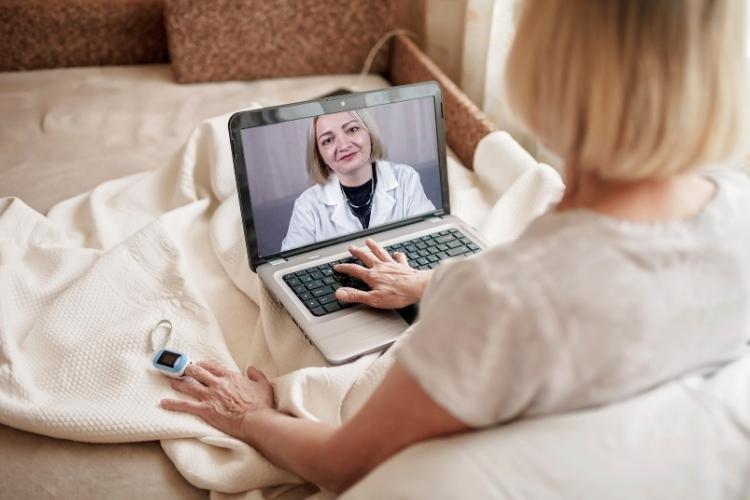
A doctor’s appointment once meant rearranging the day around a waiting room. Now, for a growing number of everyday health concerns, the waiting room might be the sofa. Telemedicine has moved beyond its pandemic moment and into ordinary life, changing not just where people see a doctor, but what they expect healthcare to look like.
When Healthcare Has to Fit Into Real Life
Convenience has become one of the clearest forces behind telehealth’s staying power. J.D. Power’s 2024 U.S. Telehealth Satisfaction Study found that 65% of consumers named convenience as their main reason for using telehealth. Direct-to-consumer services scored 730 out of 1,000 for overall patient satisfaction.
It makes sense. An appointment at 11 am can easily consume much more than its allotted slot once travel, parking, and waiting times enter the picture. That becomes harder to manage for people juggling work, childcare, or other responsibilities. Geography creates another problem. In rural communities and small towns, reaching the nearest doctor or dentist can mean traveling 20 or 30 miles.
24HrDOC approaches that problem with a deliberately simple model. Adults complete an online health assessment that usually takes less than three minutes. A licensed medical provider reviews the information, generally within 45 minutes to an hour. If the provider needs more details, they can contact the patient by phone or text.
The platform operates 24 hours a day, so everyday health issues don't have to fit traditional clinic hours. If you want to learn how the process works, you can find details from 24HrDoc about its virtual consultations and the conditions its providers assess.
There’s also an optional priority service for patients who want their case reviewed within 45 minutes, provided they submit complete intake information. It’s a healthcare model built around a fairly modern expectation that everyday services should work around people’s schedules rather than consume them.
Keeping the Focus on Everyday Urgent Care
The idea behind 24HrDOC took shape during 2020 and early 2021, when COVID-19 rapidly changed attitudes towards remote healthcare. The digital platform became operational around 2021 to 2022 and now reports serving more than 12,000 patients across the United States.
Its focus has become increasingly specific. The company covers more than 40 conditions, including sinus infections, urinary tract infections, strep throat, ear infections, pink eye, cold sores, and acne. It also provides confidential sexual health evaluations and treatment for certain STDs and STIs, alongside prescription refill services.
Dental infections and tooth abscesses account for the largest volume of its business. This category highlights one practical role for telemedicine. Someone experiencing dental pain in a small town may not have a dentist nearby or may struggle to secure a same-day appointment. Where clinically appropriate, remote access to a licensed provider offers another route to an assessment.
24HrDOC has also stepped away from some areas it previously explored. The company is discontinuing compounded lifestyle programs, including GLP-1 weight-management products, microdosing and erectile dysfunction subscription tiers. Instead, it is concentrating on individual urgent-care visits.
That narrower scope comes with clear boundaries. The service doesn’t provide mental health care or prescribe controlled substances. Nor does it replace physical examinations, emergency treatment, or other situations that require in-person medical attention.
The Price of Getting an Answer
Convenience loses much of its appeal if nobody knows what it will cost. For uninsured and underinsured Americans in particular, the price attached to seeking medical advice can influence whether they seek it at all.
24HrDOC charges between $39.99 and $59.99 for its core urgent-care visits. Patients pay the consultation fee themselves, so they do not need health insurance. The company says its visit pricing includes no copays or hidden consultation fees.
The distinction between medical consultation and medication matters here. 24HrDOC isn’t a pharmacy. When a provider considers a prescription medically appropriate, the platform sends it electronically to the patient’s chosen licensed retail pharmacy. The patient collects the medication locally and can use personal health insurance to cover the prescription where applicable.
That process also keeps the company’s role relatively defined. It assesses suitable conditions remotely and facilitates prescriptions when appropriate rather than storing, compounding, or mailing medication itself.
Telemedicine Has Outgrown Its Pandemic Reputation
Virtual medicine might still feel closely linked to lockdowns and video calls, but its place in American healthcare now looks much more permanent.
The American Medical Association reports that telehealth use among U.S. physicians rose from roughly 25% of practices in 2018 to 71% in 2024. Telemedicine also accounted for approximately 5% to 7% of medical encounters in 2024, according to private insurance and Medicare analyses.
Patients appear comfortable with the format. National survey findings show that 89% of telehealth users felt satisfied with their most recent visit, while 75% said the quality compared with an in-person appointment. Around 80% reported no technical difficulties.
Research has also examined outcomes beyond convenience. A systematic review available through the National Institutes of Health associated telehealth adoption with fewer all-cause and condition-related hospitalizations and greater patient satisfaction. Across several studies, researchers recorded about 18 fewer all-cause hospitalizations and 37 fewer condition-related hospitalizations per 1,000 patients. Research has also associated telehealth with lower missed-appointment rates and stronger medication adherence in some settings.
Those figures help explain why virtual care has continued even after clinics reopened fully. The U.S. telehealth market reached an estimated $52.8 billion in 2025 and is forecast to reach around $65.4 billion in 2026. Forecasts differ further out, but some models put the market between approximately $317 billion and $448 billion by 2034 or 2035.
A Different Kind of Doctor’s Appointment
The future of healthcare is unlikely to live entirely on a screen. Some symptoms need hands-on examinations. Emergencies need emergency departments. Dental procedures still need dentists, and complex conditions require continuity of care that a short online assessment cannot provide. But the choice is no longer simply between visiting a clinic and doing nothing.
For straightforward conditions suited to remote assessment, platforms such as 24HrDOC give adults another entry point into the healthcare system. The company’s 24-hour model, sub-hour review window, and flat visit pricing put convenience at the center of the experience. Its reported 4.2-out-of-5 Trustpilot rating and coverage across more than 300 news sites also point to its growing visibility in a crowded digital health market.
Perhaps that’s the more interesting shift. Telehealth has changed the setting of an appointment, but it has also changed the rhythm around it. Healthcare can increasingly sit alongside work, family, and the rest of daily life instead of demanding that everything else stops first.











1 thought on “Healthcare From Your Sofa: Why Convenience Is Changing the Way We See a Doctor”
Comments are closed.