

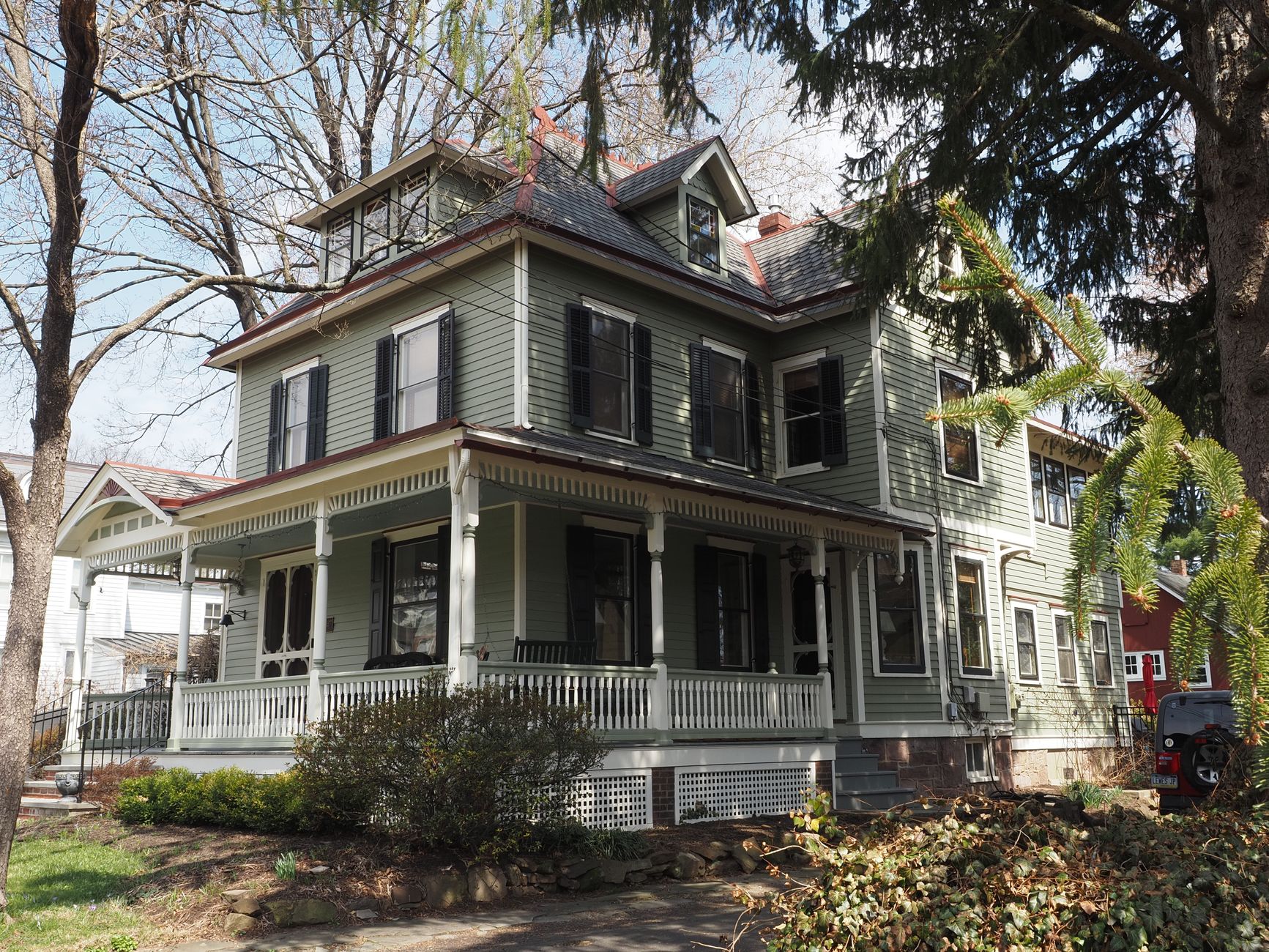
Historic district designation protects neighborhood character. It also shrinks your buyer pool, limits what the next owner can do with the property, and adds layers to the sale that most sellers don't anticipate until they're mid-transaction.
Owning a home in a historic district carries a certain prestige. The architecture is distinctive. The streetscape has character. The neighborhood feels like it belongs to a specific time and place — because, in a legal sense, it does.
But when it's time to sell, that designation stops being an aesthetic feature and starts being a transactional reality. The restrictions that preserve the neighborhood's character also limit what your buyer can do after closing, which directly affects who will buy, how much they'll pay, and how long the sale takes. If your home is in a locally designated historic district — or if the property carries individual landmark status — here's what those labels actually mean for your sale, and what you should understand before you list.
The Difference Between Federal, State, and Local Designation — And Why Only One Restricts Your Buyer
This is the first point where confusion starts. There are three levels of historic designation in the United States, and they carry very different legal weight.
National Register of Historic Places
The National Register is a federal list maintained by the National Park Service. A property or district listed on the National Register is recognized for its historical significance — but that recognition alone does not impose any restrictions on what a private owner can do with the property. You can renovate, remodel, or even demolish a National Register property without federal approval, as long as no federal funding, federal licensing, or federal permits are involved.
This surprises most people. The assumption is that "historically registered" means you can't change anything. For the National Register, that's not true. The designation is honorific and may qualify the property for certain tax incentives, but it doesn't restrict private use or alteration.
State Historic Registers
Most states maintain their own registers of historic places. Like the National Register, state listing is primarily recognition-based. It may unlock access to state-level preservation tax credits or grant programs, but state listing by itself generally does not restrict what you can do with your property. The specifics vary by state — some states have stronger protections than others — but in most cases, state designation is not what creates the restrictions sellers encounter.
Local Historic District Designation
This is the one that matters for sellers. When a municipality designates a local historic district, it creates enforceable regulations that apply to every property within the district's boundaries. These regulations are typically administered by a local historic preservation commission — a municipal body with the authority to review and approve or deny proposed changes to properties within the district.
The scope of what's regulated varies from one municipality to another, but most local historic district ordinances cover exterior alterations (windows, doors, siding, roofing, paint colors, fencing), additions, new construction on the lot, and demolition. Some districts regulate only "contributing" structures — buildings that contribute to the district's historic character — while leaving "non-contributing" structures with more flexibility. Others apply the regulations across the board.
The practical effect: if your home is in a locally designated historic district, the next owner cannot change the exterior without review and approval from the preservation commission. That one fact reshapes the entire buyer pool.
How Deed Restrictions Layer On Top of District Designation
Historic district regulations and deed restrictions are two separate things, and a property can be subject to both.
A deed restriction — also called a restrictive covenant or preservation easement — is a legal limitation that runs with the property. It's recorded in the deed and binds every future owner, regardless of whether the local historic district designation continues to exist. Deed restrictions can be placed by a previous owner, by a preservation organization that granted tax benefits in exchange for the restriction, or by a municipality as a condition of a zoning variance or demolition delay.
Common deed restrictions on historic properties include prohibitions on demolition, requirements to maintain specific architectural features, restrictions on materials used for exterior repairs, and limitations on additions or new construction. Some are narrow (protecting a single facade) and some are broad (restricting any alteration that would change the property's historic appearance).
For sellers, the critical thing to understand is that deed restrictions survive the sale. They don't expire when you sell. They don't require the buyer's agreement. They're part of the property's legal identity, and a title search will reveal them. If a buyer discovers a deed restriction during due diligence that limits their renovation plans, the deal can fall apart — or the buyer may demand a significant price reduction to account for the limitation they didn't expect.
The best practice is to know exactly what restrictions exist on your property before you list. Pull the deed, review any recorded covenants, and check with both the local preservation commission and the county records office. A buyer who understands the restrictions upfront and still makes an offer is far more likely to close than one who discovers them mid-transaction.
The Buyer Pool Problem: Who Actually Buys Historic District Homes
Historic district designation creates a split in your buyer pool that most sellers underestimate.
On one side are preservation-minded buyers — people who specifically want the architectural character, the neighborhood aesthetic, and the story that comes with a historic home. These buyers understand the restrictions, accept them, and may even see them as a feature rather than a limitation. They're often willing to pay a premium for a well-maintained historic property in a desirable district.
On the other side is everyone else — and that's the larger group. Buyers who plan to renovate, add square footage, update the kitchen with modern materials, replace original windows with energy-efficient alternatives, or change the exterior appearance in any meaningful way will encounter the preservation commission's review process. Many will decide the added time, cost, and uncertainty aren't worth it. They'll move to a property outside the district where they can renovate freely.
The result is a smaller buyer pool. Not an empty one — historic districts in desirable locations consistently attract demand — but a narrower one. And in real estate, a narrower buyer pool typically means longer days on market and less pricing leverage for the seller.
This effect is amplified when the property needs work. A well-maintained historic home sells to the buyer who wants to live in it as-is. A historic home that needs a new roof, updated mechanicals, or foundation work sells to the buyer who wants to renovate — and that buyer now faces both the cost of the renovation and the regulatory overhead of the preservation review. That combination pushes some buyers out entirely.
What the Preservation Commission Actually Controls
The specifics vary by municipality, but most local historic preservation commissions regulate the following categories of work. Understanding what's controlled — and what isn't — helps sellers set accurate expectations with buyers.
Exterior alterations. This is the core of most preservation ordinances. Changes to the visible exterior of a contributing structure — windows, doors, siding, roofing materials, trim, paint colors, porches, railings, fencing — typically require commission review and approval. The commission evaluates whether the proposed change is compatible with the district's historic character. Proposals that use non-period materials (vinyl siding over original clapboard, for example) or that change the architectural style of the facade are likely to be denied.
Additions. Most districts allow additions, but with significant design constraints. Additions are generally required to be subordinate to the original structure — set back from the primary facade, shorter than the original roofline, and designed in a way that doesn't obscure or compete with the historic building. Rear additions are more likely to be approved than side or front additions.
Demolition. Full or partial demolition of a contributing structure is the most heavily regulated action in any historic district. Many municipalities impose a demolition delay — a waiting period of 60 to 180 days or more — during which the commission assesses the building's significance and explores alternatives. Some districts effectively prohibit demolition of contributing structures except in cases of documented structural failure.
New construction. Building a new structure on a lot within a historic district — including garages, accessory buildings, or infill housing — requires commission review. The design, materials, scale, and setback of the new structure must be compatible with the surrounding district.
Interior alterations. In most districts, interior work is not regulated unless the interior has been separately designated as historically significant. You can typically gut and modernize an interior without commission involvement, as long as the exterior remains unchanged. This is an important selling point that many sellers fail to communicate to prospective buyers.
The Contractor Problem: Why Renovations Cost More in Historic Districts
Even when the preservation commission approves a renovation, the cost of executing it is typically higher than the same work outside the district. The reasons are practical, not regulatory.
Period-appropriate materials cost more. Original-profile wood windows, slate or standing-seam metal roofing, historically accurate paint, and matching masonry are all more expensive than their modern equivalents. A roof replacement that might cost $12,000 with standard asphalt shingles can run $25,000 to $40,000 or more when the commission requires slate or metal to match the original.
Specialized contractors are scarce. Not every roofer, mason, or carpenter is experienced with historic restoration work. The pool of contractors who understand preservation standards, know how to work with period materials, and have a track record of getting their work approved by the local commission is smaller — and they charge accordingly. In some markets, wait times for qualified historic restoration contractors can stretch to months.
The approval process itself adds time and cost. Commission reviews happen on a set schedule — monthly in many municipalities. If your contractor submits an application that's incomplete or that the commission sends back for revision, you're looking at another month before the next hearing. That timeline delay adds carrying costs for buyers who are financing the purchase and planning immediate work.
For sellers, all of this matters because it affects what buyers are willing to pay. A buyer who knows they'll spend $30,000 more on a commission-approved roof replacement than they would on a standard roof will factor that into their offer. The historic premium that well-maintained properties command can evaporate quickly when deferred maintenance enters the picture.
What This Means for Sellers in High-Value Historic Markets
In affluent, university-anchored, or architecturally significant communities — places like Princeton, New Jersey; Charleston, South Carolina; Savannah, Georgia; or Annapolis, Maryland — historic district properties carry substantial value precisely because of their character and location. But the selling dynamics are distinct from the broader market.
In Princeton, for example, the Witherspoon-Jackson Historic District is a locally designated Type 2 district governed by the municipality's Historic Preservation Commission. The Office of Historic Preservation reviews proposed changes within the district to ensure alterations and new construction are compatible with the surrounding neighborhood. For sellers in this district, the designation doesn't prevent a sale — properties in Witherspoon-Jackson trade at significant premiums — but it does shape who buys and how those buyers approach the transaction.
At Princeton's median home price near $995,000, the dollar impact of historic district considerations is magnified. A buyer who discovers after contract that the windows require commission-approved replacements at $1,200 per window instead of $400 per window may renegotiate — or walk. A buyer whose renovation timeline assumes standard permitting may not account for the additional two to six months that preservation review adds.
Across 42 seller transactions that Eagle Cash Buyers documented in 2026, roughly one in five involved a title or documentation problem — not a property problem — that had to be resolved before the sale could close. Timing mattered more than price to a meaningful share of sellers. These are sellers who contacted a cash buyer, not a representative sample of all home sellers, but the pattern holds relevance for historic district sellers: when the conventional path stalls on restrictions, renovation disputes, or a buyer pool that's thinner than expected, the certainty of a guaranteed close has real value.
For homeowners in Princeton's historic neighborhoods — Witherspoon-Jackson, the Western Section, Downtown — who need to move on a firm timeline, the option to sell your house fast in Princeton, New Jersey through a direct cash sale bypasses the buyer pool problem entirely. A cash buyer purchases the property as-is, in its current condition, without requiring the seller to resolve deferred maintenance, obtain preservation approvals, or wait for a buyer whose lender is comfortable with the district's restrictions. The agreed price goes to the seller intact — no closing costs, no agent commissions, no fees deducted at closing beyond the seller's own mortgage payoff and any recorded liens.
Five Things to Do Before You List a Historic District Home
1. Pull your deed and review every recorded restriction. Don't assume you know what's on the deed. Preservation easements, restrictive covenants, and HOA-layer restrictions can all exist alongside the district designation. A title search or a call to the county recorder's office will reveal what's there. Surprises during buyer due diligence kill deals.
2. Contact your local preservation commission before listing. Ask which changes require review, what the current approval timeline looks like, and whether there are any open violations or pending actions on your property. If a buyer's agent calls the commission during due diligence and learns about an unresolved issue, that's a problem you could have addressed in advance.
3. Know the difference between contributing and non-contributing status. If your property is classified as "non-contributing" within the district — meaning it doesn't add to the district's historic character — the restrictions may be significantly lighter. That's a selling advantage worth communicating clearly in the listing.
4. Document any commission-approved work you've completed. If you replaced the roof with approved materials, restored original windows, or completed an approved addition, keep the commission's approval letters and contractor documentation organized. Buyers and their lenders will want to see that past work was done in compliance. Undocumented work raises red flags and can delay or derail a sale.
5. Price for the actual buyer pool, not the theoretical one. A beautifully maintained historic home in a desirable district commands a premium from the right buyer. A historic home with deferred maintenance in a district with strict regulations appeals to a much smaller audience. Pricing should reflect the realistic intersection of condition, location, and the regulatory context the buyer inherits.
The Bottom Line: Historic Designation Adds Value — But It Also Adds Complexity
Historic districts exist for a good reason. They protect architectural character, preserve neighborhood identity, and maintain property values in ways that benefit every owner within the district. Well-maintained homes in desirable historic neighborhoods consistently outperform comparable properties in unrestricted areas.
But preservation comes with strings. The restrictions that protect the district's character also limit what buyers can do, which limits who will buy, which affects how long the sale takes and how much negotiating power the seller has. Deed restrictions add another layer. Specialized contractor requirements add cost. Commission review timelines add time.
None of this makes a historic district home unsellable. It makes it differently sellable. Sellers who understand the designation, know their restrictions, communicate them clearly, and price accordingly are the ones who close on time and at fair value. The ones who treat the designation as an afterthought — or worse, as something to minimize during the marketing process — are the ones who watch deals fall apart when buyers discover what they're actually buying into.
Know what you're selling. Know what the buyer is inheriting. And make sure both of those things are clear before the first showing.
This article is for educational purposes and does not constitute legal or real estate advice. Historic district regulations vary significantly by municipality. Consult your local historic preservation commission and a licensed real estate attorney for guidance specific to your property.









2 thoughts on “Selling a Home in a Historic District: What Deed Restrictions and Landmark Designations Actually Mean for Your Sale”
Comments are closed.