Walk into enough living rooms and a pattern shows up quickly: a nice sofa, a decent rug, and above the sofa, a piece of art that looks like it got lost on its way somewhere else. It's small, it's hung a little too high, and it floats in the middle of a big empty wall like a postage stamp on an envelope. The furniture isn't the problem, and neither is the taste of whoever chose it, since the same room would look completely different with one adjustment. It's almost always a question of scale and placement, which is why choosing wood wall decor for living room spaces starts with a tape measure rather than a mood board.
The Two Mistakes Almost Everyone Makes
The first mistake is size. People pick art that feels big while standing in a store or scrolling on a screen, then discover at home that a living room wall swallows it whole, leaving the piece looking like an afterthought rather than a decision. The second is height. Art tends to get hung where it feels natural to reach, which is usually far higher than it should be, leaving a wide, awkward gap between the sofa and the piece that nobody can quite explain but everybody can feel. Together, these two habits create the same effect every time: art that seems disconnected from the furniture below it instead of belonging to the same picture, no matter how good the piece itself happens to be.
A Simple Rule for Getting the Size Right
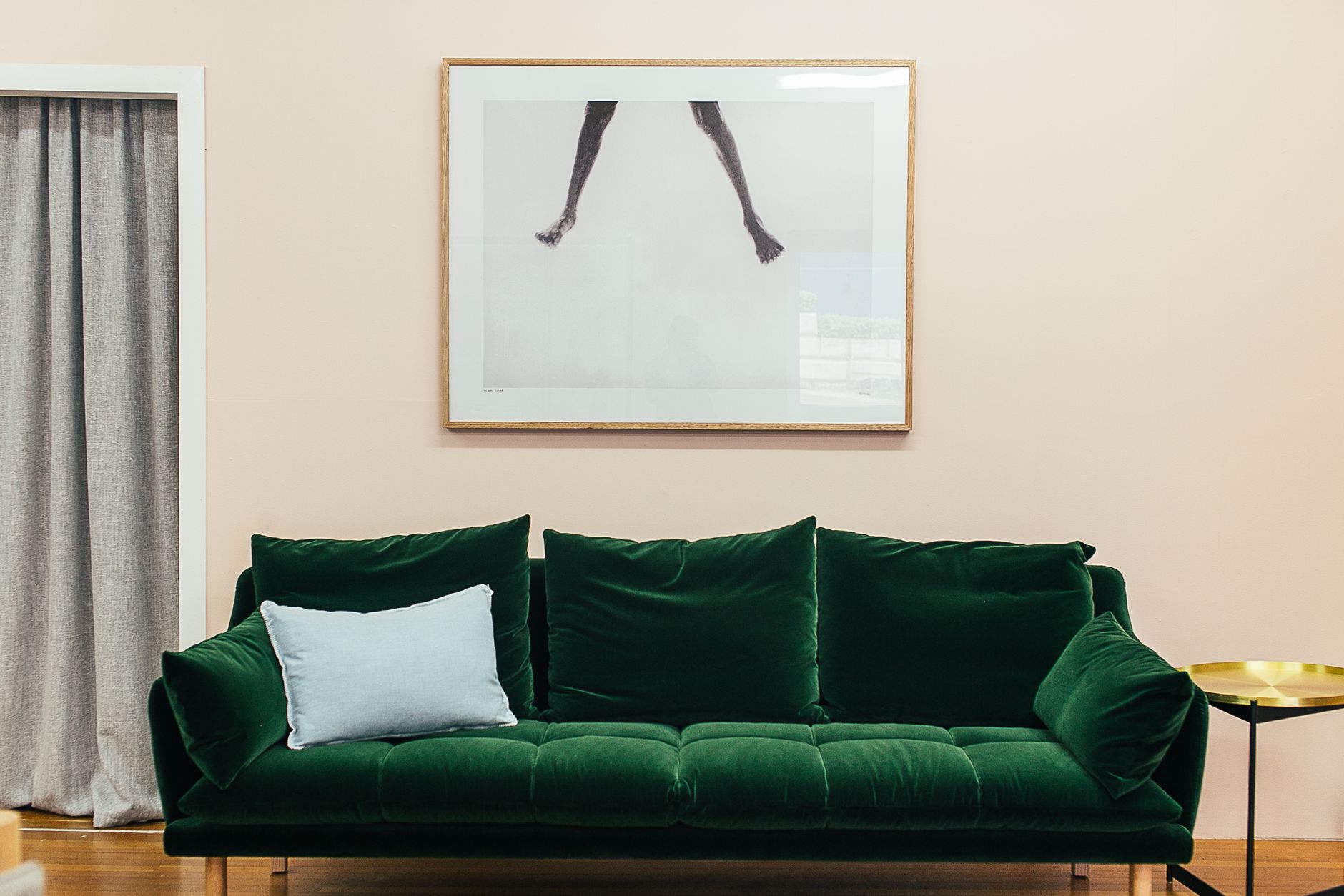
Designers rely on a rough guideline that works surprisingly well. The art, or the whole group of pieces, should span about two thirds of the width of the sofa beneath it. Then it should hang low enough that the bottom edge sits roughly a hand's width above the back cushions, so the two read as one arrangement. That's enough to fix most rooms without any special training, and it works with a single large panel just as well as with a cluster of smaller ones, so there's no need to redo an entire wall to see a real difference.
When One Big Piece Isn't Enough
Some walls are simply too wide or too tall for a single piece, especially in open-plan rooms with high ceilings, and that's where a grouped arrangement helps. Three matching panels spaced evenly, or a mix of shapes held together by a consistent wood tone, can fill the width without looking crowded. The trick is leaving equal gaps, usually a couple of inches, and treating the group as one unit when measuring, rather than judging each piece separately. Done well, the wall stops feeling like a blank space waiting for something and starts feeling like the anchor of the whole room, which is exactly what a living room wall is supposed to be.