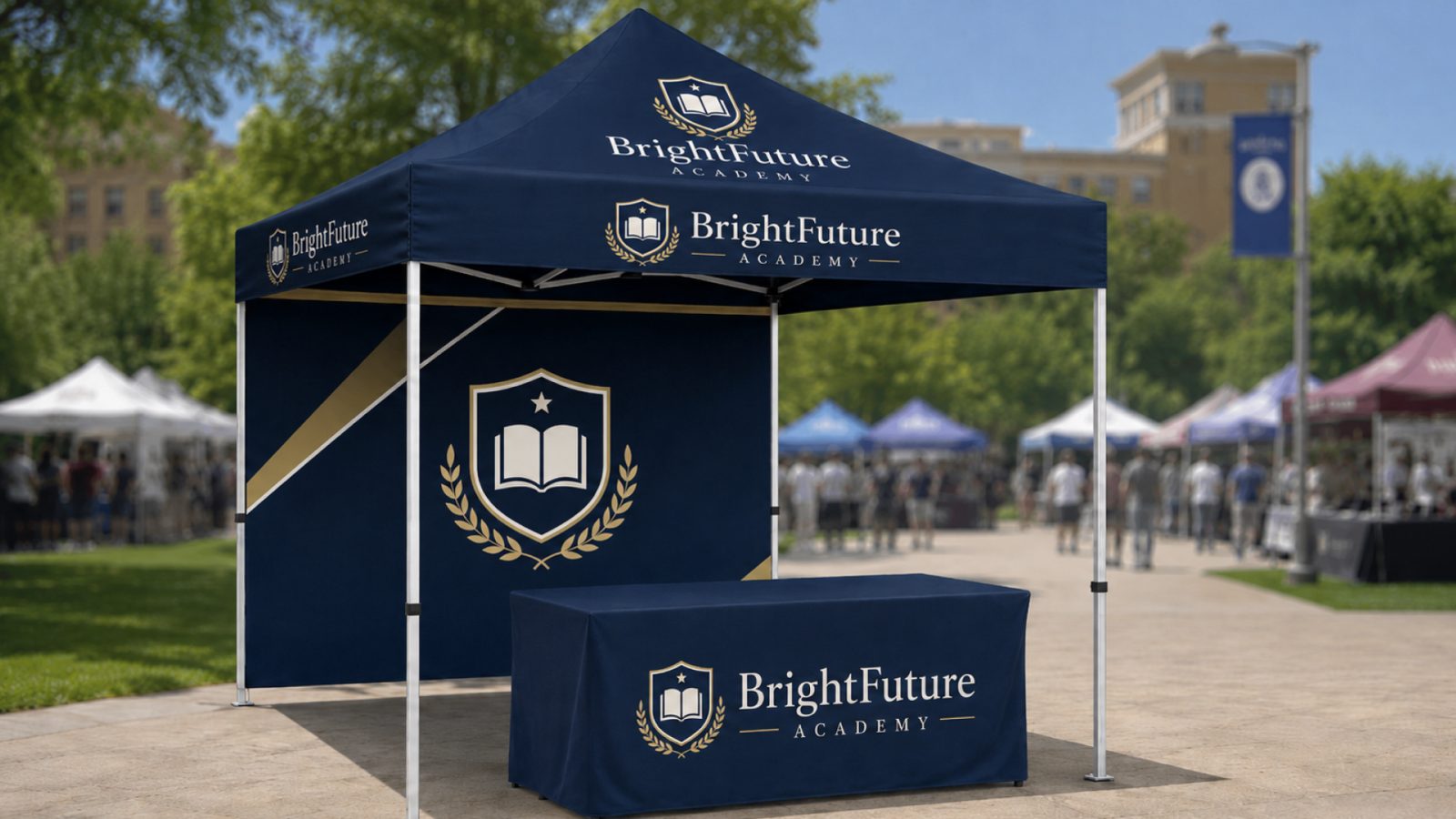
If you’ve ever stood in a 10×10 pop-up and felt cramped, you already know the problem: not enough room for the table, the display, the people, and the product. A 10×15 canopy tent solves this. It gives you half again as much covered space as the standard 10×10 without the bulk of a 10×20.
This guide covers what a 10×15 canopy tent offers, who benefits most, what to check before buying, and how custom canopy tents can turn shade into marketing.
What Is a 10×15 Canopy Tent?
A 10×15 canopy tent is a portable, frame-supported shelter measuring 10 feet by 15 feet, or 150 square feet of covered space. It usually consists of:
- A collapsible frame (steel or aluminum)
- A waterproof, UV-resistant polyester or vinyl top
- Adjustable-height legs
- Optional sidewalls, half walls, or mesh panels
Most models set up in 10 to 20 minutes with two or three people, and pack down into a carry bag or rolling case for transport.
How Much Space Do You Really Get?
Because 10×15 is less common than 10×10, people often wonder how it works in practice. Roughly:
- Vendor or trade show booth: Room for two to three 6-foot tables, product displays, and space for customers to walk in
- Seated guests: About 8 to 12 people at small tables, depending on your layout
- Standing guests: Around 15 to 20 people for a casual gathering
- Sports sidelines: Enough for a team bench, coolers, and gear
These are estimates. Chairs, tables, and walkways all take up more room than you’d think, so lay out your furniture first.
Best Uses for a 10×15 Canopy Tent
1. Farmers markets and craft fairs. The extra depth lets you display products in front and keep inventory, a cash station, or a seat behind them.
2. Trade shows and outdoor expos. A larger footprint is more noticeable than the sea of 10×10 tents, and it leaves room for demos, sampling, or conversations with visitors.
3. Backyard parties and family gatherings. It comfortably covers a buffet table plus a small seating area, or a couple of picnic tables.
4. Sports and school events. Teams, booster clubs, and PTAs use them for sideline shade, fundraisers, and check-in stations.
5. Food and beverage vendors. Extra room helps you separate prep, service, and customer areas.
What to Look for Before You Buy
Frame Material
- Steel is affordable and sturdy but heavier and can rust if not coated properly. It suits occasional use.
- Aluminum is lighter, rust-resistant, and better for frequent setup and transport. It’s the usual choice for professional and commercial use.
Also check leg thickness and truss design. A thicker, more rigid frame handles wind better and lasts longer.
Canopy Fabric
Look for a heavy-duty polyester (often listed in denier, such as 500D or higher) with a waterproof coating and UV protection. Fire-retardant certification is also worth checking, since many festivals and venues require it.
Wind and Weather Readiness
A canopy acts like a sail in the wind. Whatever tent you buy:
- Use weights or sandbags on every leg (commonly 25 to 40 lbs per leg)
- Stake it down on grass or soft ground
- Take it down when winds get strong
No canopy is designed to stay up in severe weather, no matter how well built.
Portability and Storage
A 10×15 frame is heavier than a 10×10, so a rolling bag or wheeled case is a real convenience. Check the packed weight if you’ll be loading it alone.
Accessories
Sidewalls, half walls, and mesh panels add privacy, wind protection, and bug control. Confirm they’re sold for your specific frame before ordering.
Why Consider Custom Canopy Tents?
A plain canopy provides shade. Custom canopy tents provide shade and brand exposure at the same time.
If you attend events regularly, a branded canopy works as a portable billboard. It draws attention from across a crowd and reinforces your business name every time you set up. Common customization options include:
- Full-color canopy tops with your logo, tagline, or brand artwork
- Custom colors matched to your brand palette
- Printed sidewalls and backwalls that add more branded surface area
- Valance printing for your name or website along the tent’s edge
- Custom accessories such as flags, banners, and weight bags
Tips for Designing an Effective Custom Canopy
- Keep it simple. A large logo and one clear message read better from a distance than a crowded design.
- Use high-contrast colors. Bold contrast is visible in bright sunlight and busy venues.
- Think about sightlines. Most people see the sides and valance first, so put key information there.
- Supply vector artwork. Vector logo files print sharper than low-resolution images.
- Check event rules. Some venues have restrictions on tent color, height, or signage.
For any business that shows up in person, custom canopy tents can be one of the most cost-effective forms of advertising, since the same tent is reused at dozens of events.
Is a 10×15 Canopy Tent Right for You?
Choose a 10×15 if:
- A 10×10 feels too tight, but a 10×20 is more than you need
- You want room for both display and customer traffic
- You hold events for a small to medium group
- You want a bigger visual presence at markets or trade shows
Stay with a 10×10 if you need something quick, ultra-light, and easy to carry solo. Choose a 10×20 if you regularly host large groups.
Care and Maintenance Tips
- Dry the canopy fully before storing to prevent mildew
- Clean fabric with mild soap and water, not harsh chemicals
- Inspect joints, pins, and legs for bends or wear before each use
- Store in a cool, dry place away from direct sun
- Replace damaged parts promptly instead of pushing through another event
Final Thoughts
A 10×15 canopy tent hits a practical middle ground: enough room to work comfortably, without the storage and setup demands of a much larger structure. Add custom branding, and your tent stops being just shelter and becomes part of your identity at every event. Whether you’re selling at weekend markets, exhibiting at trade shows, or hosting outdoor gatherings, choosing the right frame, fabric, and design will give you a canopy that performs and lasts.
FAQs
How many people fit under a 10×15 canopy tent?
About 8 to 12 seated at tables, or 15 to 20 standing, depending on layout.
Is a 10×15 canopy tent waterproof?
Most quality canopies have waterproof-coated fabric, but seams and edges vary. Check the product specs and consider sidewalls for heavy rain.
Can I get custom canopy tents in a 10×15 size?
Yes. Many manufacturers offer custom printing on 10×15 tops, valances, and sidewalls, though availability and lead times vary by supplier.
How much weight do I need to secure a 10×15 canopy tent?
A common guideline is 25 to 40 lbs per leg, more in windy conditions. Always follow the manufacturer’s guidance.