There is a special pleasure in watching dinner take shape. A cook turns a fillet, checks its surface, and reaches for a plate that a guest has already begun to study. At a chef's counter, those ordinary movements become part of the meal. Diners need a clear view, along with somewhere comfortable to sit while the kitchen continues working.
Choosing restaurant bar stools for this setting begins with the experience that the counter promises. Some guests arrive for a tasting menu and conversation with the kitchen. Others want a quick meal with something interesting to watch. The right arrangement supports that difference, allowing people to settle in without putting their knees, coats, or plates in the way.
Decide what the guest should see
Start from the seated position. A counter may look open when someone stands beside it, yet hide most of the cooking once that person sits down. Raised equipment, ingredient containers, and decorative screens can interrupt the view. Before ordering stools, place a sample at the proposed counter and inspect the scene from different seated heights.
The most interesting view is not always the hottest station. Watching plates being finished may reveal a clearer sequence than watching a cook's back at the grill. It also lets the restaurant decide what guests see without displaying every preparation task. Discuss the intended sightline with the chef, since visibility is a working-kitchen decision as well as an interior design choice.
Consider the view beside the guest, too. People often turn to talk to a companion while watching the kitchen. A seat that works beautifully facing forward may feel awkward when that conversation begins. Curved counters and corners deserve their own tests because they change how neighboring diners share space.
A guest's expectations also depend on the format of the meal. This guide to the chef's counter experience considers arrival, pacing, and the relationship with an open kitchen. Review those parts of the visit alongside the sightline before deciding which position to advertise as a special seat.
Give a long meal somewhere to rest
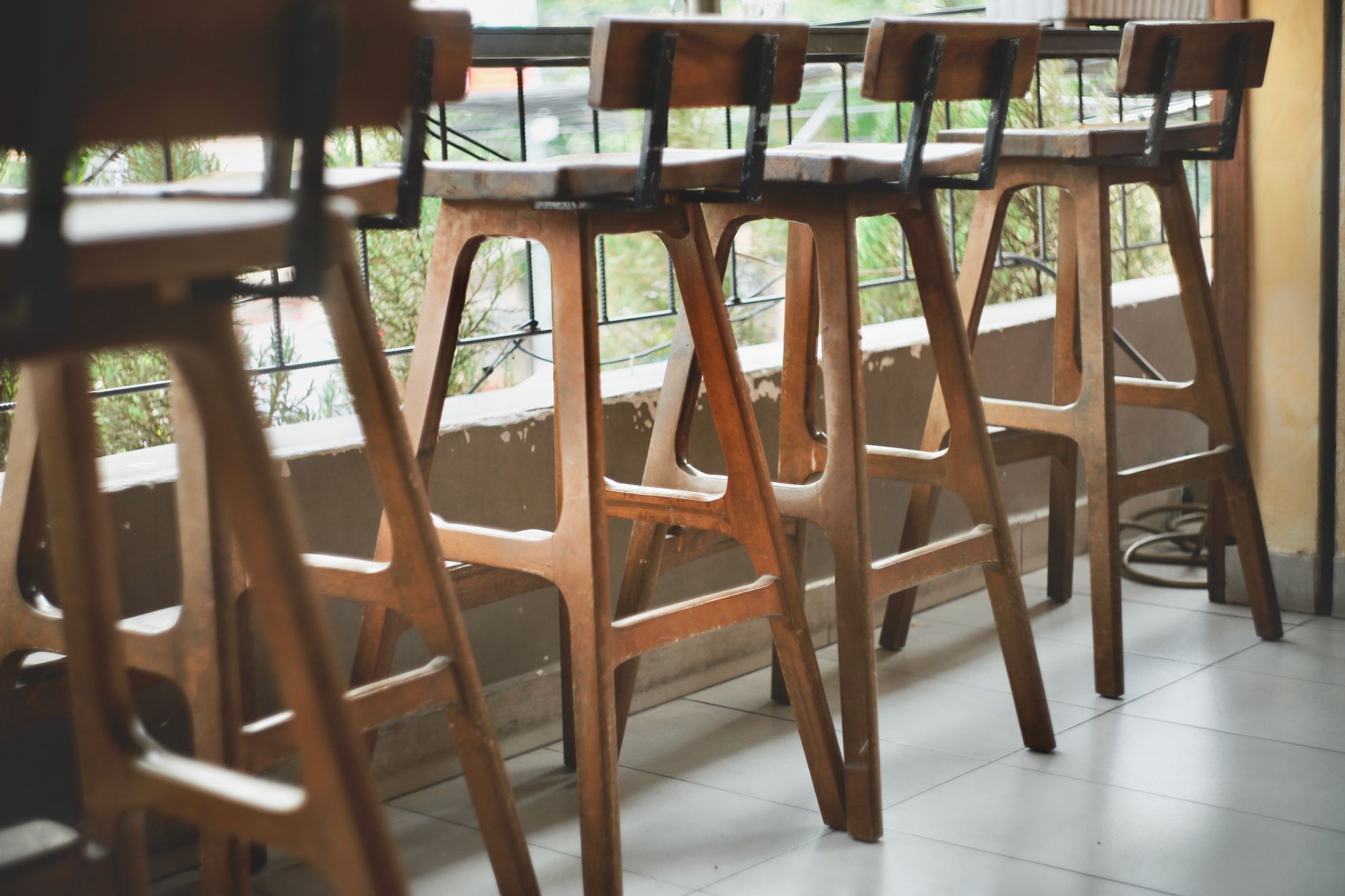
A stool's simple appearance may appeal at first, yet matter less halfway through a tasting menu. Check back support, usable seat depth, and a stable place for feet. Upholstery may suit a longer visit, provided its care instructions fit the spills and grease the restaurant expects. Compare physical samples rather than relying on descriptions such as comfortable or supportive.
Counter height and bar height are different furniture categories. Measure the installed surface, including any underside apron, and ask the stool supplier to confirm the proposed relationship. Raising the seat does not automatically improve the view. It may leave too little thigh room, or put the guest in an awkward position for eating.
Give foot support its own trial. Ask people of different heights to sit naturally with a plate in front of them. Watch for feet searching for the rail, or guests sliding forward to reach it. Those observations give the buyer useful evidence, without suggesting that a brief showroom trial can predict how comfortable every guest will feel.
Let the kitchen remain a workplace
Watching skilled work can change how people value it. A food-service study of operational transparency found a 22.2% increase in customer-reported quality in its fully specified models when customers and workers could see one another. That finding concerns the study's settings and arrangements. It does not promise that an open kitchen, or a particular stool, will produce the same result.
The research provides a reason to take visibility seriously: guests may appreciate care that would otherwise be hidden from view. That access still needs boundaries. Position the counter edge, service opening, and equipment so the arrangement does not encourage diners to reach into the kitchen's working area.
Give cooks a say in how conversation happens. A chef who is plating a time-sensitive course should not have to negotiate around a guest's phone or answer a long question immediately. Hosts can explain the format warmly at seating, including where dishes arrive and when the kitchen is likely to have time to talk.
Check the room while it is working
A quiet sample test cannot reveal the whole experience. Extraction, washing, and cooking equipment change the room once service begins. Where a live trial is possible, sit at the proposed counter during normal operation. Listen for the effort needed to understand a companion, and notice whether heat or moving air reaches the seats.
The relationship between sound exposure, volume, and duration concerns health as well as atmosphere. If the kitchen creates a persistent noise problem, seek an appropriate assessment. Moving stools closer together cannot resolve a room where guests must strain to hear each other throughout the meal.
Lighting deserves the same practical attention. The work surface must serve the kitchen, while guests need to read menus and see food without looking into a bright fixture. A reflective counter may create glare from a seated angle that goes unnoticed by someone standing. Photograph that viewpoint during the trial so the lighting designer can examine the actual problem.
Make arriving and leaving uncomplicated
Stools need more room in use than they occupy in a neat row. Guests pull them out, turn sideways, and step down. Staff may pass behind with dishes or guide another party to the counter. Try those movements with the proposed furniture in place before agreeing on the seating count.
A swivel mechanism can help with turning, but it also changes the area a person occupies. Check how the seat returns, whether neighboring backs can touch, and how staff will inspect the mechanism. Give fixed stools an exit test too, since guests may need to move the entire frame to leave.
During the sample trial, record a short set of observations:
- Can guests sit down and leave without moving someone else's belongings?
- Does the occupied stool leave the planned service route usable?
- Can staff clean the footrest and the floor beneath it without awkward handling?
- Is there a suitable alternative dining position for guests who cannot use a high seat?
Keep these observations with the order specification. They explain why the selected model works and help the buyer recognize when a seemingly similar substitute would require a fresh trial.
Buy for the counter's daily routine
Ask suppliers which tests and use conditions apply to the stool being considered. Relevant public seating standards may guide that discussion. A general reference to commercial furniture, however, does not establish that the specific model was tested. Request the product documentation and keep it with the purchase record for later reference.
Ask about replaceable glides, upholstery, and swivel parts where fitted. A foot rail's finish may receive much more contact than the decorative back. Staff need clear guidance on permitted cleaning products and the signs of movement that require a stool to be removed from service. Routine maintenance should be manageable without turning the dining room into a repair area.
A Seat Worth Booking Again
A good counter seat lets a guest enjoy the kitchen without constantly adjusting to it. A clear view matters, alongside the ordinary details that make eating easy: supported feet, space to turn toward a companion, and a straightforward route back into the dining room when the guest wants to leave.
Choose the stool after testing those details together. The restaurant can then make an honest promise when inviting someone to watch the kitchen. Guests will have a place from which to appreciate the work, while the cooks retain the space they need to prepare and serve the meal well.