Florida lawns can look lush one month and stressed the next. Heat, sandy soil, heavy rain, and watering restrictions make lawn care feel less like a routine and more like a strategy game. If you want grass, shrubs, and beds to stay healthy without wasting water, your irrigation setup matters more than most people realize. A smarter system helps you protect your landscape, control costs, and avoid the slow drip of preventable problems.
Understand What Makes Florida Irrigation Different
Watering in Florida is not the same as watering in cooler or drier states. You’re dealing with intense sun, humidity, seasonal downpours, and soil that often drains quickly. That combination can confuse homeowners into thinking their yard always needs more water, when the real issue may be timing, coverage, or runoff.
A lawn that gets watered at noon loses a lot to evaporation. A bed with poor sprinkler placement can end up with soaked mulch and thirsty roots. Then there are local watering rules, which can vary by area and season. You need a system that responds to actual conditions, not guesswork.
Good irrigation in Florida is less about blasting the whole yard and more about precision. The goal is even coverage, correct scheduling, and healthy root growth. Your grass wants consistency, not chaos with a hose.
Know the Signs Your System Is Wasting Water
A lot of irrigation problems hide in plain sight. You might notice one patch of lawn turning brown while another looks like a swamp. You may see water spraying the driveway, sidewalk, or fence like your sprinkler has a personal grudge. Those are not small quirks. They are signs your system needs attention.
Watch for these red flags:
– Soggy spots that stay wet long after watering
– Dry, uneven patches across the lawn
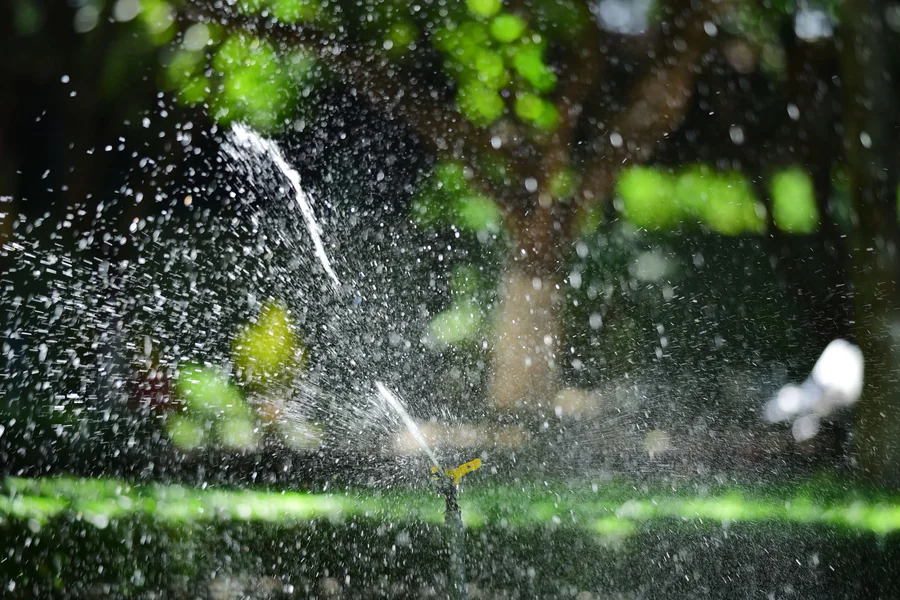
– Water misting into the air instead of reaching soil
– A sudden spike in your water bill
– Sprinkler heads that tilt, sink, clog, or leak
– Plants with fungus, mildew, or shallow roots
Small inefficiencies add up fast. A broken head or poor zone design can waste gallons every cycle. Over time, that affects plant health and your budget. Water waste is rarely dramatic. Usually, it shows up as a string of minor issues that keep repeating.
Match the System to Your Landscape
Not every yard needs the same irrigation setup. Turfgrass, flower beds, palm trees, and foundation plantings all have different watering needs. Treating them as one giant zone creates trouble. Grass may tolerate broad spray heads, but delicate beds often do better with drip lines or micro-irrigation.
If your property includes slopes, shaded areas, or mixed plant types, zoning becomes especially important. One section may stay damp while another dries out quickly. A smart layout accounts for sunlight, soil, plant type, and drainage patterns.
This is where working with an experienced irrigation company in Florida can make a real difference. A professional can evaluate pressure, coverage, controller settings, and zone placement based on actual site conditions in Florida, not generic templates pulled from a manual.
A well-matched system gives your landscape what it needs without overwatering everything else nearby.
Use Smart Controllers and Rain Sensors Wisely
Old-school timers often run on a fixed schedule, whether your yard needs water or not. That’s a problem in a state where one afternoon storm can dump enough rain to make the next irrigation cycle unnecessary. If your system still waters during or after heavy rain, your controller is not doing you any favors.
Smart controllers adjust schedules based on weather, season, and programmed landscape needs. Rain sensors can pause watering automatically when enough precipitation has fallen. Soil moisture sensors go a step further by checking what is actually happening underground.
Useful upgrades include:
– Weather-based smart controllers
– Rain shutoff sensors
– Soil moisture sensors
– High-efficiency rotary nozzles
– Drip irrigation for beds and shrubs
These tools help reduce waste, but they still need correct setup. A smart controller programmed badly is just an expensive way to make the same mistakes faster. Technology helps most when it supports a thoughtful irrigation plan.
Pay Attention to Maintenance Before Problems Spread
Irrigation systems do not usually fail all at once. They slip. A clogged nozzle here, a valve issue there, a wire problem underground, and suddenly your lawn starts showing stress. By the time the grass changes color, the system may have been underperforming for weeks.
Routine checks keep those problems from snowballing. Run each zone and observe what happens. Look for mismatched spray patterns, blocked heads, pooling water, and areas where coverage seems weak. Check whether plants have grown over heads and disrupted distribution.
Seasonal inspections are worth it, especially before hotter months. Florida landscapes grow fast, and your irrigation setup has to keep up. Even a great design can lose efficiency if it is not maintained.
Think of it like changing the oil in a car. Skip it long enough and the repair bill gets more exciting than you wanted. Your lawn may be quieter about it, but the principle holds up.
Water for Root Health, Not Just Surface Color
A lawn can look green and still be unhealthy. Frequent shallow watering encourages roots to stay near the surface, where heat stress hits harder. Deeper, less frequent watering often supports stronger root systems, better drought tolerance, and more resilient growth.
That approach depends on your grass type, soil conditions, drainage, and local restrictions, so there is no one-size-fits-all formula. Still, the principle is simple: water should reach the root zone, not just dampen the top layer and disappear by lunch.
Early morning is usually the best time to irrigate. It reduces evaporation and gives foliage time to dry, which can help limit disease pressure. Night watering can leave plants wet too long. Midday watering is often the least efficient option.
When your system promotes root depth instead of surface dependence, your lawn handles stress better. You use water more effectively, and the landscape becomes less fragile when weather gets unpredictable.
Build a Lawn Care Plan That Works Long Term
Great irrigation is part of a bigger landscape strategy. Mowing height, soil health, drainage, plant selection, and fertilization all influence how much water your yard actually needs. If those factors are off, irrigation has to work harder to compensate.
A long-term plan should include:
– Regular irrigation inspections
– Seasonal controller adjustments
– Zone-specific watering methods
– Drainage review after heavy rain
– Lawn and plant monitoring for stress signals
– Upgrades when parts become inefficient or outdated
If you want a healthier yard in Florida, your irrigation system should be active, accurate, and adaptable. The best results come from paying attention before damage becomes obvious. A greener lawn is nice to look at, but efficiency matters just as much.
When your system is designed and maintained with local conditions in mind, you stop chasing symptoms and start solving the actual problem. That’s a better use of water, time, and money.