

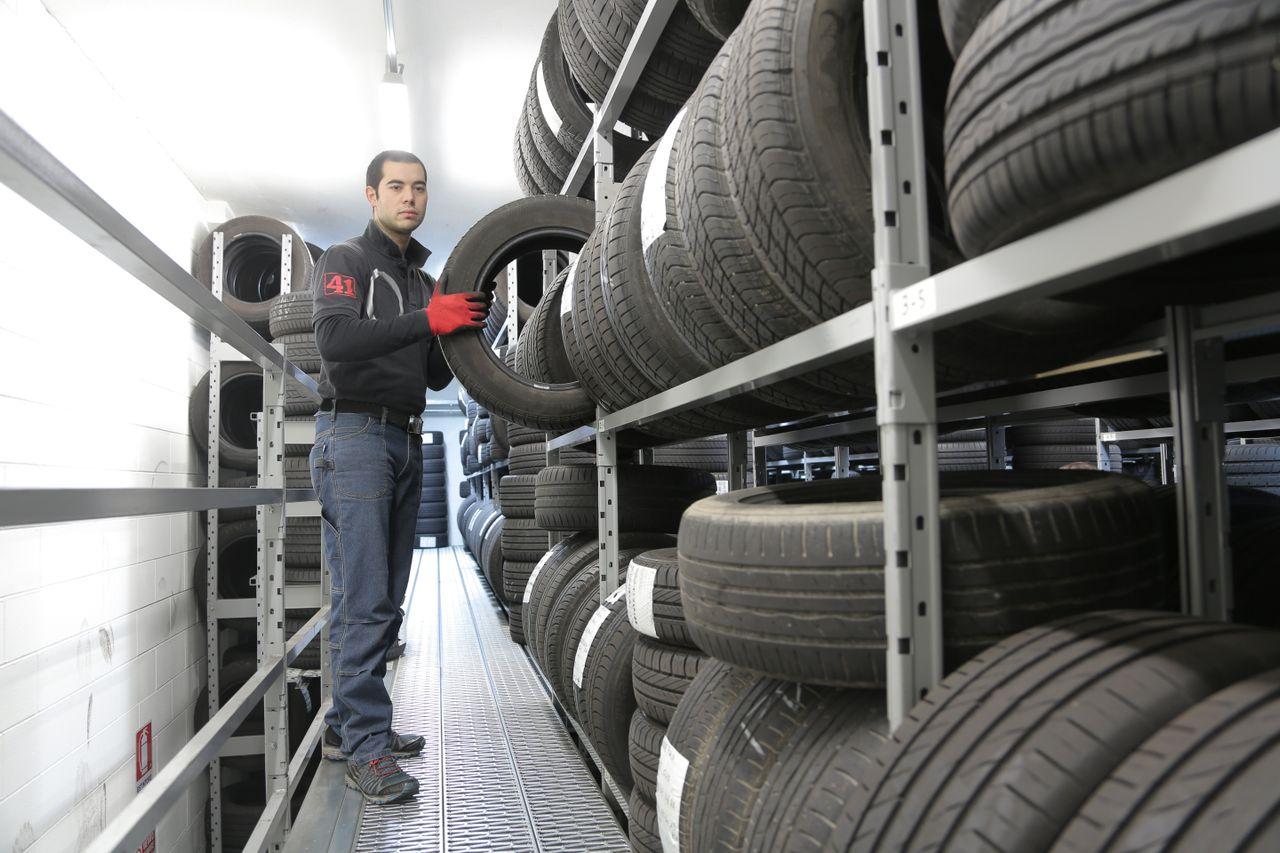
For tyre retailers, automotive workshops, fleet service providers, and online sellers, reliable product sourcing is essential for profitability and customer satisfaction. Competitive prices, consistent availability, and efficient deliveries directly influence daily operations.
Choosing a professional car tyres wholesaler involves more than comparing catalogue prices. Businesses should evaluate inventory availability, purchasing conditions, logistics, and digital ordering capabilities. A dependable supplier can reduce operational risks, improve purchasing efficiency, and support long-term growth.
What Makes a Reliable Wholesale Tyre Supplier?
A trustworthy wholesale partner should offer a broad product range, transparent commercial conditions, and predictable delivery schedules. These factors are especially important for businesses processing frequent orders or experiencing seasonal demand fluctuations.
Why Does Product Availability Matter?
Tyre demand depends on seasonal conditions, vehicle specifications, and customer preferences. During seasonal replacement periods, workshops may experience increased demand for popular sizes.
Limited availability can result in cancelled appointments, delayed services, and lost sales.
For example, a tyre retailer selling 150 sets monthly could lose €450 in potential gross profit if ten orders cannot be fulfilled, assuming an average gross profit of €45 per set.
This hypothetical example demonstrates how supply chain reliability affects financial performance.
Working with a supplier offering extensive product coverage helps businesses maintain consistent service and respond to changing customer requirements.
Why Is a Broad Product Portfolio Important?
Customers have different expectations regarding performance, durability, and price. Some prefer premium manufacturers, while others seek mid-range or budget alternatives.
Access to multiple brands allows retailers to serve different customer groups without maintaining numerous supplier relationships.
At Tyres X, we support automotive distribution through a portfolio of more than 100,000 products from over 400 brands. Our business model combines extensive product availability with modern B2B and B2C sales platforms, helping manufacturers, suppliers, and distributors expand across European markets.
A diverse catalogue also benefits businesses introducing additional automotive product categories.
How Do Digital B2B Platforms Improve Wholesale Purchasing?
Traditional wholesale purchasing often involves telephone enquiries, emails, and manual catalogue comparisons. These methods can become inefficient as order volumes increase.
Modern B2B platforms centralise product information and simplify purchasing processes, reducing administrative work.
Which Features Should Professional Buyers Prioritise?
The most useful digital purchasing capabilities include:
- Structured product catalogues: Simplify searches by brand, dimensions, and specifications.
- Availability information: Helps buyers assess stock levels when inventory data is available.
- Order management: Supports consistent purchasing workflows.
- Transparent pricing: Facilitates cost comparisons.
- Integration capabilities: May allow connections with inventory or e-commerce systems.
For example, a retailer processing 30 orders daily may spend considerable time verifying specifications and contacting suppliers. A digital platform can simplify these activities and reduce ordering errors.
Businesses should verify which functions are available before establishing cooperation.
Traditional Wholesale Purchasing vs Digital Distribution: What Are the Differences?
Both models support automotive businesses but differ in convenience, information availability, and scalability.
|
Business aspect |
Traditional wholesale |
Digital B2B platform |
|
Ordering |
Phone, email, or representative |
Online purchasing interface |
|
Product information |
Catalogues and quotations |
Centralised digital catalogue |
|
Stock verification |
Supplier confirmation |
Potential access to inventory data |
|
Price comparison |
Manual quotation analysis |
Easier product comparison |
|
Order processing |
Greater administrative involvement |
Standardised workflows |
|
International expansion |
Existing supplier relationships |
Wider digital market access |
Digital platforms can improve purchasing efficiency, but dependable logistics and professional customer service remain essential.
Businesses should evaluate the entire distribution process rather than technology alone.
How Can Automotive Companies Calculate Their Real Purchasing Costs?
Wholesale prices do not always represent the final cost of acquiring products.
Transportation, storage, payment conditions, and administrative expenses can significantly influence profitability.
Why Is the Cheapest Offer Not Always the Best?
Consider two hypothetical offers for four identical tyres.
Supplier A charges €260 plus €30 for delivery, resulting in a total cost of €290. Supplier B offers the same tyres for €275 with transportation included.
Despite the higher product price, Supplier B provides a €15 saving per order. Across 200 transactions, this represents €3,000 in potential savings.
Delivery reliability also matters. A slightly more expensive supplier may offer better overall value if consistent fulfilment prevents cancelled appointments or emergency purchases.
Businesses should therefore evaluate total acquisition costs alongside service quality.
How Can Better Inventory Management Reduce Expenses?
Tyres require considerable storage space and tie up working capital.
Maintaining extensive inventories can be expensive, particularly for smaller workshops.
An efficient approach involves stocking frequently requested dimensions while ordering less popular products when needed.
This strategy depends on reliable replenishment and realistic delivery times.
Analysing historical sales, seasonal demand, and inventory turnover helps businesses determine which products should remain permanently available.
Why Does International Distribution Matter for Automotive Businesses?
European automotive companies increasingly operate across national borders. Manufacturers, distributors, and online retailers seek opportunities to expand product ranges and reach new customers.
International distribution networks can support these objectives by connecting businesses with additional suppliers and commercial markets.
At Tyres X, we combine modern sales infrastructure, an extensive automotive portfolio, and access to European markets. We work with manufacturers, suppliers, and distributors to support business development through professional B2B and B2C distribution solutions.
What Should Companies Verify Before Purchasing Internationally?
Cross-border sourcing requires consideration of delivery conditions, VAT regulations, invoicing arrangements, warranty procedures, and technical documentation.
Within the European Union, tyre labelling requirements are established under Regulation (EU) 2020/740.
For covered products, labels provide information about rolling resistance, wet grip, and external rolling noise.
These specifications help professional buyers compare products and provide customers with relevant information.
Businesses should also confirm transportation costs and return procedures before establishing international relationships.
How Can Businesses Evaluate Wholesale Supplier Performance?
Supplier reliability should be assessed through measurable indicators rather than individual purchasing experiences.
Which KPIs Are Most Important?
Several indicators are particularly useful in automotive distribution:
- On-time delivery rate: Percentage of orders delivered within the agreed timeframe.
- Order fill rate: Proportion of requested products successfully supplied.
- Order accuracy: Percentage of deliveries matching specifications and quantities.
- Average purchasing cost: Total acquisition expense per product.
- Inventory turnover: Frequency of product sales and stock replacement.
For example, a supplier delivering 97 out of 100 orders on time achieves a 97% on-time delivery rate.
Monitoring these indicators helps identify recurring issues and provides a stronger basis for comparing suppliers.
The most relevant metrics depend on business size, purchasing frequency, and the consequences of delayed deliveries.
How Do You Build a Successful Long-Term Wholesale Partnership?
Choosing a car tyres wholesaler should be treated as a strategic business decision rather than a one-time price comparison.
An independent garage may prioritise popular tyre dimensions and predictable deliveries. An online retailer may require a broader assortment and efficient order processing. Larger distributors may focus on scalability and international market coverage.
Before establishing cooperation, businesses should analyse purchasing volumes, identify essential product categories, and compare suppliers against operational requirements.
A reliable wholesale relationship improves purchasing efficiency, reduces unnecessary inventory costs, and supports better customer service. Prioritising product availability, transparent conditions, digital purchasing tools, and consistent deliveries helps automotive businesses build stronger supply chains and sustainable growth opportunities.










3 thoughts on “How to Choose a Reliable Car Tyre Wholesale Supplier for Your Automotive Business”
Comments are closed.