

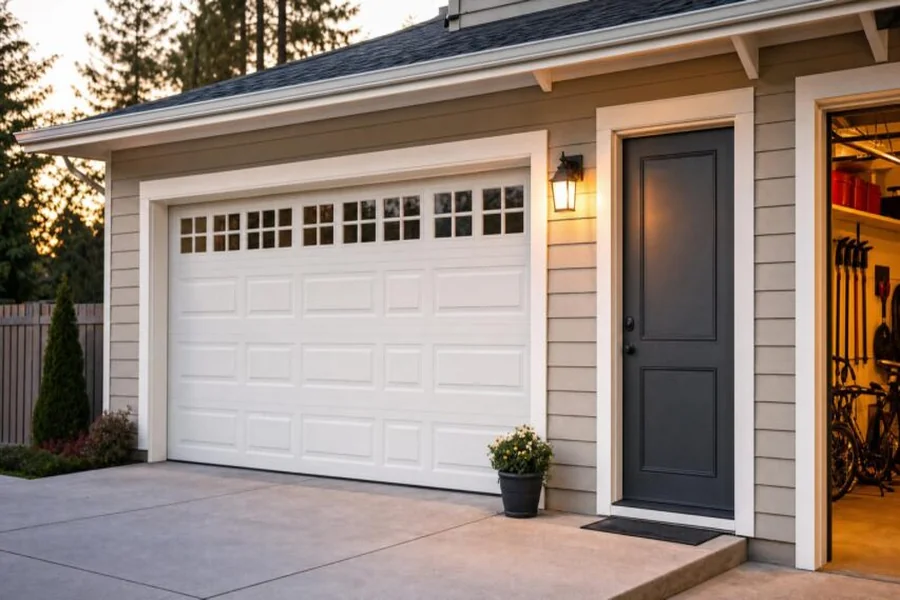
You are ready to leave for work on a freezing morning, but the garage door only shudders when you press the remote. After a Chicago snowstorm, the cause might be ice holding the bottom seal to the driveway, an obstructed sensor, or a mechanical problem that needs attention. Repeatedly pressing the button will not tell you which.
Garage door winter maintenance in Chicago starts with checking the door before severe weather and watching it during the season. Snow, moisture, road salt, and repeated freezing and thawing can affect seals, surfaces, and operation. These ten tips help homeowners in New Lenox, Frankfort, Orland Park, Tinley Park, and nearby communities prepare without taking on hazardous repairs.
1. Inspect worn weatherstripping before the first deep freeze
With the door closed, look for daylight around the sides and bottom. Check accessible seals for cracking, flattened sections, missing pieces, or rubber that has become brittle. Bottom and perimeter seals help limit drafts, windblown snow, and moisture, but gaps reduce their effectiveness.
Replace damaged weatherstripping with the correct type for your door, following its instructions. If replacing the bottom seal requires removing a bracket or disturbing a cable attachment, have a technician do it. A new seal should fit correctly without interfering with closing or safety reversal.
2. Clear snow and ice from the threshold
Slush near the bottom seal can melt during the afternoon and freeze overnight. After shoveling the driveway, clear the area immediately outside the door and keep drainage paths open. Use care around the seal so a shovel edge does not cut it.
If the door appears frozen to the ground, stop operating the opener. Do not pry it up, chip ice against the panels, or repeatedly activate the motor. Arrange safe thawing according to the door manufacturer’s guidance or call for help. Avoid applying deicing salt directly to the door; residue can damage finishes and encourage corrosion. Pouring water at the threshold can also create more ice.
3. Use the right lubricant on the right parts
Some lubricants become less effective in cold conditions. Check the door’s maintenance instructions for an approved product suitable for winter temperatures and for the specific parts that need it. Accessible hinge pivots and metal roller bearings may require lubrication; nylon roller wheels generally do not.
Apply only the recommended amount, keep hands clear of pinch points, and prevent anyone from operating the door while you work. Do not coat tracks with thick grease, which can collect dirt. Leave spring servicing and lubrication that requires reaching tensioned or inaccessible components to a qualified technician.
4. Keep accessible tracks clear
With the door stationary and secured against accidental operation, use a soft brush or cloth to remove loose debris from safely accessible track surfaces. Keep fingers away from rollers and joints. Do not climb beside an unsupported open door to reach higher sections.
A bent track, loose mounting point, scraping roller, or uneven gap calls for inspection. Cleaning will not correct misalignment. Do not hammer tracks straight or loosen their brackets to experiment with the fit; the door’s support and movement depend on correct alignment.
5. Remove road salt before it damages the finish
Vehicles carry salty slush into garages, while snow removal can splash residue onto lower panels. Look for a white film, staining, peeling finish, or early rust. Gently clean affected surfaces using the door manufacturer’s approved cleaner and method, often mild soap and water.
Choose conditions that allow surfaces and the surrounding pavement to dry without freezing. Avoid abrasive tools and directing water into electrical components. Follow the finish-care instructions for touch-ups; cleaning removes residue, but damaged protective coatings may need separate attention.
6. Look for spring, cable, and hardware wear
From a safe position, inspect for frayed cables, corrosion, visibly damaged hardware, or a gap in a spring. If the door otherwise appears sound, observe a normal operating cycle from outside its path and note jerking, tilting, or new grinding sounds. Stop use if anything looks unsafe.
Springs counterbalance the door’s weight, and cables help transmit that lifting force. Springs, cables, bottom brackets, and related tensioned parts can cause serious injury if disturbed. Do not adjust, tighten, or replace them yourself. Cold weather may reveal existing wear, but a malfunction still needs diagnosis rather than an assumption about temperature.
7. Check opener operation before a winter storm
Replace weak remote batteries and check that the wall control works consistently. Listen for new motor strain or hesitation, and record any warning lights or error codes for the technician. An opener struggling with a frozen or poorly balanced door needs the underlying problem addressed. Never increase its force setting to push through resistance.
Review the emergency-release instructions before an outage. Release a door only under the conditions specified in the manual, preferably when fully closed; do not disconnect an open door with suspected spring or cable damage. A compatible battery-backup system may help during power loss, but it cannot make a damaged door safe to operate.
8. Test safety sensors and automatic reversal
Wipe photo-eye lenses gently and clear snow, boxes, or tools from their beam path. Photo eyes detect an obstruction across the opening; contact reversal is a separate safeguard that should also be checked. Follow the opener manufacturer’s procedure and test frequency for both systems.
Use the prescribed test object, never a person or pet, and stay clear of the moving door. LiftMaster’s safety guidance calls for checking reversal as part of routine safety checks. If the door fails its test, repeatedly reverses with a clear opening, or displays persistent sensor warnings, stop automatic operation and arrange service. Do not bypass the sensors.
9. Address insulation and drafts together
For an attached garage or a space used as a workshop, an insulated door and sound seals can help moderate temperature swings. R-value describes resistance to heat flow: higher values indicate greater resistance for the material or assembly being rated. Check what a quoted rating actually covers.
Insulation alone will not close perimeter gaps or heat an unheated garage. Before adding an insulation kit, confirm compatibility and have its added weight assessed, since a change can affect balance. Compare repair, sealing, and replacement options without assuming a particular reduction in utility bills.
10. Schedule a professional inspection before severe weather
A prewinter tune-up gives a technician time to assess door balance, springs, cables, rollers, hardware, seals, and safety systems before a problem interrupts your morning. Ask what is included, which adjustments are needed, and whether repairs require separate approval. Keep the inspection record for future visits.
When comparing garage door maintenance in the Chicago Metro Area, look for a service that includes lubrication where appropriate, a balance evaluation, hardware inspection, and opener safety testing. A thorough visit can identify developing wear, although no inspection guarantees that a component will never fail.
When should you call a garage door professional?
Routine cleaning and visual checks have limits. Stop using the door and seek qualified help if you notice:
- A broken spring, frayed cable, or damaged bottom bracket.
- A crooked door or rollers that have come out of the tracks.
- A door that suddenly feels unusually heavy during otherwise permitted manual use.
- Repeated opener strain or reversing after visible obstructions are removed.
- A door stuck open during freezing weather.
Keep people and pets away from the opening and do not try to force the door closed. If the garage is exposed to winter weather, use another entrance and arrange service rather than standing beneath an unstable door.
Winter garage door FAQs
Why does my garage door freeze shut?
Moisture from melting snow can collect along the bottom seal and freeze it to the threshold. Clear slush promptly and address drainage problems. If the door sticks, stop using the opener until the cause is identified and safely resolved.
Should I lubricate my garage door during winter?
Yes, when the manufacturer’s schedule or the condition of approved components calls for it. Use the specified lubricant and application method. More lubricant is not automatically better, and tracks and nylon roller surfaces should not be greased.
How often should Chicago homeowners schedule maintenance?
Annual professional maintenance, often before winter, is a useful starting point. Follow your equipment manufacturer’s schedule and ask whether heavy use warrants more frequent visits. New noises, visible damage, or a failed safety test should prompt attention immediately rather than waiting for the annual appointment.
Prepare before the next Chicago snowstorm
Check seals, remove slush, clean away salt residue, and pay attention to changes in movement or sound. These manageable habits support winter readiness while leaving balance adjustments and tensioned components to trained hands. For homeowners planning an inspection, World of Doors is a New Lenox-based garage door company serving the greater Chicagoland area. Confirm service availability for your address and discuss your door’s condition before scheduling.






1 thought on “10 Tips to Protect Your Garage Door in the Winter (Chicago Edition)”
Comments are closed.