A home solar battery upgrade should solve more than today’s power needs. Household consumption can change when families add appliances, install air conditioning or begin charging an electric vehicle. Choosing storage without considering those changes can leave a system undersized or make later expansion complicated.
A better approach starts with actual electricity use, identifies which loads need backup and checks whether the inverter and battery architecture can support future capacity. Homeowners do not need to buy every future kilowatt-hour at once; they need a sensible first installation and a technically compatible path for growing it.
Start With a Clear Picture of Household Energy Use
Before comparing batteries, examine when the household uses electricity. Utility bills help, but daily totals can hide patterns: one home may use most power after sunset, while another consumes more during daylight. Review bills and smart-meter or inverter data to identify seasonal changes.
Build a practical load profile by noting:
- Evening and overnight electricity use, not just monthly totals across the year.
- Daytime consumption that solar panels can serve directly during normal operation.
- Seasonal peaks when heating, cooling or other loads increase significantly.
The aim is to estimate what storage must supply, not copy monthly consumption into a battery order. This profile gives the installer a realistic starting point and separates backup needs from electricity used while panels are producing.
Decide Which Household Loads Need Battery Backup
A battery sized for every appliance during an outage can be much larger than one designed around essential circuits. Decide what must stay on and what can be switched off. Refrigeration, selected lights, communications equipment and fans may be priorities; ovens, water heaters and multiple air conditioners may not be.
Typical priority loads include:
- Refrigerator, essential lighting and selected power outlets.
- Wi-Fi router, phone charging and security equipment.
- Fans or a medical device, where relevant to the household.
The installer should total running demand and check which appliances may start together. Motors and compressors can briefly draw more power than during normal operation. The inverter and battery must handle that peak, even when daily energy use is modest.
Calculate Battery Capacity and Power Requirements Separately
Capacity and power describe different limits. Kilowatt-hours (kWh) measure stored energy; kilowatts (kW) describe delivery rate. A battery may hold enough energy for several hours yet be unable to run appliances together if its discharge rating or inverter output is too low.
For illustration, a load averaging 500 watts for six hours uses about 3kWh before system losses. A proper estimate must also account for:
- Usable capacity, rather than the battery’s headline nominal figure.
- Inverter conversion losses and reserve settings configured by the installer.
- Peak demand and starting surges from appliances.
This is not a runtime guarantee. Actual duration depends on load variation, temperature, efficiency and battery limits. Ask the installer to calculate usable energy and peak power for the selected circuits.
Account for Future Changes in Household Electricity Demand
A system that fits today may face new demands after a renovation or changed routines. Air conditioning, an electric vehicle, a home office, extra refrigeration or a heat-pump water heater can alter consumption. Consider likely changes over the installation’s life.
Useful planning questions include:
- Are major appliances likely to be added or replaced?
- Could evening or overnight consumption increase after planned renovations?
- Is EV charging or additional cooling a realistic future requirement?
Consider which changes are likely and when they may happen. These possibilities should also inform the overall design, not justify the largest battery. A staged plan keeps initial spending proportionate while identifying capacity and installation space needed for later changes.
Check Inverter Compatibility Before Choosing an Expansion Path
The inverter is vital to expandable storage. Battery voltage must fit its supported range, and the battery management system (BMS) may require an approved protocol and compatible firmware. CAN or RS485 ports alone do not prove compatibility; models, settings and operating limits matter.
Before purchasing, ask the installer or manufacturers to confirm:
- Exact inverter and battery model compatibility.
- Supported voltage, charge and discharge limits under operating conditions.
- BMS communication, firmware and parallel-connection rules.
Check that the inverter can manage future capacity and that protection devices, cables and distribution equipment are correctly rated. Some systems need a specific battery profile or firmware version, so confirm commissioning settings and approved combinations before ordering. Confirming this before installation is easier than finding a restriction later.
Compare Stackable Modules With Fixed-Capacity Battery Options
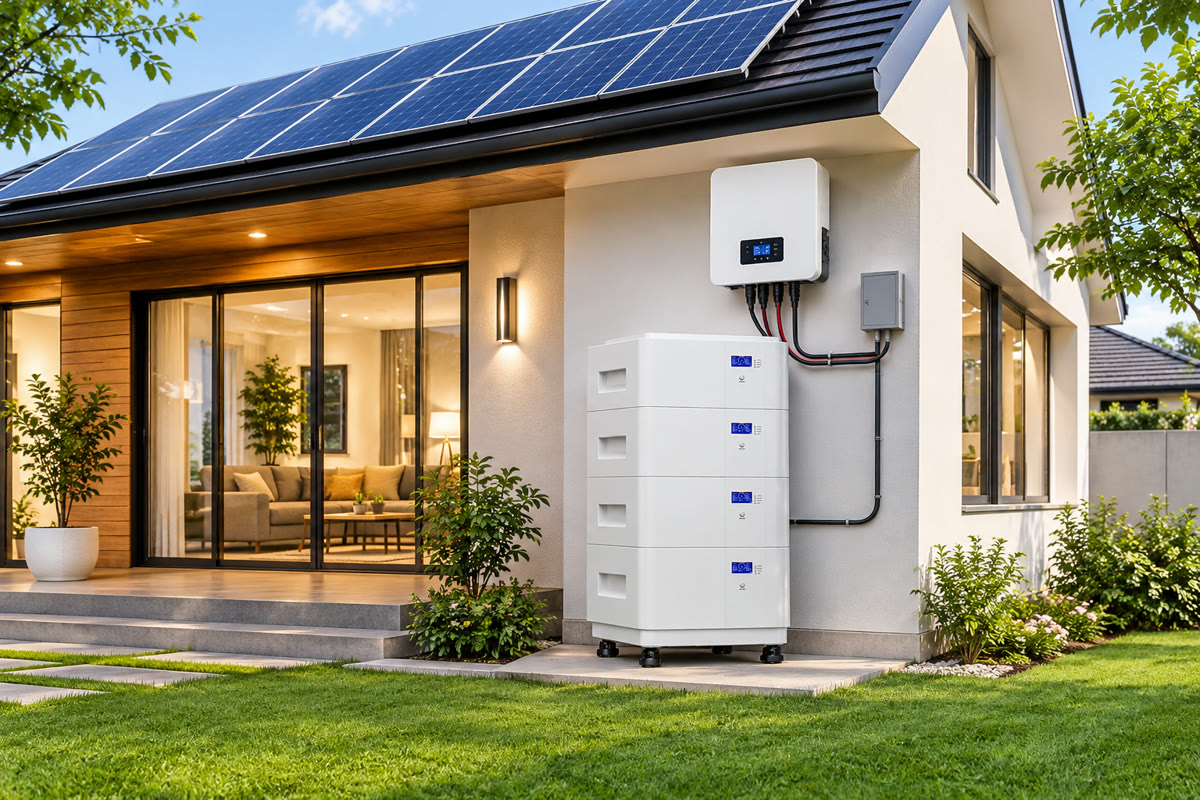
Modular batteries can support staged capacity planning by adding approved units. A stackable lithium battery may allow expansion without replacing the whole arrangement, but additions must follow manufacturer rules. Confirm module limits, parallel configuration, firmware, matching requirements and whether the original inverter can accommodate added storage and approved charge and discharge limits and warranty conditions.
A fixed-capacity wall-mounted battery provides a defined package for households with established needs. Its footprint and mounting method can simplify planning, although site conditions still determine suitability. Some wall-mounted products also support parallel connection, while modular systems retain electrical and physical limits. Compare space, weight, connection method and approved expansion instructions for future service.
Evaluate Battery Dimensions, Weight and Installation Space
Capacity is only one installation consideration. A wall-mounted unit needs suitable support and mounting hardware; a stackable unit needs a stable, level location. Installers should check clearances, temperature, moisture, cable routes, electrical protection and inspection access before selecting a site.
A site assessment should cover:
- Wall strength or floor support for the equipment’s full weight.
- Manufacturer clearances, ventilation and environmental limits.
- Cable routes, protective devices and maintenance access.
Dimensions turn a shortlist into a site check. Avepower lists its 51.2V, 100Ah wall-mounted LiFePO4 model at 5.12kWh, approximately 450 × 440 × 153mm and 42kg. Its stackable family is advertised at about 5kWh per module, measuring 530 × 460 × 190mm and weighing approximately 50kg. Site assessment is still essential.
Examine How Installers Source and Service Battery Systems
For installers, distributors and project developers, battery selection involves more than price. They need consistent documentation, clear warranty conditions, traceable specifications, replacement procedures and technical assistance. Suppliers should explain cell chemistry, BMS functions, communication options and approved configuration limits.
An installer sourcing wholesale solar batteries should compare:
- Documented cell chemistry, model-specific datasheets and test records.
- Warranty coverage, replacement processes and spare-part availability.
- Technical assistance for inverter matching and commissioning.
For repeat projects, ask about production consistency, lead times, sample evaluation and engineering support. Request current datasheets and written confirmation of project-specific configurations before placing a bulk order. OEM/ODM and private-label services may suit buyers needing agreed branding, packaging or project configurations, with requirements confirmed in writing.
Plan the Rules and Costs of Future Battery Expansion
Adding storage later is not simply connecting another battery. A manufacturer may restrict compatible modules, parallel-unit limits and mixing batteries of different ages or revisions. Inverter capacity, protection devices, cable sizing and labour can also limit an upgrade or raise its cost.
Before the first installation, clarify:
- Maximum approved modules and capacity.
- Rules for adding modules at a later date.
- Warranty implications and commissioning requirements for the expanded system.
Ask whether expansion needs spare inverter capacity, breakers, cabling or space. Include labour and upgrades in the estimate; an extra module is not the full cost of increasing storage. Get the approved configuration in writing and retain model numbers and commissioning records. This reduces the risk of buying an incompatible module.
Consider Battery Life, Monitoring and Long-Term System Value
Cycle-life figures matter only when test conditions are clear. Depth of discharge, temperature, charge rates, installation and test methods affect performance. A cycle-life claim is not a guaranteed number of years. Read the warranty separately and check capacity-retention terms, usage limits and service conditions.
Monitoring can help owners and installers spot unusual changes and understand how the battery is being used. It can provide useful operational information such as:
- State of charge and changes in stored energy.
- Energy flows, operating temperature and system alerts.
- Shifts in household consumption or backup patterns.
Long-term value includes installation quality, service access, replacement availability and expansion costs. A good upgrade meets realistic needs now and remains compatible, maintainable and economical as they change.
Conclusion
Planning a home solar battery upgrade means matching present demand with a credible future pathway. Start with actual consumption, prioritize backup circuits, size energy and power separately, and verify inverter communication and expansion limits before choosing a format. Physical dimensions, weight, installation conditions, warranty terms and service support deserve the same attention as advertised kilowatt-hours.
Recording these decisions also gives installers a clearer basis for future service and expansion. For installers and project buyers evaluating LiFePO4 storage, Avepower offers battery solutions alongside technical support and OEM/ODM customization. Explore its options when assessing a system for a specific project.
FAQs
How do I know when my home solar battery needs an upgrade?
Consider an upgrade if your battery regularly runs out before the next charging cycle, your household energy use has increased, or you need backup power for more appliances.
How much battery storage does a home need?
It depends on daily electricity consumption, essential backup loads, backup duration and solar production. Reviewing your energy usage helps determine the appropriate capacity.
Can I add more batteries to an existing solar system?
Yes, some systems support additional battery modules. However, inverter compatibility, battery voltage, communication protocols, firmware and manufacturer-approved expansion limits must be checked first.
What is the difference between stackable and wall-mounted solar batteries?
Stackable batteries use modular units that can increase storage capacity as needed. Wall-mounted batteries offer a fixed installation format and may also support parallel expansion, depending on the model.
What should I check before upgrading a home solar battery?
Check battery capacity, continuous power output, inverter compatibility, available installation space, expansion limits, warranty conditions and the system’s expected future energy requirements.