- Pest prevention is most effective when it is a routine operational process, not an emergency response.
- Food, water, shelter, building gaps, and clutter create conditions that can support pest activity.
- Seasonal inspections help businesses address changing risks before problems become harder to manage.
- Clear reporting, sanitation standards, and documented follow-up make prevention easier to maintain.
- Professional support can be useful when activity persists, affects sensitive areas, or returns repeatedly.
A pest sighting can be disruptive, but the conditions that support pest activity often develop long before anyone sees an insect or rodent. A year-round plan helps businesses identify and correct those conditions in kitchens, storage rooms, loading areas, offices, and exterior spaces. For businesses in Chicagoland, commercial pest control from Pointe Pest Control offers a structured approach that includes inspection, monitoring, prevention, staff education, and tailored treatments for facilities such as restaurants, warehouses, offices, apartment communities, gyms, and government buildings. Businesses can also explore service options through Pointe Pest Control, which offers commercial pest management solutions for a range of facility needs.
A prevention plan is not simply a schedule for applying products. It is a practical system for keeping pests from gaining access to food, moisture, and hiding places. This approach can help protect inventory, reduce interruptions, and support a cleaner environment for employees, customers, residents, and visitors.
Why a Year-Round Plan Works Better Than Emergency Treatment
Waiting for an obvious infestation can allow pests to spread through hidden areas, including wall voids, ceiling spaces, drains, equipment rooms, trash areas, and stored materials. By the time activity is visible, the original entry point or attractant may still be present.
Integrated pest management, often called IPM, offers a useful framework because it emphasizes prevention, identification, monitoring, control, and evaluation. The CDC’s guidance on integrated pest management explains that the approach focuses on reducing pest populations and eliminating the conditions that lead to infestations. In practice, that means addressing the property itself before relying on treatment alone.
Step One: Identify the Property’s Main Risk Zones
Begin with a walkthrough of the interior and exterior. Focus on places where pests may enter, feed, hide, or reproduce. Common risk zones include:
- Food preparation areas, employee break rooms, and vending spaces.
- Trash rooms, dumpsters, recycling areas, and grease collection locations.
- Receiving docks, loading bays, delivery entrances, and open overhead doors.
- Basements, crawl spaces, mechanical rooms, utility closets, and rooflines.
- Storage rooms, cardboard staging areas, and shelving near exterior walls.
- Restrooms, floor drains, plumbing penetrations, and damp maintenance areas.
- Landscaping, mulch, pallets, firewood, or shrubs that sit against the building.
Step Two: Build a Simple Inspection Checklist
A repeatable checklist keeps small maintenance issues from being forgotten. Weekly checks may suit high-traffic food or waste areas, while monthly reviews may work for lower-risk spaces. During each inspection:
- Look for droppings, gnaw marks, grease trails, insect remains, shed skins, nests, or unusual odors.
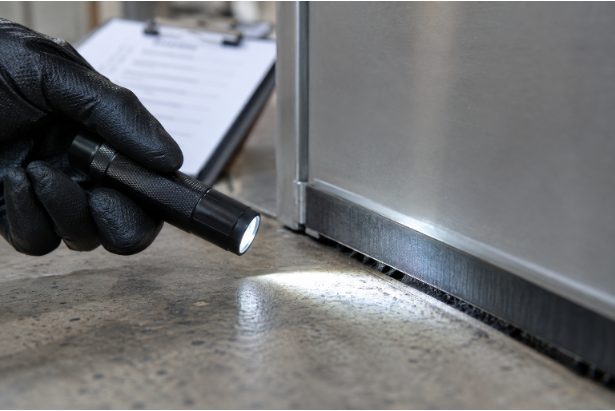
- Check doors, windows, screens, vents, pipe openings, and utility lines for gaps or damage.
- Inspect food supplies, stored products, packaging, and incoming deliveries for pest evidence.
- Identify standing water, leaking fixtures, clogged drains, condensation, and damp materials.
- Review whether trash is contained, dumpster lids close fully, and pickup routines are followed.
- Record the location, date, observed issue, and corrective action.
Early evidence can appear before a live rodent is seen. The CDC notes that droppings and gnaw marks are common signs of rodents, and that control is easier before rodents become established in a building. Its guidance on controlling wild rodent infestations also emphasizes removing food, water, and shelter.
Step Three: Close Common Entry Points
Exclusion makes it harder for pests to enter and reduces the chance that cleaning or treatment efforts will be undermined by an open access point. Assign repairs promptly when inspections find:
- Worn or missing door sweeps, especially at exterior, receiving, and loading doors.
- Cracks around foundations, windows, wall joints, and utility penetrations.
- Torn window screens or damaged covers on vents and openings.
- Gaps around plumbing, electrical conduits, and HVAC lines.
- Branches, vines, or dense shrubs touching the building exterior.
Step Four: Control Food, Water, and Shelter
Food
- Store ingredients, snacks, and supplies in sealed containers when possible.
- Clean spills promptly, including beneath shelving and large equipment.
- Empty indoor trash before it overflows and keep outdoor dumpster lids closed.
- Inspect deliveries before moving boxes and products into storage areas.
Water
- Repair dripping faucets, pipes, ice machines, and HVAC condensate lines.
- Keep floor drains clear and investigate persistent moisture around drains.
- Dry wet mop heads and floors after cleaning.
- Remove standing water near dumpsters, docks, and exterior equipment.
Shelter
- Reduce clutter and remove unused cardboard, packing materials, and broken equipment.
- Keep stored materials off floors and away from walls when practical.
- Move pallets, outdoor supplies, and firewood away from exterior walls.
- Maintain access around utility equipment so signs of activity are easier to spot.
Step Five: Adjust the Plan by Season
Commercial properties face different pressure points throughout the year. A seasonal review keeps prevention aligned with changing conditions.
- Winter: Inspect door seals, rooflines, pipe openings, food storage, and mechanical areas for rodents seeking protected indoor spaces.
- Spring: Check gutters, drainage, landscaping, and exterior moisture after winter weather. Watch for ants, flies, and stinging insects.
- Summer: Increase attention to dumpsters, outdoor dining, patios, loading zones, open doors, food waste, and standing water.
- Fall: Remove leaves and debris near the building, seal weather-related gaps, and look for rodents or overwintering insects moving indoors.
Train Employees Without Making Pest Control a Burden
Training works best when it is short and tied to everyday responsibilities. Employees should know how to report a sighting, where food waste and recyclables belong, why exterior doors should not be propped open, and which hidden areas require regular cleaning. Use clear examples of droppings, gnaw marks, nests, and insect activity. Assign one person to review reports, confirm repairs, and close the loop with staff.
When to Add Professional Support
Professional help may be appropriate when activity continues after sanitation and repair work, when pests appear in food-handling or sensitive areas, or when the same issue returns in one location. Ask a provider whether service begins with an inspection, how pests and entry points will be identified, what prevention tasks the business must complete, how often monitoring will occur, and whether written service reports will be provided.
How to Track Progress Over Time
Keep a simple record of pest sightings, inspection dates, repairs, sanitation issues, monitoring activity, treatments, employee reports, and follow-up actions. Review the record every quarter. A pattern near a drain, storage room, dumpster, or door can indicate a building condition that warrants targeted attention.
Common Mistakes That Weaken Prevention
- Waiting for a customer or employee to report a pest before taking action.
- Using treatment without correcting food, water, shelter, or entry-point issues.
- Ignoring minor leaks, damaged seals, clutter, or cardboard buildup.
- Failing to inspect deliveries and incoming shipments.
- Keeping incomplete records or leaving staff without a reporting process.
A Practical 30-Day Action Plan
- Days 1 to 5: Walk the property and identify risk zones.
- Days 6 to 10: Correct sanitation, waste, moisture, and clutter issues.
- Days 11 to 15: Repair visible gaps, door sweeps, screens, and damaged covers.
- Days 16 to 20: Train employees and assign reporting responsibilities.
- Days 21 to 25: Review past pest activity and determine whether monitoring is needed.
- Days 26 to 30: Set seasonal tasks, document priorities, and schedule the next inspection.
Conclusion
A reliable commercial pest prevention plan depends on consistency, accountability, and early action. Regular inspections, proper sanitation, moisture control, sealed entry points, and seasonal adjustments help businesses address risks before they develop into recurring infestations. Clear employee responsibilities and documented follow-ups also make it easier to identify patterns and correct underlying problems. By combining daily prevention habits with professional support when needed, businesses can protect their facilities, maintain cleaner environments, and reduce disruptions to their operations.