

Key Takeaways
- Flowering trees benefit from care that changes with the weather, growth stage, and species.
- Pruning at the right time helps preserve blooms and reduces unnecessary stress.
- Deep watering, proper mulch, and routine inspections support healthier roots and canopies.
- Early attention to storm damage, pests, and disease symptoms can prevent larger problems.
- Major structural issues and work near power lines require qualified professional help.
Flowering trees add seasonal color, shade, and structure to a landscape, but they do not thrive on a one-size-fits-all maintenance routine. Their needs shift throughout the year as temperatures, rainfall, sunlight, and growth cycles change. Whether you are caring for dogwood, redbud, magnolia, crabapple, or crape myrtle, understanding factors such as crepe myrtle lifespan can also reinforce why steady, preventive care matters over the long term.
A useful care calendar does not replace attention to local conditions. Tree age, species, soil texture, drainage, recent weather, and planting location all influence the right approach. Use the schedule below as a practical framework, then adjust it when your tree shows signs that it needs more or less support.
Why Seasonal Care Matters
Tree care should follow the tree's natural rhythm. Roots, leaves, flowers, and woody tissue do not respond the same way in every season. A newly planted tree may need more frequent moisture checks than an established one, while a mature tree near pavement may need closer monitoring during hot, dry weather. The goal is not to perform every task on a fixed date, but to inspect regularly and act when conditions call for it.
Winter Care: Check Structure and Plan Ahead
On deciduous trees, winter often makes the branch structure easier to see. Look for dead limbs, cracks, weak branch unions, bark damage, and branches rubbing against a roof, fence, walkway, or neighboring limbs. Remove only small broken or dead branches when it is safe to do so. Before making any larger cut, step back and study the tree's natural form. Avoid trying to reshape a mature tree quickly with severe cuts.
Spring Care: Support New Growth
As buds open and leaves emerge, check soil moisture before turning on irrigation. Refresh mulch if needed, spreading it in a broad, even layer over the root zone without piling it against the trunk. Watch for leaf spots, mildew, chewing insects, sticky foliage, or weak new growth. Inspect drip lines and sprinklers for leaks, clogged emitters, and uneven coverage. Do not assume fertilizer is the answer to poor growth, since compacted soil, drainage problems, and root injury can create similar symptoms.
Summer Care: Watch Water and Heat Stress
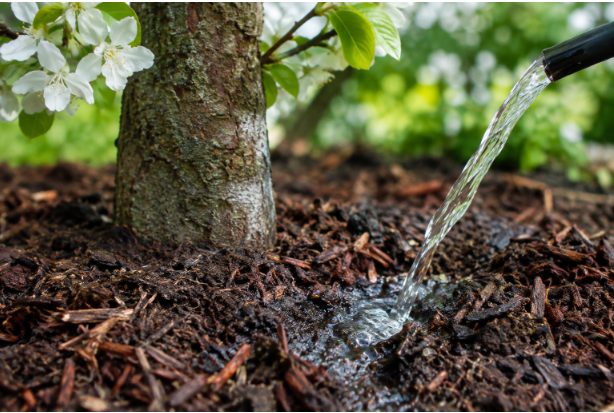
Hot weather can expose weaknesses quickly. Wilted leaves, dry soil, leaf scorch, premature leaf drop, and reduced growth may indicate water stress, although these symptoms can have multiple causes. Water slowly so moisture reaches the broader root zone rather than concentrating at the trunk. Watering early in the day can reduce losses to heat and wind, and irrigation should be reduced after meaningful rainfall. Guidance on checking soil moisture before watering emphasizes that trees' water needs vary with soil type, species, and local conditions.
Pay extra attention to trees surrounded by turf, dense ground cover, compacted soil, or reflective pavement. These conditions can increase competition for water or intensify heat around the root zone. Keep lawn equipment away from the trunk, since repeated wounds can create entry points for pests and decay organisms.
Fall Care: Prepare Trees for Colder Weather
Fall is a good time to review the effects of summer heat, drought, and storms. Check for broken branches, dieback, loose mulch, and signs of disease on fallen leaves. Remove and dispose of leaves that appear heavily diseased, but healthy leaves and other organic material do not always need to be stripped from the landscape. Continue watering when the soil is dry, and rainfall is limited, but adjust the schedule as temperatures cool and rain becomes more reliable. Avoid unnecessary late-season pruning that could stimulate tender new growth before cold weather.
Build a Pruning Calendar
Pruning timing depends heavily on when a flowering tree sets its buds. Many spring-flowering trees bloom on older wood, so pruning immediately after flowering is often the best way to preserve the following season's display. Trees that flower later on new growth are often pruned during dormancy or before active spring growth begins. The University of Maryland explains that damaged, diseased, and dead branches can be removed at any time, while major cuts and pruning near power lines should be left to trained professionals.
Do not top a tree, remove a large share of its living canopy at once, or shorten branches randomly. These practices can leave weak regrowth, poor structure, and larger wounds. If a tree has a large limb, a narrow branch union, or an obvious lean, seek an assessment before attempting corrective pruning.
Create a Smarter Watering Routine
- Check the soil several inches below the surface before watering.
- Apply water slowly enough for it to soak into the root zone.
- Keep irrigation away from direct contact with the trunk.
- Check newly planted trees more often while the roots are becoming established.
- Reduce or pause irrigation during rainy periods.
- Use mulch to slow moisture loss and moderate soil temperature.
There is no universal watering frequency for every landscape tree. Sandy soil drains faster than heavier soil, and trees exposed to wind or heat may dry out sooner. Let soil moisture and weather guide the schedule rather than relying solely on the calendar.
Improve Soil and Mulch Conditions
Healthy roots need access to air and water as well as space to grow. Compacted soil can make all three more difficult. Keep grass and dense ground cover from growing directly against the trunk, and maintain a wide mulch ring where practical. Mulch should be spread evenly and kept away from the trunk flare. Thick mulch piled against bark can hold excess moisture and hide damage, so avoid the familiar "mulch volcano" shape. If nutrient problems are suspected, use a soil test before adding amendments or fertilizer.
Spot Pests, Disease, and Damage Early
Inspect leaves, bark, branches, and the soil surface after storms, heat waves, or long dry periods. Watch for unusual spots, holes, sticky residue, peeling bark, dieback, premature leaf loss, or sudden changes in canopy density. Correct identification matters before treatment, because the same symptom can result from drought, excess moisture, insects, disease, root stress, or physical injury.
Check These Conditions First
- Is the soil unusually dry or staying wet for too long?
- Has the trunk or a major branch been recently damaged?
- Are symptoms confined to one branch or spread through the canopy?
- Are nearby plants showing similar symptoms?
Know When to Request Professional Help
Request professional help for large dead limbs, deep trunk cracks, a major lean, root damage, or branches near utility lines. Climbing, chainsaw work, and electrical hazards can turn a simple-looking task into a serious safety risk. Take dated photos and notes as conditions change, then ask for a clear explanation of the issue, proposed work, and expected outcome










1 thought on “The Seasonal Care Calendar for Healthier Flowering Trees”
Comments are closed.