A countertop edge can look perfect on a sample and still feel wrong above the cabinets at home. When weighing cabinet refacing vs. full kitchen remodel, consider which parts of the room will stay and which will change. That decision gives the edge a context: it must complement retained finishes or become part of a coordinated redesign. The aim is not to choose the most impressive profile, but one that belongs in the kitchen you are actually building.
Decide What Is Staying Before Choosing What Is New
Refacing updates the visible cabinet finishes while retaining the underlying boxes and basic layout. That can suit a kitchen whose storage and arrangement already work. It does not solve damaged cabinet structures or an awkward footprint. When those problems are driving the project, address them before spending on new counters; a decorative edge cannot correct a kitchen that remains difficult to use.
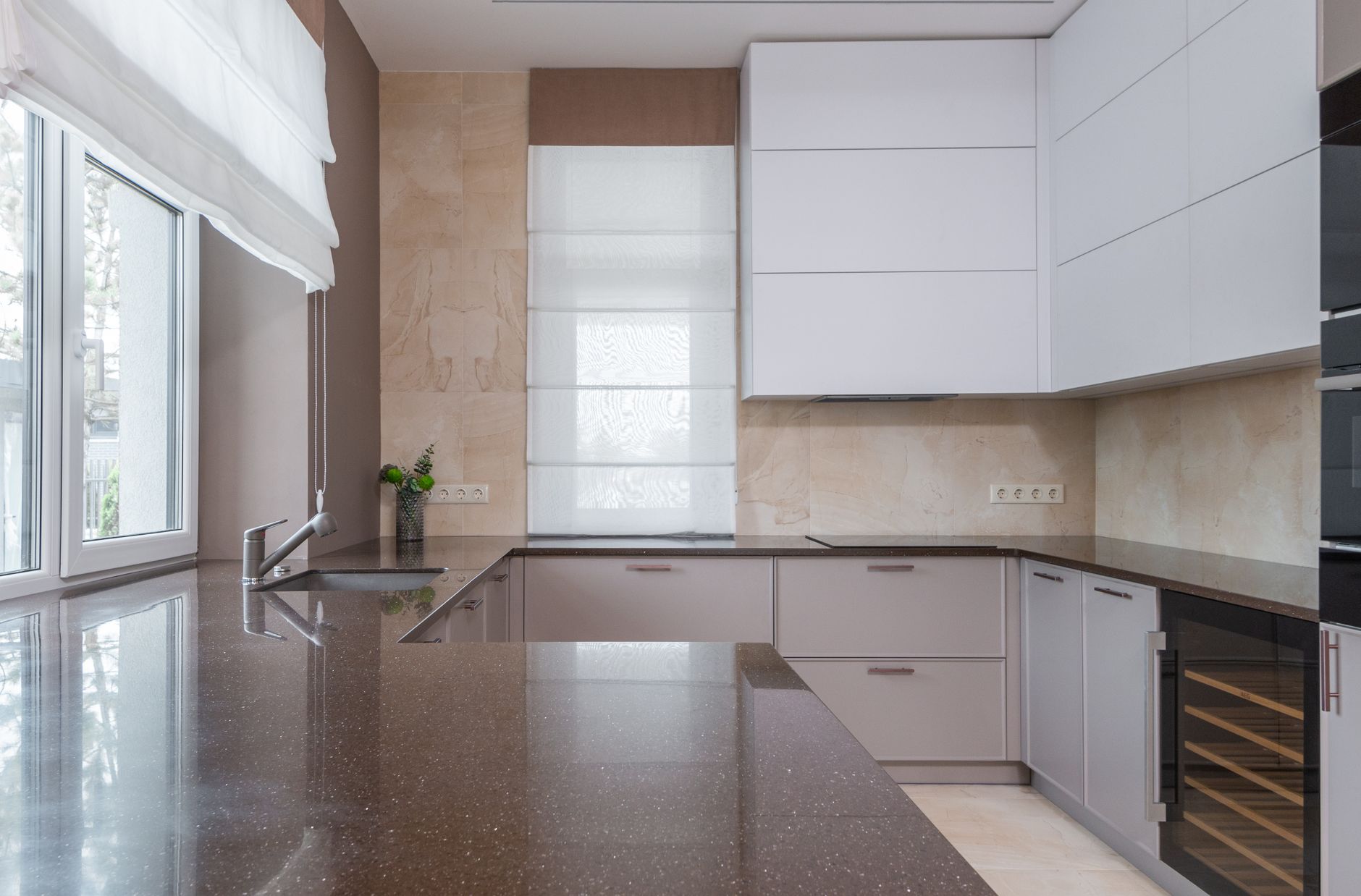
Use the cabinetry as your first visual reference. An eased edge offers a mostly straight face with softened corners, while a bevel introduces an angled detail. Both can sit quietly beside simple doors. An ogee has a more decorative curve that may suit detailed cabinetry. Rather than treating these as rigid style rules, compare how much ornament the room already contains. A busy backsplash and strongly veined slab may need very little additional detail. Place the edge sample directly over a door sample rather than judging each finish separately.
Make the Detail Buildable, Not Just Attractive
The profile also has to work with the chosen material and slab thickness. Do not assume every sample can be reproduced on every surface. A mitered edge, for instance, joins pieces to create the appearance of a thicker counter rather than requiring a uniformly thicker slab. Ask the fabricator to confirm the proposed construction, finished dimensions, and any restrictions before approving the design. A drawing showing the edge from the side is more useful than a profile name alone.
Put those decisions in writing, from the exact profile to the treatment of exposed ends and the person responsible for final approval. The same attention to detail belongs in contractor selection. Specific accounts of communication and problem-solving should carry more weight in reviews of Gartmann Renovations than vague praise, particularly when several trades share responsibility for one finished kitchen. Establish who checks the details and who resolves a mismatch before work begins.
Choose for Elbows, Cleaning, and Busy Corners
An island used for homework or breakfast deserves a different test from a display sample: rest your forearms against it. Rounded profiles can feel more comfortable at seating areas, and a full bullnose curves around both the top and bottom. A half bullnose softens the upper edge without rounding the entire face. Compare actual samples rather than assuming one shape will suit everyone.
Look separately at the countertop’s outside corners. Ask to see both the front-edge profile and the corner shape from above, rather than assuming one sample answers both questions. Walk through the proposed layout and notice where someone carrying groceries or moving between appliances might brush past the counter. Pay attention to seating access, too, not just the route between the sink and refrigerator.
Cleaning is another practical test. Simpler profiles are generally easier to wipe, while intricate curves need more attention. Run a cloth over the sample and consider how you normally clean around the sink and preparation area. A deeply shaped edge may be worth that extra effort, but its appearance should not be the only thing you assess.
Spend on the Details You Will Notice
Ask for the edge treatment to be identified in the countertop quote rather than buried in a single total. Elaborate profiles can add cost, and a thicker-looking edge may involve different fabrication from a simple eased finish. Compare alternatives on the same material and layout so you can see what the upgrade actually changes. There is little value in paying for detail that disappears beneath the rest of the design.
Treat an island accent as an option, not an obligation. You might prefer one consistent edge throughout the room, or a slightly more substantial treatment where people gather. Hold both possibilities against the cabinet sample and backsplash before deciding. The question is whether the difference creates a deliberate focal point or simply introduces another competing shape.
Approve the Edge in Real Life
Before fabrication, view a finished sample from above, from across the room, and at seated height. Check the underside as well as the visible face, and confirm that the written description matches what you handled. Keep the approved sample or clear photographs with the project selections. An edge worth choosing should look right beside the cabinetry and feel right during an ordinary day in the kitchen.