Lighting design has evolved beyond traditional bulbs and visible LED points. Modern residential, commercial, and architectural projects increasingly require smooth illumination that creates a clean and professional appearance. COB LED strip technology addresses this requirement by producing a more uniform lighting effect without the noticeable individual light points commonly associated with conventional LED strips.
For distributors, contractors, and lighting designers, understanding COB technology can help when selecting products for projects that require continuous illumination and flexible installation options.
What Makes COB LED Strip Technology Different?
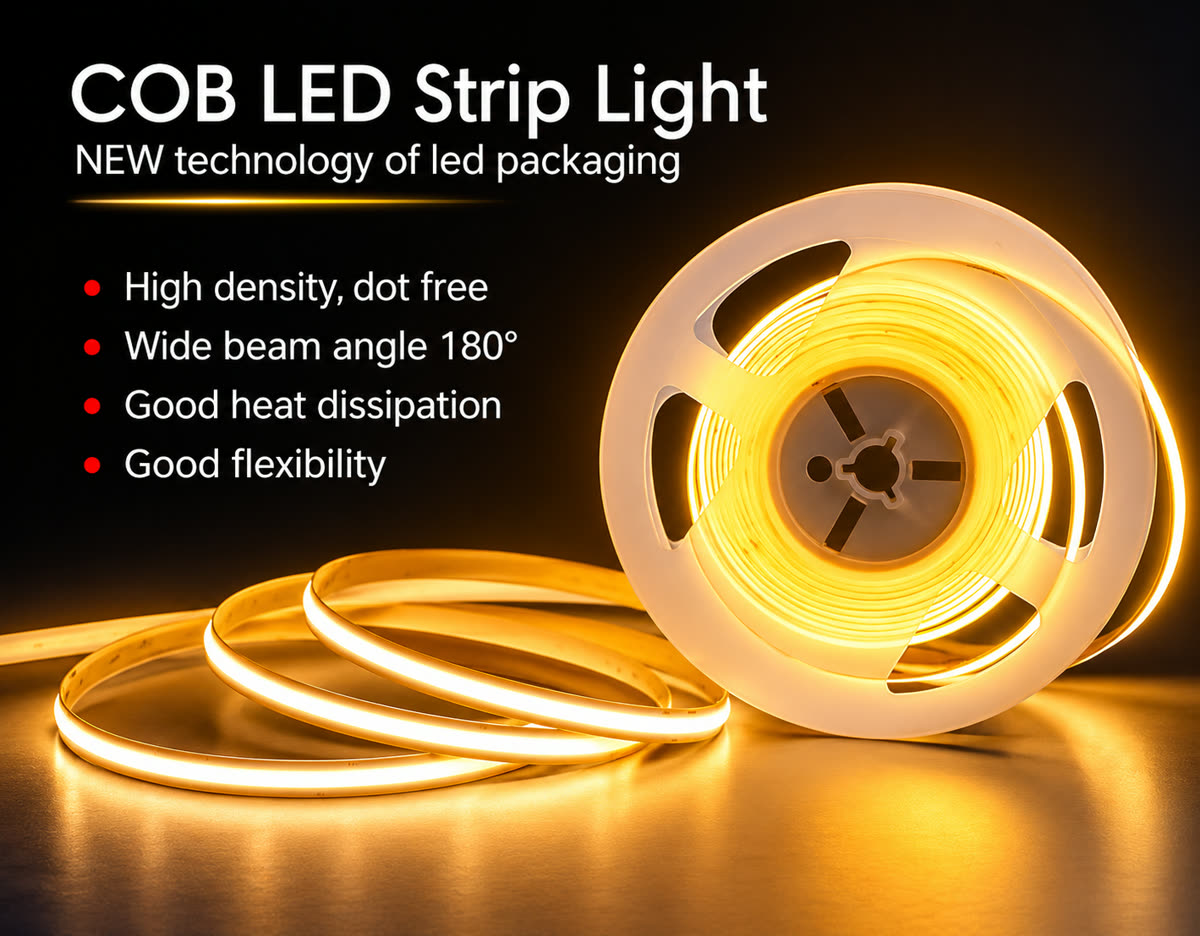
COB stands for Chip on Board. In LED lighting, this technology is designed to create a continuous and uniform appearance along the strip.
Traditional LED strips may show individual points of light, particularly when installed in locations where the LEDs are directly visible. COB strips provide a smoother visual effect, making them useful for applications where lighting appearance is an important part of the design.
Some key characteristics include:
- Uniform, dot-free illumination
- Flexible installation possibilities
- A clean and aesthetically pleasing appearance
- Suitability for different decorative and architectural applications
- Easier maintenance as part of a well-planned lighting installation
These characteristics make COB LED strips worth considering for projects where a continuous lighting effect is preferred.
Where Can COB LED Strips Be Used?
COB technology can be considered for several types of lighting installations. The final product selection should depend on the environment, brightness requirements, and electrical configuration.
Residential Cove Lighting
Cove lighting is a common way to introduce indirect illumination into living spaces. COB strips can create a smooth glow around ceiling edges and architectural features without emphasizing individual light points.
Commercial Interiors
Retail stores, showrooms, and other commercial environments often use accent lighting to highlight specific areas. COB strips can be incorporated into display features, shelves, and selected architectural details.
Furniture and Display Lighting
Furniture installations sometimes have limited space for conventional lighting fixtures. Flexible LED strips can be used in suitable locations to create discreet accent lighting.
Signage and Decorative Features
Lighting used around signage and decorative outlines needs to deliver an attractive visual appearance. A uniform COB lighting effect can be useful when individual LED points would distract from the design.
Choosing the Right Voltage: 12V or 24V
Voltage selection is an important consideration when planning a COB LED strip installation.
Both 12V and 24V options are available, but they can behave differently over longer installation distances.
A 24V COB LED strip can offer reduced voltage drop compared with a 12V option. This can help maintain more consistent brightness over longer runs when the installation is designed correctly.
A 12V strip may experience greater voltage drop over distance, potentially causing brightness to decrease progressively along the installation.
Before choosing between the two, buyers should consider the required strip length, power supply compatibility, wiring arrangement, and installation conditions.
Understanding Protection Requirements
The installation environment has a direct influence on which COB LED strip should be selected.
For example, indoor decorative lighting may have different protection requirements from installations exposed to moisture or outdoor conditions.
The COB product information describes IP44 protection for dust resistance. Buyers should confirm the exact protection capabilities of the product they intend to purchase and should not assume that every COB strip is suitable for outdoor or water-exposed installations.
Other LED strip ranges may offer IP65 or IP68 protection options, depending on the product. The appropriate rating should always be checked against the actual installation environment.
What to Consider When Selecting a Manufacturer
Finding a suitable COB LED strip lights manufacturer requires more than comparing product prices. Buyers should review the product range, technical information, and level of support available.
Consider asking the manufacturer about:
- Available voltage options: Confirm whether 12V or 24V versions are available for the required application.
- Lighting appearance: Ask about the uniformity of illumination and available product configurations.
- Protection rating: Verify the rating of the specific COB product rather than relying on general product descriptions.
- Power supply compatibility: Confirm the electrical requirements before installation.
- Customization: Discuss whether the manufacturer can support particular project requirements.
- Technical assistance: Check whether help is available when selecting products and planning installations.
Clear product information helps buyers compare options and make informed purchasing decisions.
Why Manufacturing and Technical Support Matter
COB LED strips may appear straightforward, but successful installation still depends on selecting suitable products and compatible electrical components.
Working with an experienced cob led strip factory can help buyers explore available options and obtain information relevant to their projects.
Manufacturing capabilities, research and development, and quality control are useful areas to discuss when evaluating a potential supplier. Businesses with specific product requirements can also ask about available OEM and ODM services.
For distributors and contractors, maintaining clear records of approved product specifications can make repeat purchasing easier and help reduce differences between project orders.
Common Mistakes to Avoid
Even a suitable LED strip can produce disappointing results if important installation details are overlooked.
Some common mistakes include:
- Selecting voltage without considering the installation length
- Using an incompatible power supply
- Ignoring voltage drop over longer runs
- Choosing a protection rating without checking environmental conditions
- Failing to confirm product specifications before ordering
- Assuming all COB products have identical electrical and protection characteristics
Avoiding these mistakes begins with proper planning and communication with the supplier.
Conclusion
COB LED strip technology offers a useful option for lighting projects that require smooth, uniform, and visually appealing illumination. Its dot-free appearance makes it suitable for selected residential, commercial, furniture, signage, and architectural applications.
However, buyers should still evaluate voltage requirements, protection ratings, power supply compatibility, and installation conditions before selecting a product. Working with a manufacturer that provides clear technical information and appropriate support can help businesses choose COB lighting solutions that match their project requirements.